
Protests against high fuel prices in Ireland reached a new level of escalation in early April 2026. In Dublin, Cork, Galway, and Foynes, demonstrators blocked fuel depots, major roads, and the country’s only refinery. The government is considering deploying the military to support the police in clearing the blockades. The trigger was a sharp increase in the cost of gasoline, diesel, and heating oil, but the consequences extend far beyond that: gas stations are reporting shortages, supply chains are faltering, and even emergency services are facing risks to their ability to provide essential services. (independent: 09.04.26)
Military in Focus Due to Blocked Energy Facilities
Irish police no longer consider the actions to be normal protests. They are now referring to them as blockades, because critical infrastructure is being deliberately targeted, putting pressure on the supply of fuel, food, clean water, and animal feed. At the same time, according to authorities, the police and military are already working closely together to restore access to key facilities.
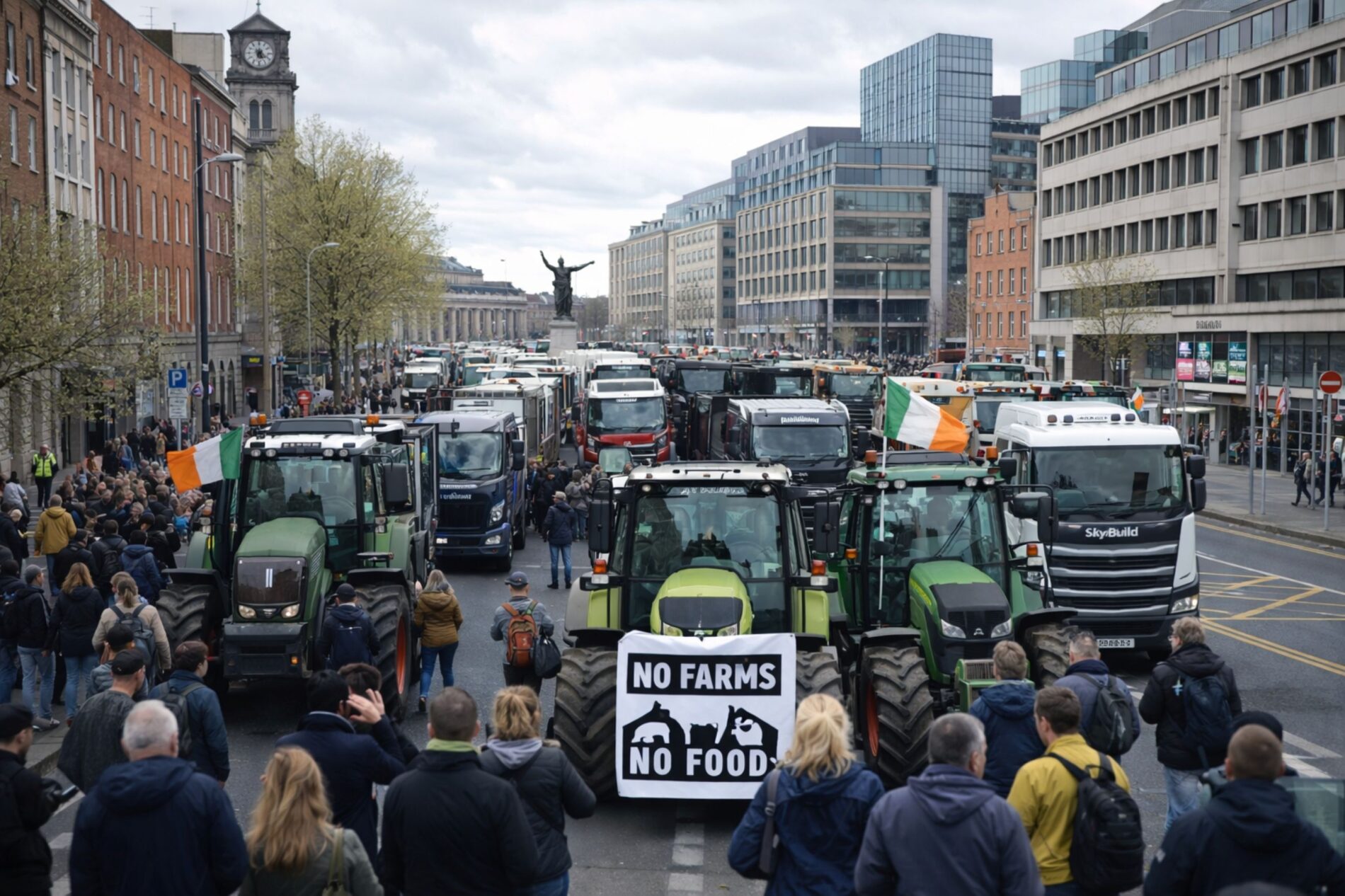
The situation is particularly critical in Whitegate, Cork. Ireland’s only refinery is located there, while the sites in Galway and Foynes have also been blockaded. These facilities together supply more than half of Ireland’s fuel, which is why the situation quickly escalated from a protest into a full-blown supply disruption.
Gas stations run out of fuel – hospitals sound the alarm
The consequences are already being felt in everyday life. According to Irish media, more than 100 gas stations reported empty pumps or low fuel supplies, while motorists, concerned about fuel shortages, filled up their tanks. This further exacerbated the pressure on distribution, even though the government is working on countermeasures.
The situation is even more serious in the healthcare sector. Medical representatives warned that patients could miss appointments, and that problems with dialysis, cancer treatments, and emergency services are likely if the fuel shortage persists. The National Ambulance Service has also had to set aside emergency reserves because regular care in some areas no longer seemed guaranteed.
Government Takes a Hard Line, But the Conflict Remains Open
The government is unwilling to tolerate the blockades. Justice Minister Jim O’Callaghan announced consequences for unlawful actions, while Prime Minister Micheál Martin described the refinery blockade as sabotage against the country. Therefore, the military is now taking center stage as a logistical support unit, with heavy equipment to remove blocking vehicles from depots and access roads.
At the same time, the political situation is delicate. According to current plans, the military will not play a traditional role in dispersing crowds, but will primarily provide technical support and assistance. However, this decision alone underscores the seriousness of the situation. As long as protesters persist with the blockades and announce new actions, the risk remains high that Ireland will face not only rising fuel prices but also a broader supply and economic crisis.