
At the Ceraweek energy conference in Houston, Texas, German Federal Minister for Economic Affairs Katherina Reiche warned of potential supply problems for gasoline, diesel, and kerosene in Germany if the war between the US and Israel against Iran continues. According to her, the conflict is already severely impacting international oil trade, while the consequences at German gas stations are currently primarily reflected in sharply increased prices. While the supply of oil, gas, and refined products is still secure, Reiche stated that this could change as early as the end of April or in May if the war does not end. The greatest risk factor remains a persistently disrupted energy market, as higher oil prices could not only drive up fuel costs but also fuel inflation and, according to estimates, inflict approximately €40 billion of damage on the already weak German economy. (ntv: 24.03.26)
Reiche predicts timeframe for initial shortages
Reiche formulated her warning in Houston with unusual clarity. She said that the prices for gasoline, diesel, and kerosene had already risen sharply due to the war. At the same time, she emphasized: “We are not yet seeing any volume shortages, but if the conflict does not end, we expect them probably by the end of April or in May.”
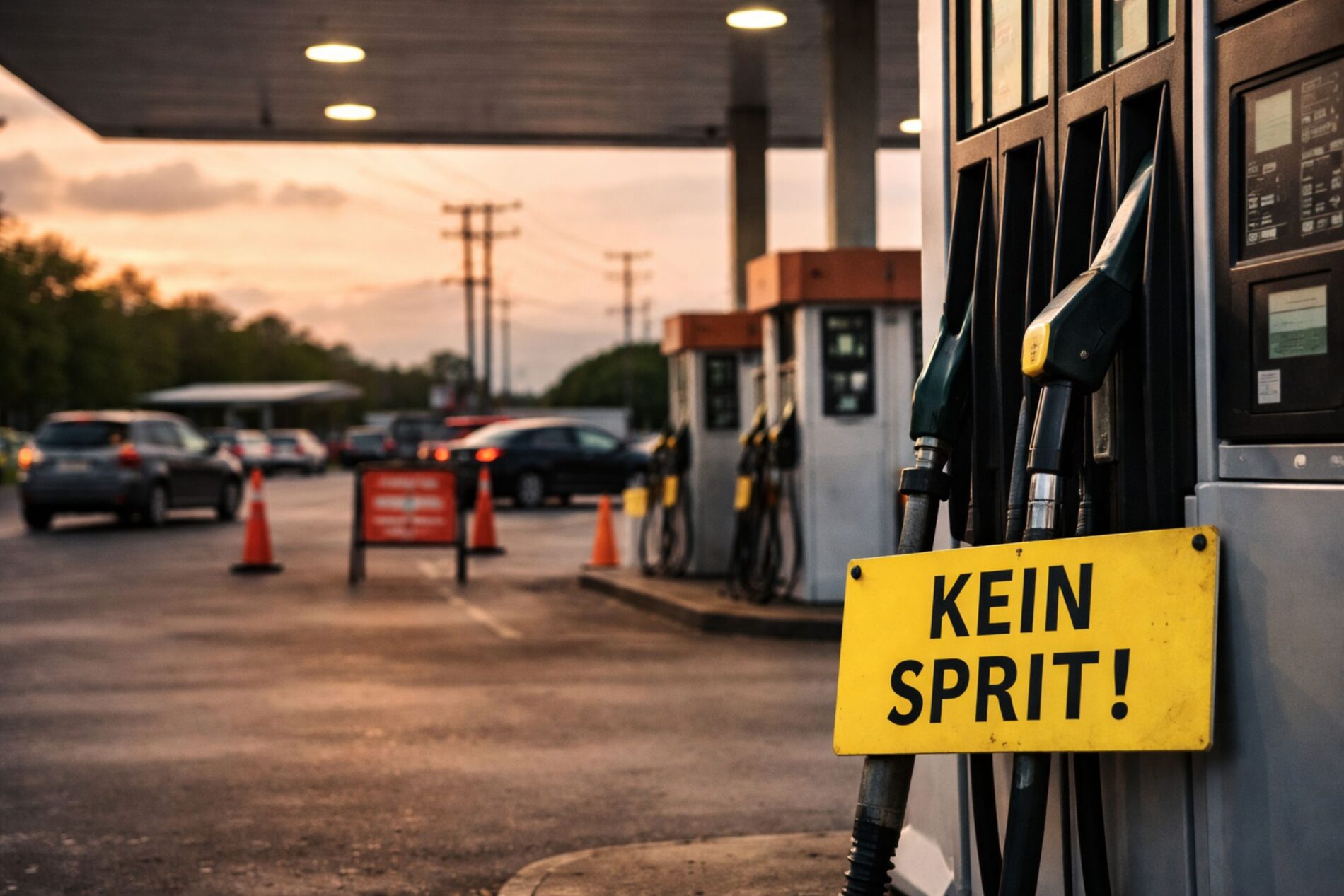
This puts not only the price, but also the actual situation on the energy markets in focus. So far, drivers and businesses are primarily feeling the effects of the crisis at the gas pump. However, should the conflict last longer, the price shock could become a serious problem for transportation, air travel, and industry. This would be particularly critical because diesel and kerosene are indispensable for key sectors of the economy.
Supply remains stable, but the risk is growing
The contradiction within the German government is striking. A spokesperson for the Ministry of Economic Affairs stated as recently as Friday that there were “absolutely no supply bottlenecks, neither for oil and gas nor for refined products.” While this statement describes the current situation, it stands in contrast to Reiche’s warning for the coming weeks if the conflict does not end quickly.
At the same time, the minister pointed to the economic risks for Germany. She spoke of a small and fragile recovery that is jeopardized by high energy costs. If prices rise permanently, this will affect private households as well as businesses. Therefore, the pressure is mounting on the government not only to react to rising costs, but also to secure supplies early on.
Study Projects Billions in Losses and Higher Inflation
A calculation by the German Economic Institute in Cologne illustrates the potential severity of the consequences. Researchers anticipate a real loss in overall economic output of approximately 40 billion euros over two years if the Brent oil price rises to $100 per barrel. They also expect higher consumer prices in this scenario, specifically an increase of 0.8 percent this year and 1.0 percent next year.
Meanwhile, the German Bundestag is debating a fuel price package proposed by the federal government this week. Gas stations would only be permitted to raise prices once per day, while price reductions would remain possible at any time. Furthermore, a spokesperson for Chancellor Friedrich Merz indicated that further measures would be considered if the price surge continues. The government aims to provide relief to consumers while simultaneously preventing additional strain on the market.