
In Frankfurt am Main, the German Chemical Industry Association is warning of growing risks to supply chains, as the war with Iran and the blockade of the Strait of Hormuz are already disrupting international supply chains. Important raw materials such as ammonia, phosphate, helium, and sulfur, needed for chemicals, fertilizers, and other industries, are affected. At the same time, this development is impacting an industry that was already in crisis before the escalation. The decisive risk factor is therefore no longer just the price surge in energy and transportation, but increasingly the availability of intermediate products. This threatens companies in Germany with shortages, uncertain procurement, and noticeable consequences in the next six to eight weeks if canceled orders cannot be replaced. (fr: 16.03.26)
Supply chains for raw materials and fertilizers are breaking down
The industry’s warning is now more specific than in previous assessments. The German Chemical Industry Association (VCI) points to “initial indications of disruptions in international supply chains.” The association explicitly names ammonia, phosphate, helium, and sulfur as particularly sensitive substances. The availability of sulfur is especially critical because a large portion of maritime trade passes through the Strait of Hormuz. This raw material is primarily used in fertilizers. Therefore, costs are rising not only for industry but also for agricultural markets and food supply chains.
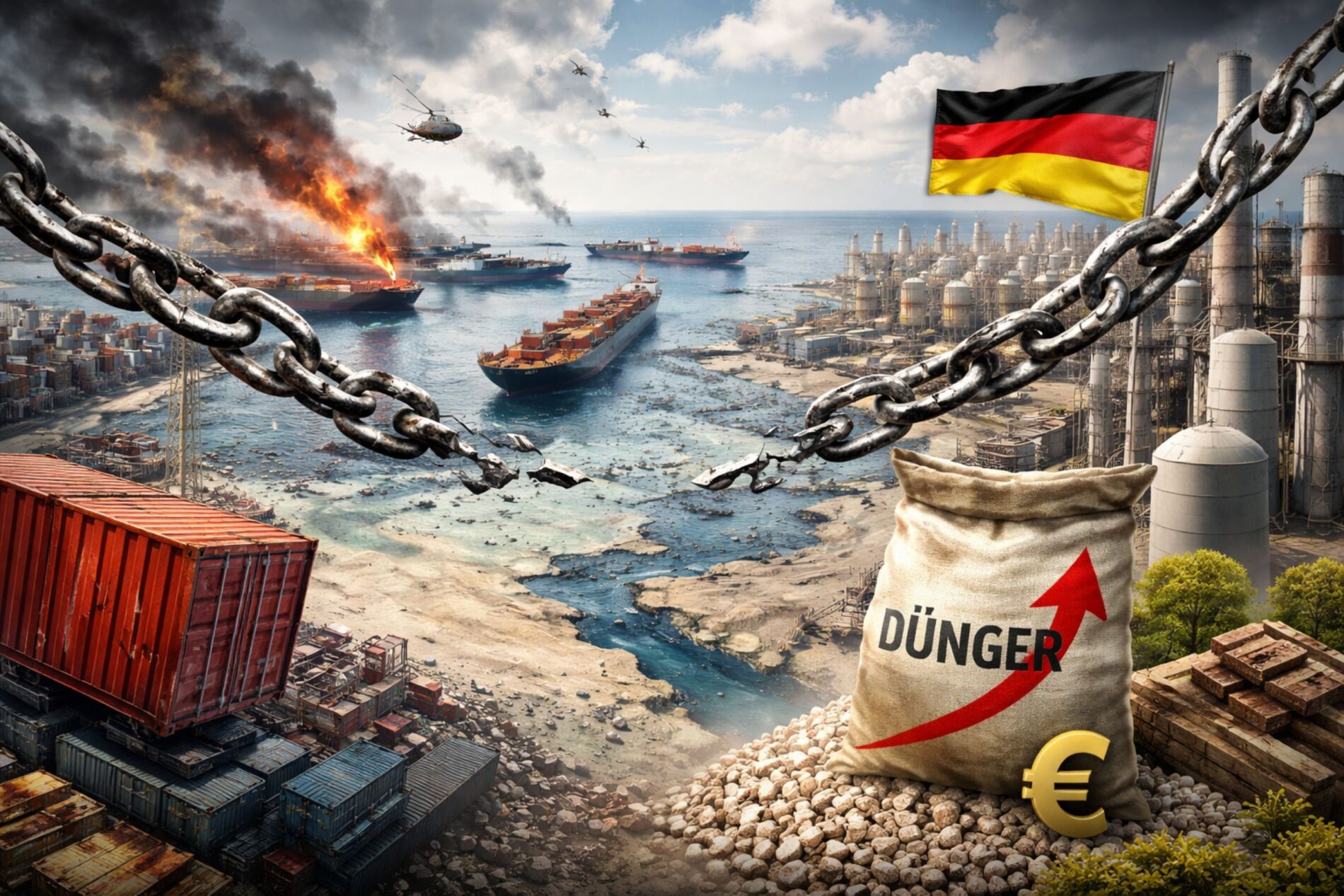
This makes the situation particularly difficult for small and medium-sized enterprises (SMEs). Many companies can only absorb price increases to a limited extent, while at the same time, predictability is decreasing. The German Chemical Industry Association (VCI) describes the feedback from businesses as dramatic and points out that it is no longer just about prices, but also about a lack of availability. Ongoing deliveries are still mitigating part of the problem, but this buffer will soon run out.
China Focuses on De-escalation, Reserves, and Preparedness
Since the beginning of March, China has officially called for an end to military actions and secure trade routes through the Strait of Hormuz. The Foreign Ministry emphasizes that the route is crucial for international trade in goods and energy and therefore demands de-escalation instead of further escalation. However, there has been no publicly confirmed military securing of the passage by China.
Economically, China’s response has been considerably more measured. In mid-March, Beijing released fertilizer from state commercial reserves because the disrupted passage through Hormuz is impacting global supplies. Furthermore, China has significantly increased its iron ore imports and is storing substantial quantities instead of using them directly in production. This suggests preparedness against potential supply disruptions. Beijing is securing its own supply, building up reserves, and responding to impending shortages as global supply chains falter.