
In Hemer, in the Märkischer Kreis district of North Rhine-Westphalia, part of a house in the Stephanopel neighborhood is being demolished to allow a wind turbine transport with 78-meter-long rotor blades to navigate the narrow route through the valley. This is due to three Enercon E-160 wind turbines being built in the northern Balver Forest in the Sauerland region, within the Balve municipal area, but accessed via Hemer. Because the access road via Garbeck proved too narrow, the route leads through the town center and then through the Stephanopel Valley. There, a sharp bend at a building protruding into the roadway blocks passage, while traffic lights, lampposts, power lines, and bridges create additional problems. The consequences are already visible for property owners, residents, and traffic, as preparatory work is underway, temporary traffic lights are in place, and further alterations to the road and infrastructure are planned. (ikz-online: 06.03.26)
Wind turbine transport forces house demolition at narrowest point
The most drastic intervention affects a house that has defined the course of the district road in Stephanopel for decades. The road curves around the building at this point, while normal vehicles can still manage the passage. However, this space is no longer sufficient for the planned heavy transport vehicles. Therefore, the project developer, SL Naturenergie, is having part of the house demolished. This turns an energy project outside the city limits into a massive intervention in the heart of a district of Hemer.
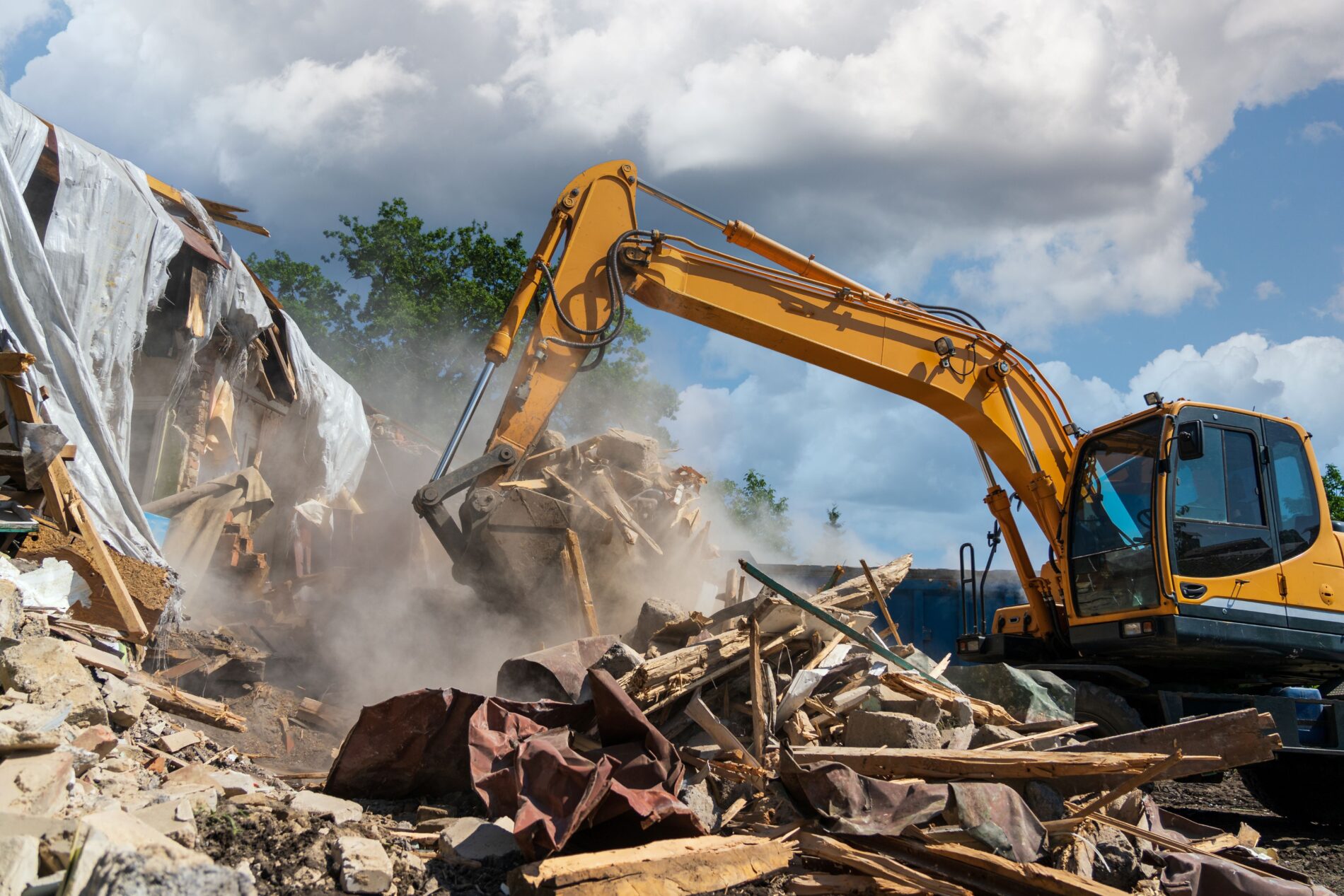
Symbolic image
The project is no longer just an abstract plan. A temporary traffic light has already been installed, and preliminary work has begun. The landscape is already changing, even though the wind turbines themselves are not located within Hemer’s city limits. Company spokesperson Stefanie Flam said, “There were several attempts to find alternative solutions.” However, other options would have placed a greater burden on adjacent private properties and therefore required even more effort.
Further transport and construction work place an additional burden on Hemer
The three wind turbines are being built in Balve, yet Hemer is bearing the logistical burden of the project. The alternative access route through Garbeck was ruled out because it is too narrow for the extra-long special transport vehicles. Therefore, the wind turbine components are now being transported via the Stephanopel Valley. Forest roads there have already been widened, graveled, and partially paved. Concrete mixers were already using this route to reach the hilltops last year, while the foundations have since been completed.
The next construction phase has already begun with the tower segments, but the greatest strain is yet to come. The nacelle, rotor, stator, and the enormous rotor blades must be transported through the entire city center of Hemer. For this purpose, the company is planning a temporary storage facility at the end of the motorway on the open space near Duloh. There are ten sets of traffic lights along the route, and the transport vehicles also require a minimum clearance of six meters. Light poles, overhead power lines, and bridges exacerbate the problem, while at the same time a 10 kV power line from Hochgiebelweg through the Stephanopeler Valley to Perick is also slated for approval. The three wind turbines are scheduled to go into operation in mid-2026, but further projects have already been applied for, which is why Hemer must expect heavy wind energy transport in the future as well.