
Arnstadt – In mid-August 2026, Thyssenkrupp Nucera halted plans to establish its own serial production line for SOEC units. The decision was driven by the delayed ramp-up of the hydrogen market and the postponement of customer projects. Although the company had not yet finalized the factory location, Arnstadt had been considered a key option. Consequently, the anticipated investment—running into the hundreds of millions—will not materialize, and nine of the 27 employees are set to be laid off for operational reasons.
Hydrogen Market Ramp-Up Slower Than Expected
The German electrolysis market is growing significantly more slowly than earlier projections anticipated. By early 2026, only 181 megawatts of electrolysis capacity had been installed, while approximately 1.3 gigawatts more were under construction or had received final approval. Consequently, the EWI considers Germany’s target of ten gigawatts by 2030 to be barely achievable. The ramp-up of hydrogen thus continues to lag far behind previous expansion plans.
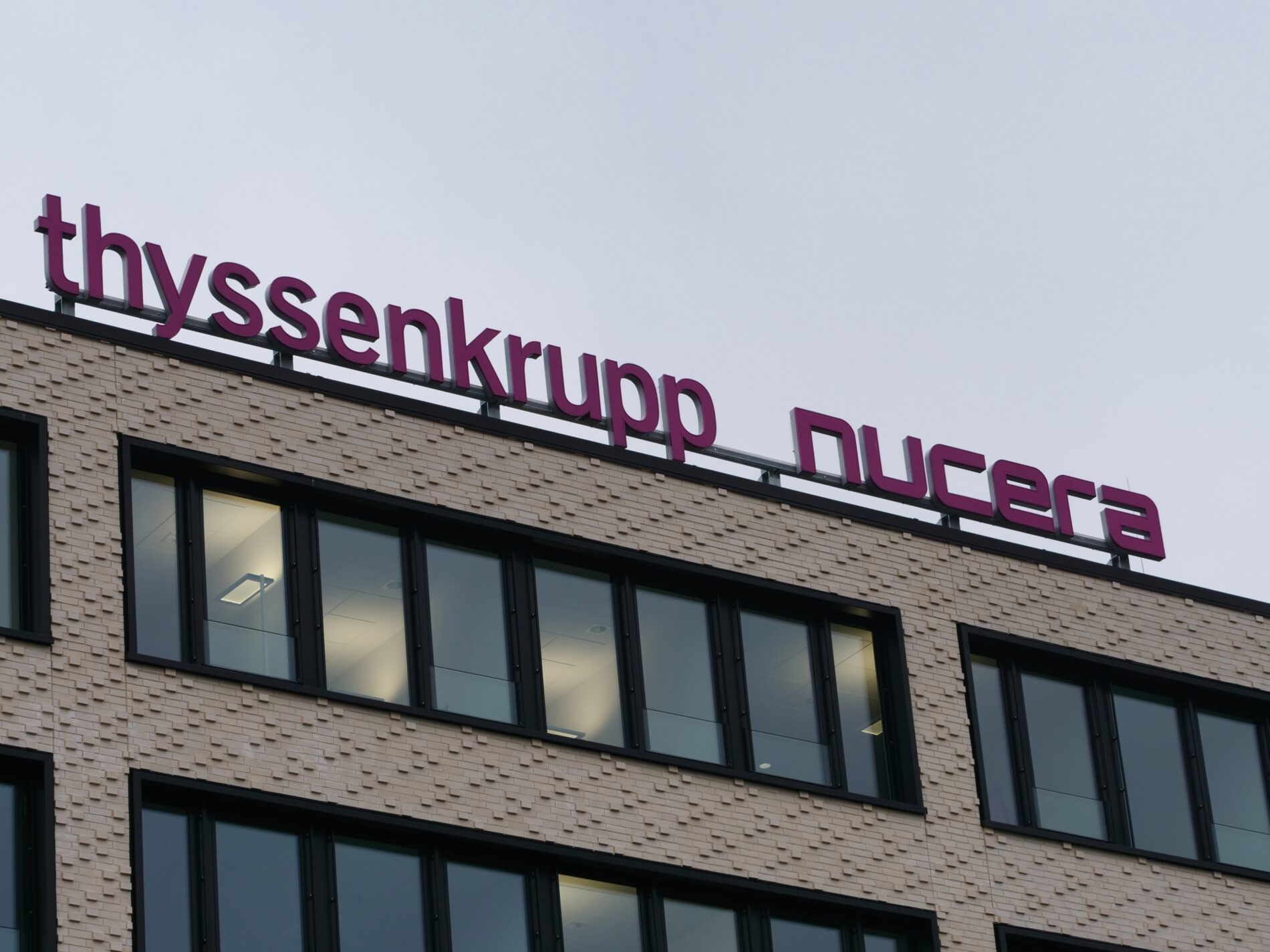
Image: Shutterstock
However, a joint pilot production facility operated by Nucera and Fraunhofer IKTS has been running in Arnstadt since May 2025. It is capable of manufacturing SOEC stacks with an annual capacity of around eight megawatts. Plans had envisaged transitioning this into full-scale serial production—with an output of approximately 300 megawatts per year—starting in 2029. Additionally, high-temperature electrolysis offers the potential to significantly reduce electricity consumption by utilizing process heat.
Arnstadt Loses Prospects for Industrial Expansion
For Arnstadt, this primarily means the loss of prospects for large-scale industrial manufacturing. Of the 27 employees, nine are set to receive redundancy notices, while two others are leaving the company voluntarily. However, the remaining 16 employees are to continue research work on the pilot plant in collaboration with Fraunhofer IKTS. Nucera is also evaluating how the site and existing expertise can be utilized in the future.
The Free State of Thuringia had provided €900,000 in support for the technology as recently as January 2026. The funding was intended to advance technical maturity and market readiness, with additional support for the planned serial production also under consideration. Consequently, pilot research is continuing despite the cancellation of large-scale industrial production; however, the prospect of significantly larger-scale manufacturing is off the table for the regional economy for the time being.
Thyssenkrupp Nucera Takes €30 Million Hit
Financially, the decision impacts Thyssenkrupp Nucera’s EBIT by approximately €30 million. This charge stems primarily from write-downs on a pilot plant and capitalized development costs. Consequently, the company now anticipates an EBIT loss of between €75 million and €105 million for the 2025/26 fiscal year. Meanwhile, nine-month revenue fell to €354 million, whereas order intake rose to €471 million.
Nevertheless, Nucera is not withdrawing entirely from the hydrogen business. Moving forward, the company will focus on alkaline water electrolysis, chlor-alkali technology, and its planned high-pressure water electrolysis. However, the halt in large-scale SOEC production highlights the extent to which new manufacturing facilities depend on firm offtake agreements. Without sufficient demand, it is difficult to bring even technologically advanced electrolysis systems to mass production profitably.
Author: Blackout News
Sources: HydroNews (20.08.26) – Power to x (19.08.26) – MDR (14.08.26)