
Prüm/Brake, August 2026 – The hospital crisis in Germany is affecting an increasing number of basic care facilities. In Prüm, St. Joseph Hospital—which employs over 450 people—is undergoing insolvency proceedings following financial difficulties; the Eifelkreis Bitburg-Prüm district intends to take over the facility to secure its continued operation. In Brake, however, no such rescue materialized: St. Bernhard Hospital ceased inpatient operations on August 14, affecting around 350 jobs. Michael Wilke, the managing director of the Prüm hospital, estimates that approximately 500 hospitals nationwide face similar economic risks, though there is no official survey confirming this scale.
Hospital crisis primarily affects facilities with high standby costs
St. Joseph Hospital in Prüm exemplifies a structural problem faced by smaller hospitals. The clinic treats approximately 5,200 to 5,300 inpatients annually. At the same time, it must maintain round-the-clock staffing, medical technology, emergency infrastructure, and on-call services. These costs are incurred regardless of how many beds are actually occupied.
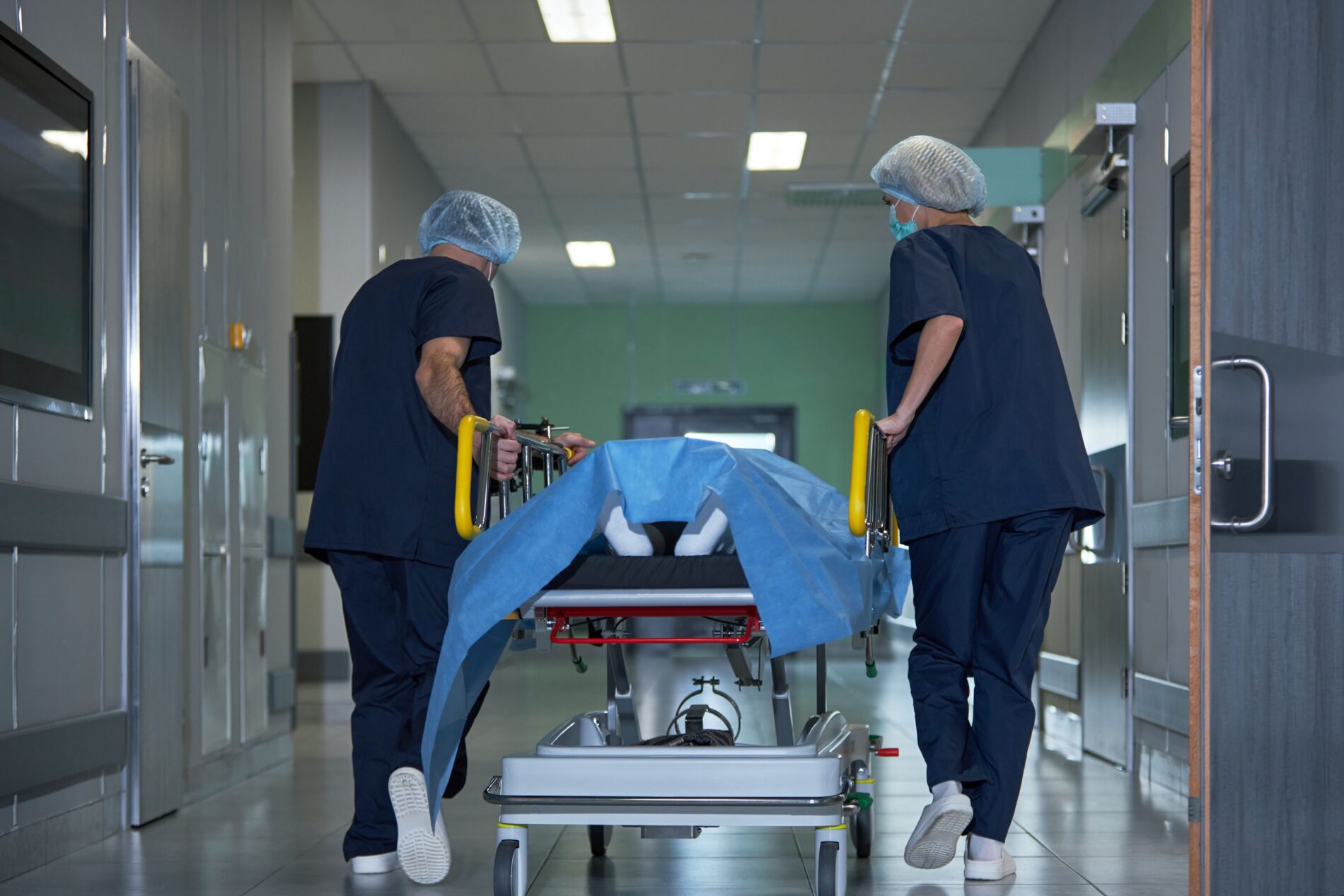
Image: Shutterstock
This creates a financial dilemma, particularly in sparsely populated regions. Fewer cases mean lower revenues, while a large portion of the costs remains fixed. Nevertheless, such hospitals can be indispensable for a region’s medical care. In Prüm, the district is therefore set to step in, after it proved impossible to secure economically viable continued operations under the previous conditions.
Plans to save the Prüm hospital – Brake has already closed
An agreement regarding the takeover of the Prüm hospital has now been reached between the district, the hospital, and the insolvency administrator. However, the district council still needs to approve the plan. The economic transfer to the Eifel district is then scheduled to take place in October. This would see a municipal solution secure inpatient care—services that the previous operator could no longer guarantee on its own.
In Brake, by contrast, the other side of the hospital crisis is already evident. St. Bernhard Hospital stopped admitting new inpatients on August 7 and completely ceased inpatient operations a week later. While some outpatient services are set to continue, the hospital care previously provided is being discontinued. For emergency services and patients, this means longer journeys to other hospitals.
Financial Situation of Many Hospitals Remains Critical
The difficulties are not limited to individual insolvent facilities. According to the latest hospital business climate survey by the German Hospital Federation, 58 percent of hospitals rate their financial situation as unsatisfactory. Among hospitals in rural regions, this figure is as high as approximately two-thirds. Furthermore, 61 percent anticipate a further deterioration of their situation in the second half of 2026.
The hospital crisis is thus escalating into a challenge for healthcare provision planning. The hospital reform aims to consolidate services and restructure financing, yet many facilities are already struggling to cope with ongoing deficits. The case of Prüm demonstrates that, in extreme instances, municipalities must step in to keep a facility open. Brake, on the other hand, illustrates the consequences that can arise when financing, ownership, and medical planning are not aligned in a timely manner.
Author: Blackout News
Sources: Bild: (23.08.26) – SWR (21.08.26) – Kölner Stadt Anzeiger (21.08.26) – Marburger Bund Niedersachsen (19.08.26) – Deutsche Krankenhausgesellschaft (11.08.26)