
The Federal Network Agency plans to make battery storage systems contribute to grid costs in the future, thereby calling into question a key exemption rule. This could also affect home storage systems, even though they are significantly smaller than large-scale systems. Until now, newly installed, grid-connected storage systems were exempt from grid fees for 20 years, but this exemption is to be discontinued. (t-online: 26.01.26)
End of special status for storage and new cost logic
The previous regulations were intended to make storage for solar and wind power more attractive. They were also meant to stimulate investment in home storage systems. From the perspective of the Federal Network Agency, this privilege is no longer appropriate for a system in which storage facilities make intensive use of the grid. Therefore, storage operators will be required to pay fees in the future, although the specific details are still being worked out.
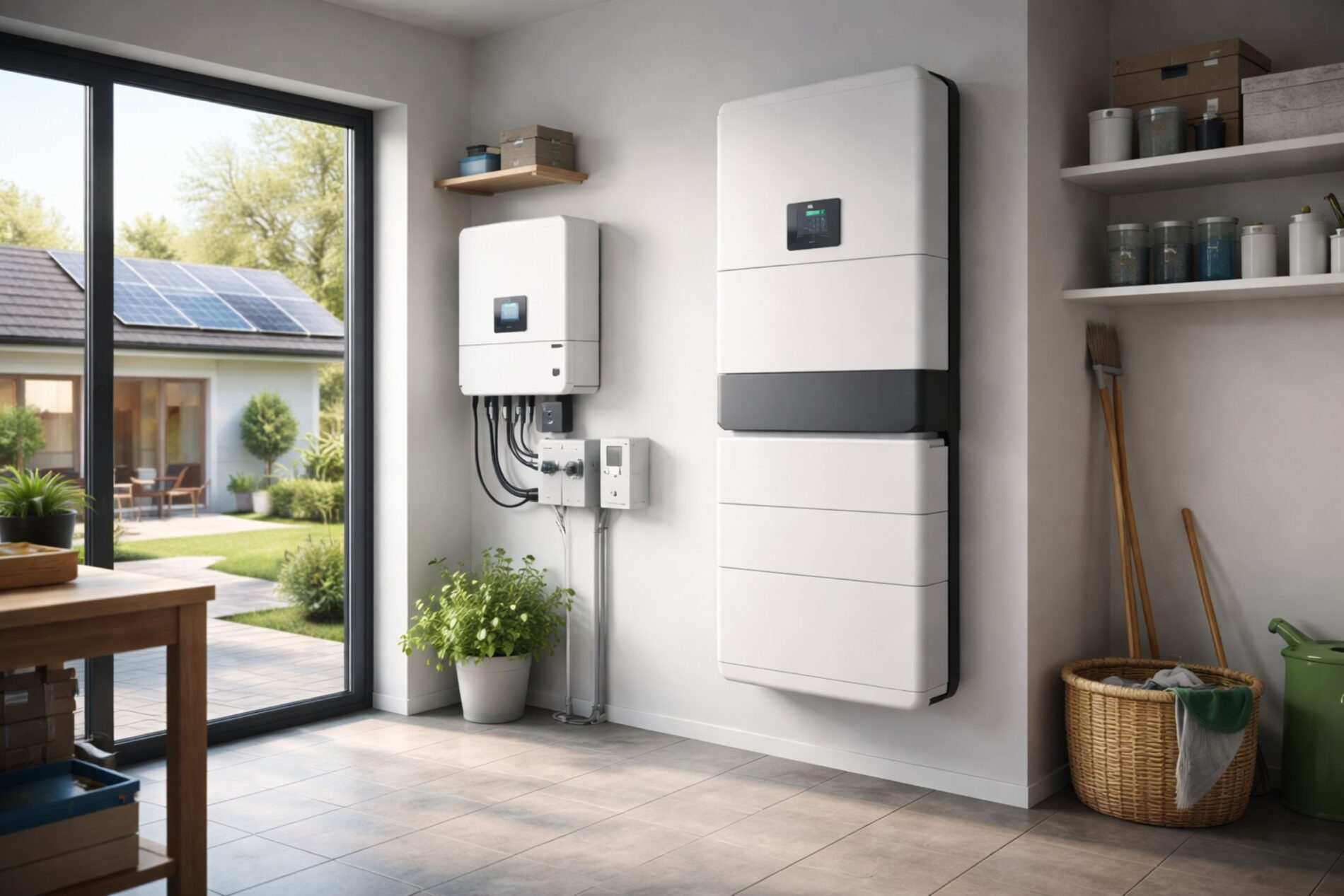
The Federal Network Agency categorizes energy storage systems into three groups and links them to different billing logics. Stand-alone storage systems are directly connected to the grid and operate solely on grid electricity, which is later fed back into the grid. Co-location storage systems are additionally connected to a generation facility, such as a photovoltaic system. Depending on the situation, the electricity generated on-site can be used directly at the location, charged into the storage system, or fed into the grid. Later, the storage system can release electricity again, either for use at the location or for grid feed-in.
Three Storage Types and Multi-Use Solutions Take Center Stage
Multi-use applications combine several functions, thus going beyond traditional home storage systems. They cover self-consumption, engage in electricity trading, and provide balancing power as a reserve for short-term fluctuations. This multiple use makes billing more complex because consumption and feed-in occur in different roles.
The planned fee structure continues to be capacity-based, but the Federal Network Agency is adding two energy-based charges. Electricity consumption within the booked capacity should be cheaper via energy price 1. Those exceeding the capacity limit should pay energy price 2, making such excesses measurably more expensive.
An open question regarding the billing of electricity fed back into the grid determines fairness
It remains unclear how electricity fed back into the grid from stand-alone storage systems should be priced, as this determines its effectiveness. If only energy price 1 applied to electricity fed back into the grid, the model would be unable to penalize capacity exceedances. If energy price 2 applied across the board, operators would be disadvantaged even if they remain within the limits.
In parallel, the Federal Network Agency is planning a dynamic grid fee, which will focus more strongly on actual grid utilization. Different price impulses will apply during periods of bottlenecks than during periods of surplus, allowing flexible consumers to adjust their behavior. This is intended to reward grid-friendly charging and storage, as it relieves pressure on the grid and can reduce costs.
Home storage systems contribute to grid financing, electric cars require metering concepts and smart meters
Despite their lower capacity, home storage systems are not considered a special case by the Federal Network Agency. Therefore, private households will automatically contribute to grid financing via the basic model. This could change the economic viability of new battery storage systems, as ongoing grid fees will play a more significant role in the calculation. At the same time, the issue remains politically sensitive, as home storage systems have previously been promoted as a key component of the energy transition.
For electric car batteries, the agency considers billing based on the actual amount of electricity consumed to be feasible, provided the amounts can be clearly defined. This requires a smart meter, as only with a smart meter can charging processes be accurately measured and attributed. However, these proposals are not final, as the Federal Network Agency explicitly intends them as a basis for discussion among experts.