
Since the beginning of 2026, owners of heat pumps have only been eligible for government subsidies if they comply with new noise limits. The federal government aims to reduce noise conflicts in residential areas, as many complaints originate from the outdoor unit. Anyone hoping to secure heat pump subsidies should therefore check how quiet the model is in real-world operation before purchasing it. Effective noise protection is also crucial, as authorities and neighbors ultimately assess the actual noise levels. The correct installation location often determines success or problems. (spiegel: 15.01.26)
Noise limits determine subsidies and neighborly peace
The new noise limits are approximately ten decibels lower than the requirements of the EU Ecodesign Regulation. Only air-to-water heat pumps with a maximum output of 60 decibels at six to twelve kilowatts are eligible for subsidies, while smaller units must not exceed 55 decibels. These regulations refer to the sound power directly at the unit, i.e., the emission. In practice, however, sound immissions also play a crucial role, as they determine what noise actually reaches the neighbors.
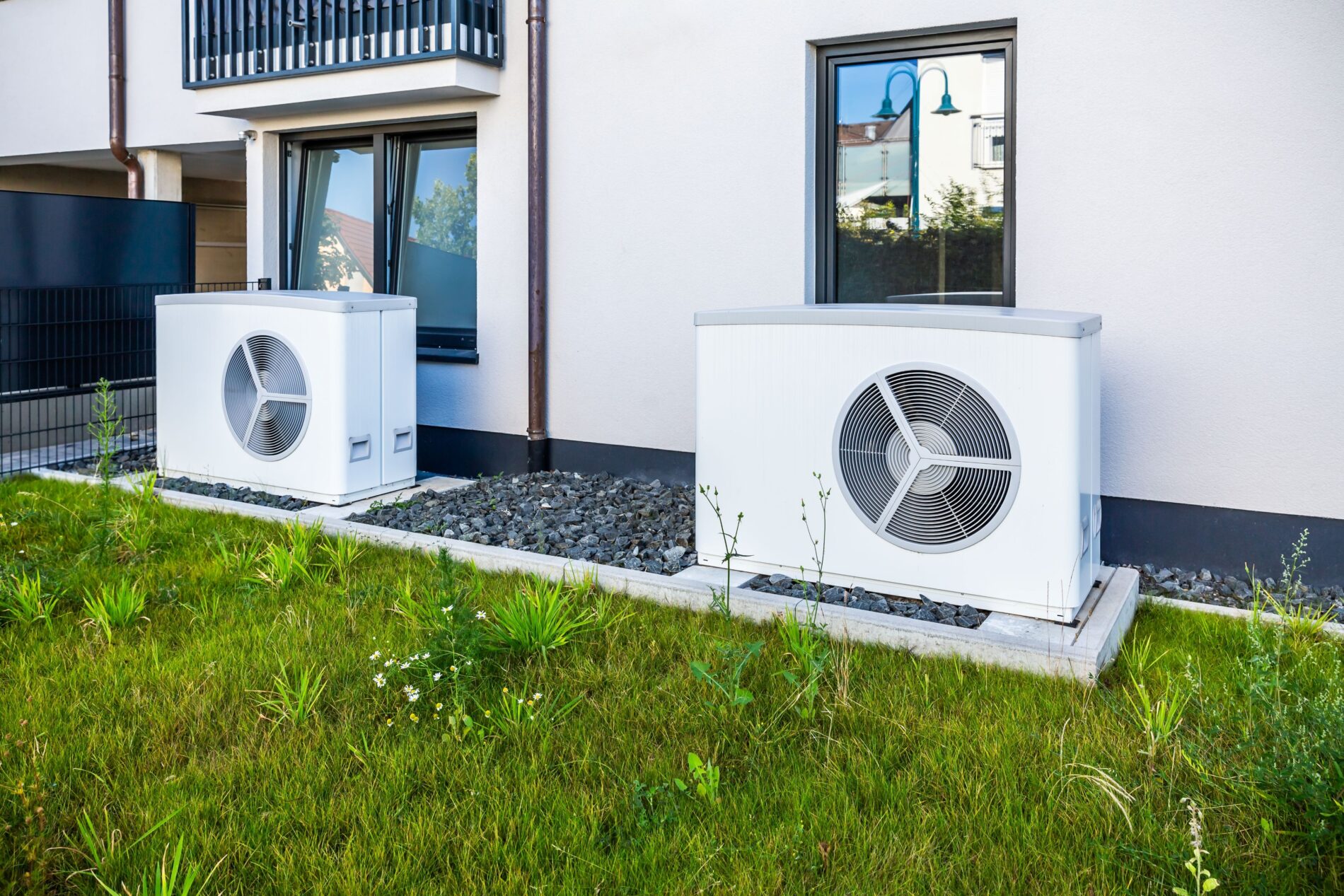
Many current models already meet the stricter requirements; nevertheless, buyers should carefully check the technical specifications. Manufacturers often provide values under ideal conditions, while real-world operation depends on installation, environment, and the surface beneath the unit. Therefore, for heat pump subsidies, it is not enough to rely solely on brochure information; a realistic assessment of the installation situation is also necessary.
Emissions, Immissions, and Effective Noise Protection
There is a significant difference between emission values and noise immissions, which is often underestimated. While emission describes the sound directly at the source, immission measures the level at the location where people are present. A common rule of thumb states: If a heat pump emits 50 to 60 decibels, the value drops to about 35 to 40 decibels at a distance of three meters. This is roughly equivalent to a quiet household appliance.
However, noise protection depends heavily on the installation location. Reflective surfaces such as house walls or masonry can increase the sound pressure. Therefore, experts recommend not placing the outdoor unit in corners or narrow passageways. The distance to neighboring properties also plays an important role, as the noise level decreases significantly with increasing distance.
Legal Requirements and Practical Planning
For residential areas, clear immission limits apply according to the Technical Guidelines for Noise Protection. In purely residential areas, 50 decibels are permitted during the day and 35 decibels at night, while higher levels are allowed in mixed-use areas. These regulations apply regardless of heat pump subsidies but determine potential complaints and official requirements.
To ensure that noise limits are not just met on paper, the “Future of Existing Buildings” program recommends a combination of technology and planning. “Future of Existing Buildings” is an information and consulting service for owners, builders, and renovators supported by the Baden-Württemberg Ministry of the Environment. It clarifies regulations and provides practical advice on selecting the right unit, installation, and suitable location. A quiet operating mode or night setback can improve the situation because the heat pump operates at reduced capacity during sensitive times. A buffer storage tank provides additional flexibility, as heat generation can be shifted more towards the daytime.
Location Selection as Key to Acceptance
The installation location significantly influences whether noise limits are met in everyday use. Many German states require a minimum distance of three meters, with the respective state building code being the determining factor. A greater distance not only improves noise levels but also increases acceptance among neighbors.
Additional shielding measures such as green roofs, soundproof enclosures, or lightweight housings can be beneficial, provided air circulation is not impaired. If implemented correctly, these measures can help meet even the stricter requirements and secure funding, even in densely populated areas. This makes it clear: the new heat pump subsidy program rewards not only modern technology but also thoughtful planning.