
For the first time since 2020, Hamburger Hochbahn is once again ordering diesel buses, with plans to acquire up to 150 new vehicles by 2029. This move in Hamburg comes against the backdrop of higher costs for electric buses, uncertain funding, and growing demands for a crisis-resilient public transport system. Security of supply is a decisive factor, as public transport is classified as critical infrastructure. Passengers, climate targets, and the continued electrification of the bus fleet are all affected; however, operational disruptions are to be avoided. (welt: 11.05.26)
Hochbahn Reverts to Internal Combustion Technology
The decision marks a significant departure from the previous procurement strategy. Since 2020, Hamburg has ceased purchasing new diesel buses for urban transport. Nevertheless, resilience in times of crisis is now taking center stage.
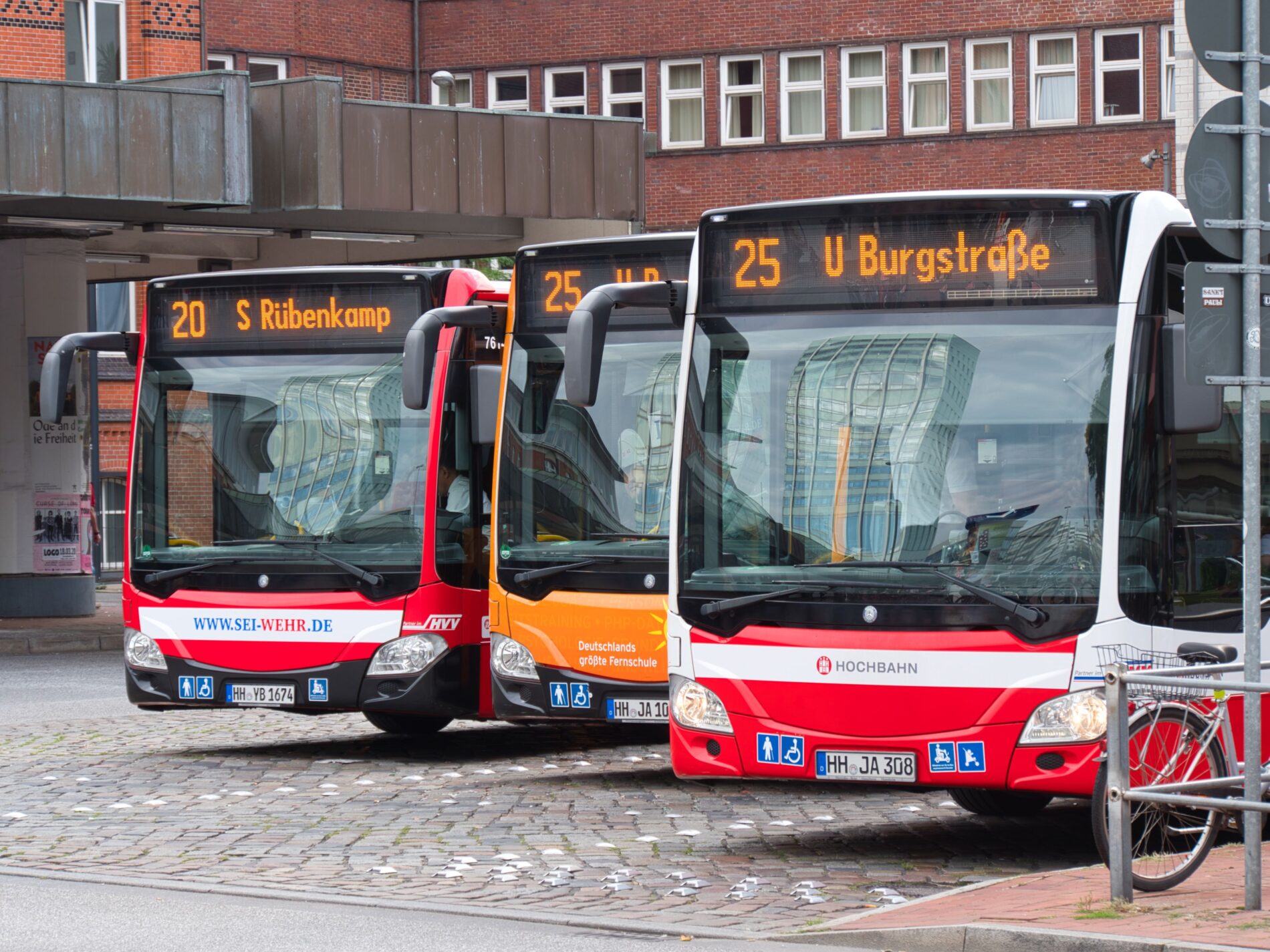
The new vehicles are designed to run on HVO100. This fuel is based, among other things, on treated vegetable oils and waste fats. As a result, the carbon footprint is reduced compared to conventional diesel; however, local emissions do not disappear completely.
High Costs Slow Down Electrification
Electric buses remain expensive for transport operators. According to the company, an electric bus costs approximately two and a half times as much as a diesel bus. Consequently, further expansion depends heavily on government subsidies.
Hochbahn currently operates around 432 electric buses. This accounts for approximately 39 percent of its fleet. At the same time, another 240 electric buses are scheduled to be added by 2031, provided that sufficient funding is available.
Hamburg Drifts Away from Original Climate Goal
In 2019, the City Parliament resolved to transition its bus fleets to emission-free propulsion systems by 2030. This target was subsequently pushed back to the early 2030s. Now, even this timeline appears increasingly difficult to achieve.
While Hochbahn remains fundamentally committed to electrification, the recent order for diesel buses demonstrates the significant extent to which costs, charging infrastructure, and crisis preparedness are influencing this transition. Nevertheless, operations are intended to remain reliable for passengers.