
The town of Groß-Gerau has rejected Vantage Data Centers’ €2.5 billion data center, primarily because it cites the threat of terrorism, cyberattacks, and hybrid threats as risks, while also fearing increased local heat stress from building blocks up to 30 meters high. Furthermore, the municipality questioned the reliability of the business tax revenue and criticized the low number of direct jobs. Nevertheless, the decision is a harsh one, as it halts a 174-megawatt project on a 14-hectare site, thus setting a strategic course against digital infrastructure.
The rejection doesn’t affect the Groß-Gerau location, but it doesn’t affect the company
The city council rejected the proposal by a vote of 18 to 14 after roughly 90 minutes of heated debate. The CDU and the combined Free Voters’ Association (FWG) voted in favor, while the SPD, Greens, FDP, Free Voters, and Left Party voted against it. The administration stated that there was a palpable sense of relief among the audience, but this relief could prove costly for the location. Vantage can move on, but Groß-Gerau is left with a site that will need to be remarketed.
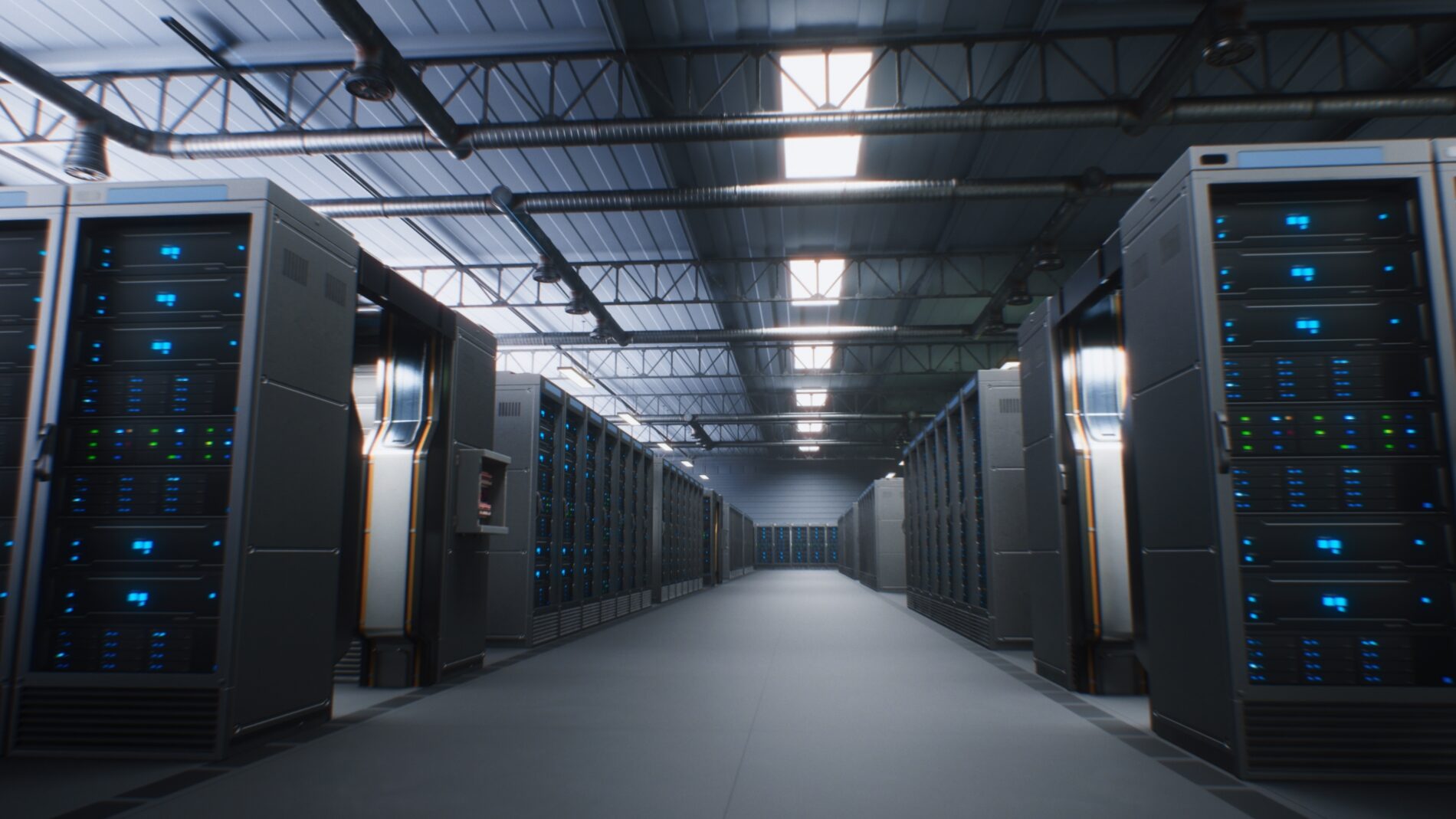
Vantage stated that it accepts the decision and is discussing the next steps. This sounds matter-of-fact, but it also means: The investor is proceeding without Groß-Gerau. This is a warning sign because future potential investors factor in political volatility. Anyone who halts a billion-euro project must therefore quickly demonstrate what alternative use will be made; otherwise, the rejection will become a standstill.
Terror threat as an argument: too general, too convenient
The city called the facility a potential target for terrorism as well as for cyber and hybrid attacks. The problem lies not in the warning itself, but in the consequences, because risks can be reduced through security concepts, not eliminated by simply voting against them. Furthermore, critical infrastructure is already being built in the region, and relocating it doesn’t automatically make it safer. Clear guidelines for perimeter protection, access, redundancies, crisis drills, and coordinated responsibilities would have been sensible, because that’s precisely where real resilience is built.
Moreover, cyber threats depend primarily on operations, architecture, and security levels, not on municipal boundaries. If Groß-Gerau is taking the risk seriously, the municipality should demand standards instead of using the issue as a deal-breaker. Otherwise, it remains just a buzzword, but no sound safety logic.
Heat and waste heat: real issues, but manageable
The feared heat stress from large buildings is not unfounded. Nevertheless, it is manageable if a city consistently utilizes planning, for example, through building layout, de-sealing, greening, water features, and cool air corridors. Many municipalities approve large commercial buildings even though these also have a microclimatic impact, and this is precisely why the justification here appears selective. If heat is truly the guiding principle, then the city should argue equally strongly for all major projects.
Waste heat utilization was also described as problematic because the city would have to invest. This statement is correct, but it distracts from the core issue: Without investment, there will be no energy transition and no robust infrastructure. Those who only accept waste heat if it is delivered without effort are blocking a model that has long been considered a building block for heating networks elsewhere.
Benefits Debate: Too Narrowly Focused
It’s true that hyperscale facilities often create fewer direct jobs than traditional industries. Nevertheless, indirect effects arise through construction, maintenance, security, network operation, and supply chains, while stable property tax revenues can ease the burden on municipal budgets. The criticism of uncertain business taxes is understandable, but it’s not a suitable sole obstacle, as business taxes fluctuate in many sectors. Those who focus solely on absolute certainty will ultimately receive hardly any approvals.
Furthermore, the operation generates comparatively little traffic, which is a significant locational advantage in the Rhine-Main region. Rejection doesn’t guarantee that a “better” project will follow, as logistics projects with constant traffic often take their place. This assessment is part of an honest evaluation.
AI Boom and Frankfurt Cluster: Groß-Gerau Stands Apart
The Frankfurt metropolitan region is Germany’s data center hotspot. According to Bitkom, more than a third of all data centers are located there, and the region produces more than 1,100 megawatts (as of 2025). Bitkom also emphasizes: “Analysts assume that the additional demand for AI capacity in Germany will increase more rapidly than the supply.” This is precisely why the rejection doesn’t seem like a precautionary measure, but rather like disconnecting from a growth driver that is moving on anyway.
Groß-Gerau could have made a significant contribution with 174 megawatts, albeit under strict conditions. Instead, the impression remains that the municipality is maximizing risks by rejecting opportunities and shifting the problem. The demand doesn’t disappear; it simply ends up elsewhere.
A “no” without a plan is a weakening move
The decision may have political majority support, but it needs a convincing follow-up strategy. So far, concepts of threat and climate risks dominate, while concrete alternatives for land, revenue, and infrastructure are lacking. This makes the vote a signal of uncertainty, and that signal is detrimental to the location. Groß-Gerau has not solved risks, but has merely given up the possibility of actively managing them.