
In Berlin, the CDU/CSU and SPD are seizing control of the Federal Court of Auditors, thereby damaging the very agency tasked with independently auditing the government’s handling of taxpayers’ money. Following the departure of its current president, Kay Scheller, after twelve years, CDU Member of Parliament Ansgar Heveling is slated to become the new president, while the SPD has already appointed former Construction Minister Klara Geywitz as vice president. This move strikes at the heart of state financial oversight, as both top positions are now held by politicians from the governing parties. Heveling’s appointment is particularly sensitive, given his close ties to Chancellor Friedrich Merz and his recent parliamentary experience. The consequences are serious: one of the last effective federal oversight bodies is visibly losing its distance from the very power it is meant to monitor. (welt: 24.03.26)
Control over billions in the hands of political parties
The Federal Court of Auditors is not a subsidiary agency. It examines whether ministries waste money, projects fail, or risks are concealed. This is precisely why this institution needs political distance. If the government fills the top positions with its own people, it damages the independence of the audit.
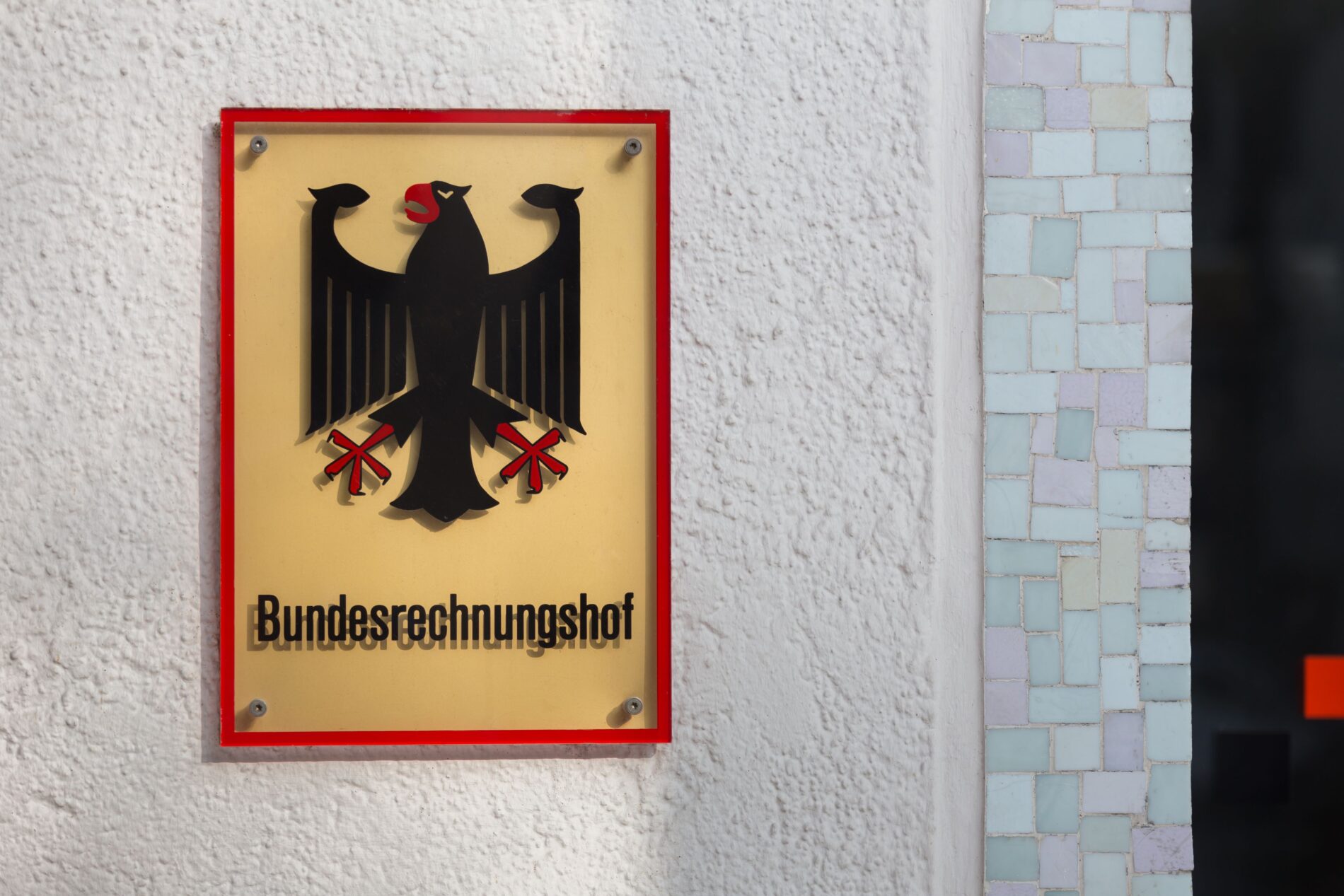
With Heveling’s appointment, a sitting member of the Bundestag is set to take on the most important federal oversight position for the first time. This is more than just a typical personnel change. It represents open access to an agency that could prove problematic for the state. Whoever audits the budget often determines the political assessment of any negative developments. Therefore, the planned appointment is not a fringe issue, but a warning signal for every taxpayer.
Heveling and Geywitz represent direct lines to the government
Heveling has been a member of the Bundestag since 2009 and has been part of the CDU/CSU’s inner circle for years. Eight years ago, he became legal counsel for the CDU/CSU parliamentary group. During this period, Friedrich Merz led the group. Heveling was considered loyal to Merz, and it is precisely this close relationship that makes his appointment so sensitive. The President of the Federal Court of Auditors must not be politically close to the government. He must be able to hold it accountable if figures, projects, or expenditures are not correct.
The SPD has also long since secured its share of this oversight. Klara Geywitz was Federal Minister for Construction until just a few months ago. Now she is to become Vice President of the Federal Court of Auditors. This secures joint control of the very agency that is supposed to scrutinize their decisions. Independent oversight is thus transformed into a construct with direct party and government ties. Trust in rigorous audits is therefore already undermined before the first report is even published.
The oversight body risks becoming a toothless tiger
While Kay Scheller also worked within the CDU/CSU alliance before taking office, this move goes significantly further. Until now, the parties have shied away from appointing a still-active member of parliament directly to the highest federal oversight position. This barrier has now been broken, and therein lies the real taboo. Those deeply entrenched in the daily grind of politics bring with them dependencies, loyalties, and networks.
A comparison with previous personnel decisions is therefore apt. Under Angela Merkel, Stephan Harbarth, a leading CDU/CSU politician, was appointed to head the Federal Constitutional Court. The damage is even more immediately felt at the Federal Court of Auditors, because it is constantly tasked with judging flawed planning, cost overruns, and mismanagement within the government apparatus. If the CDU/CSU and SPD themselves decide who heads this work, the oversight of public finances also falls under political influence. The government is thus no longer building a neutral supervisory body, but rather a protective shield within its own ranks.
This move undermines trust in the state
Ultimately, it’s not just about Heveling and Geywitz. It’s about whether the government still tolerates independent auditing or prefers to politically control it. This is precisely the impression given by the new appointments. The CDU/CSU and SPD are reaching for an institution that will contradict them, document failures, and expose billions in risks. Anyone who installs party representatives there deliberately weakens the institution’s credibility and trust in a functioning democracy.
This sends a disastrous signal to citizens. They finance the state and therefore have a right to an audit without regard for the Chancellor’s Office, parliamentary group leaders, or coalition harmony. The Federal Court of Auditors is meant to uncover waste and identify flawed decisions. It should not be bound by political ties. That’s precisely why this personnel decision appears to be an attack on the last vestige of separation between government and oversight. What is being sold as a routine appointment is, in reality, a power grab at a key institution of the state.