
Germany continues to make grand promises regarding hydrogen, with the federal government planning to secure €1.3 billion in funding for green hydrogen from Denmark. This funding is aimed at a pipeline scheduled to begin deliveries in 2030. At the same time, one domestic project after another is collapsing, making these further subsidies appear to pose a risk to taxpayers and industry alike. (ndr: 27.01.26)
Imports from Denmark as a savior – even though the market isn’t viable
The debate begins with a simple question, but politicians aren’t answering it: Who will buy hydrogen at profitable prices? A 400-kilometer hydrogen pipeline is considered operational, but so far no customer has booked capacity. Thus, the infrastructure exists without its use. Ultimately, the costs are passed on to customers through fees and levies.
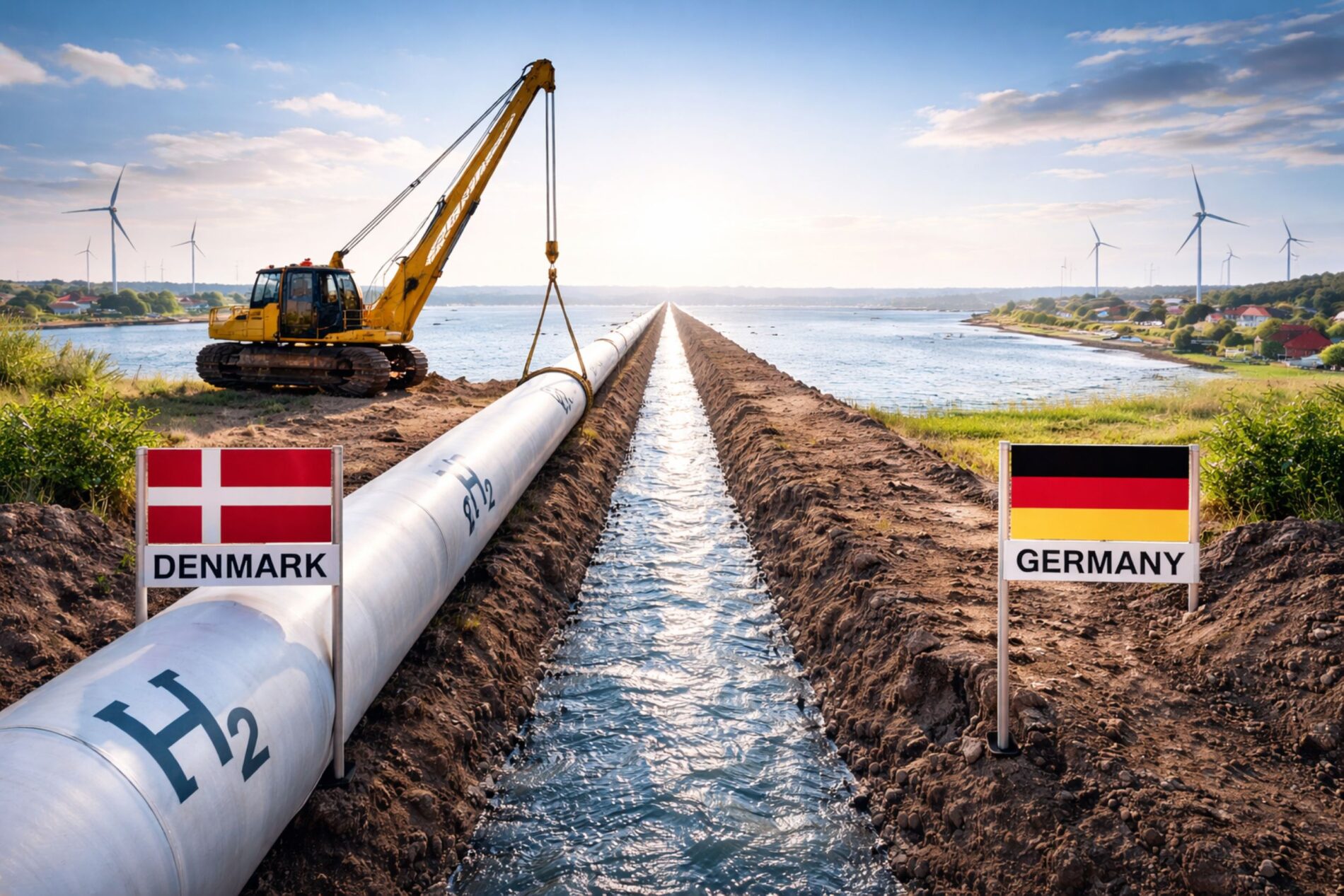
This very pattern makes the new import subsidies so controversial, because Germany is pre-financing the expansion without securing demand. The Federal Network Agency therefore discussed a fixed fee to even get the planned core network started. Such arrangements put pressure on companies’ calculations, as every new levy ends up in product prices. Confidence in the ramp-up diminishes when lines remain empty.
Saarland halts major plans despite subsidies – the signals are turning negative
The setback is particularly evident in Saarland, where several large projects have been frozen due to a lack of economic viability, despite subsidies. One key project was to build an electrolyzer with a capacity of 200 to 400 MW in Saarlouis. The Dillinger Hütte steelworks was slated to be the customer. Now this foundation has been scrapped, forcing a fresh start for supply chains and investment calculations. The effect extends beyond the state, as other locations are closely monitoring the risks.
Such cancellations have a greater impact than any page of a strategy paper because they reflect real-world decisions. Without stable electricity prices, clear grid costs, and reliable power purchase agreements, companies are pulling the plug. This is causing Germany to lose time, even though time is the scarce resource. At the same time, a gap is emerging between political ambitions and economic reality.
Schleswig-Holstein warns of displacement – but the federal government downplays concerns
Despite this situation, billions are flowing into a new import pipeline from Esbjerg to the border at Ellund. Denmark is initially slated to provide 0.5 gigawatts of electrolysis capacity, with more to follow later. The Federal Ministry for Economic Affairs and Energy justifies this with EU regulations for cross-border infrastructure, allowing customers to plan ahead. The Danish government even calls it a “milestone.”
Nevertheless, resistance is growing in the north because regional projects are facing significantly smaller funding opportunities. The Schleswig-Holstein Renewable Energy Association fears that investors will postpone domestic electrolysis projects, even though locations like Brunsbüttel and Neumünster have been under discussion for years. State Secretary Joschka Knuth clearly articulates the core of the criticism: The federal government “would be well advised to incentivize domestic production of green hydrogen to at least the same extent and with significantly more ambition.” The federal government counters, stating: “We do not see any market distortion.”
The crucial gap remains: customers, price, and risk
Ultimately, it’s not the pipeline that decides, but the contract, because hydrogen needs customers with robust budgets. If Germany builds pipelines but no one signs up, a baseline cost is created without any benefit. If Germany announces electrolysis projects but projects like the one in Saarland collapse, the production base is lacking. And if Denmark can supply hydrogen more cheaply, German manufacturers will come under even more pressure.
This raises suspicions that the subsidies will become another example of mismanagement. The government is creating incentives, but it isn’t creating a market. As long as demand, grid costs, and electricity prices don’t align, hydrogen will remain an expensive interim solution. This is precisely why the billions in subsidies appear politically significant but economically shaky.