
The decline of the German automotive industry isn’t coming with sirens, but with briefcases. The diagnosis is brutal: The auto industry is losing its core business – and much faster than many believe. This is evident in factory closures, bankruptcies, and slashed development budgets. There’s a point where all sugarcoating ends: Once production has moved abroad, it generally doesn’t return. With production, tools, supply chains, and established routines disappear, while new locations simultaneously build up expertise. Furthermore, suppliers are following the manufacturers to these locations abroad.
When Location Pays the Price
For the automotive industry, energy costs, taxes, and approval times are crucial. These factors shape the cost structures at each location. Germany combines high energy prices with a heavy tax burden, while approvals are time-consuming. At the same time, infrastructure is crumbling in many places, driving up additional costs in every calculation. As a result, even strong brands are losing momentum, despite continued global demand.
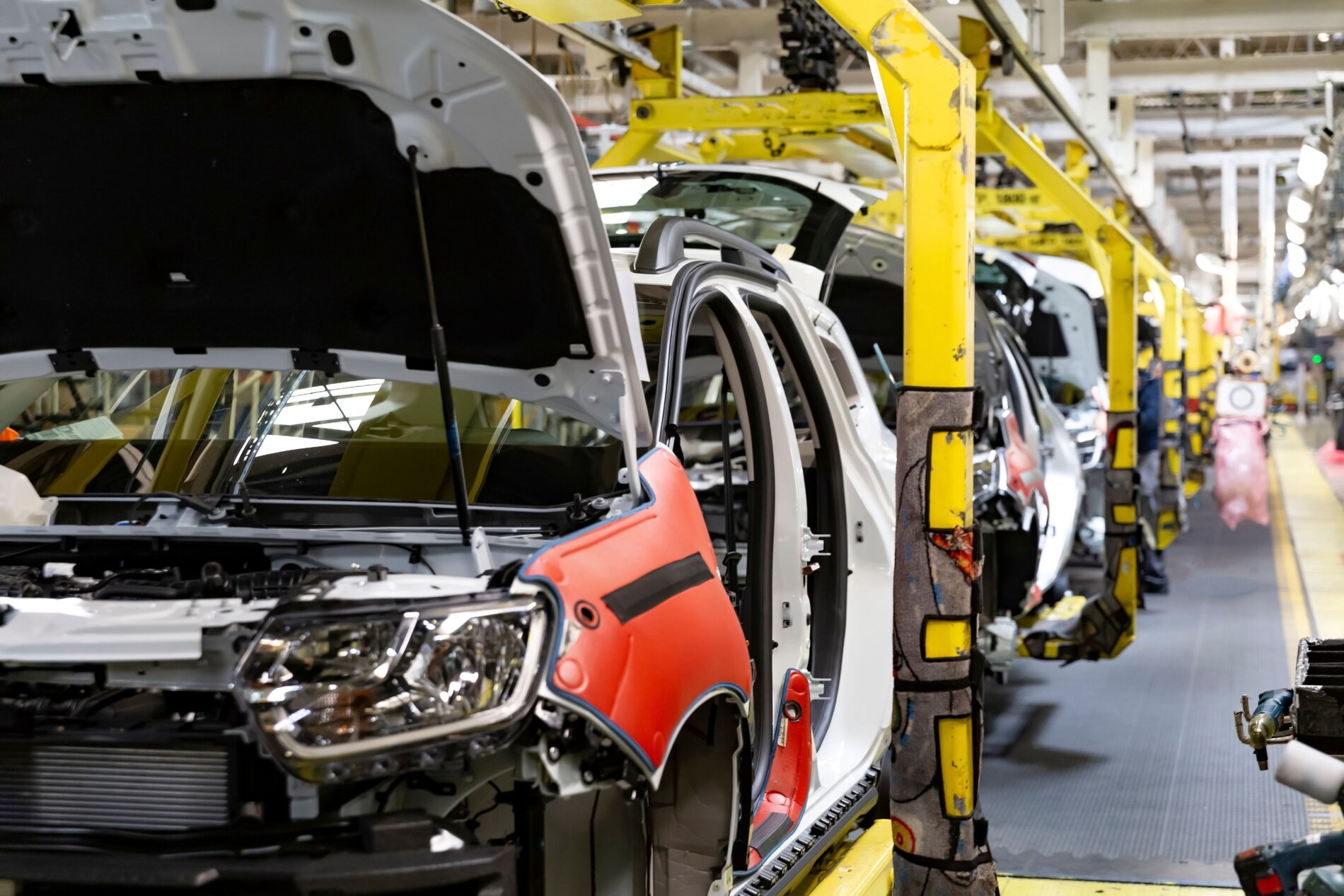
The problem isn’t limited to just one corporation. Besides Volkswagen, companies like BMW, Mercedes, and Ford have also relocated parts of their production abroad. This often happens gradually, but the effects are lasting. And as soon as supply chains, quality processes, and cycle times are running smoothly elsewhere, returning becomes economically unattractive.
From Product Promise to Management Doctrine
The foundation of the German automotive industry was trust, and that’s precisely what began to crack. Customers bought engineering expertise, not empty marketing rhetoric. Nevertheless, many companies increasingly subordinated technology to business objectives. Moreover, attention was diverted to certifications and programs, while core competencies diminished.
The political handling of the “diesel scandal” provided a perfect backdrop, but the market often reacted more pragmatically. Many decision-makers seized the opportunity for a proactive approach. They focused on electromobility, even though networks, prices, and infrastructure didn’t seem ready. This created a “perfect storm” of rising costs and declining competitiveness, making relocation the logical consequence.
Suppliers as an Early Warning System for Collapse
The real alarm comes from below, because the suppliers are the backbone of the system. If their network collapses, the industrial logic falls apart. That’s precisely why every bankruptcy counts more than every new model. And because foundries, tooling, and specialized offices are disappearing, the country is not only shrinking, it’s also losing its skills.
The consequences are dire because lost manufacturing triggers a chain reaction. With every lost order, process knowledge also disappears, and later, partners for new platforms are lacking. Even if policymakers and manufacturers later change course, the reality of production will have long since shifted elsewhere. And then, expertise cannot be brought back by decree.
The Job Cuts of 2025/26 Sound Like a Death knell
In the last 12 months, the news has intensified. The industry seems numb. ZF Friedrichshafen is planning to cut up to 14,000 jobs in Germany, while locations like Gelsenkirchen and Eitorf are teetering on the brink. Bosch is reducing its Mobility division by around 13,000 jobs by 2030, and the pressure is noticeably mounting for 2025/26. Continental is cutting over 10,000 jobs worldwide, while parts of its Automotive division are being “prepared” for an IPO to limit losses.
These figures represent more than just personnel policy. Fewer employees often mean less development, less vertical integration, and less investment capacity. At the same time, fixed costs per unit increase due to lower volume. This, in turn, increases the incentive to build the next production line wherever energy, space, and specifications are more suitable.
Bankruptcies Hit Regions Before Berlin Reacts
Some cases illustrate the severity particularly clearly, yet without much fanfare. Kiekert had to file for insolvency, and this hit the Wuppertal/Heiligenhaus region hard. The AE Group finally closed its German plants at the end of 2025 after the search for investors failed. This resulted in over 600 people in Thuringia losing their jobs and disrupting value chains.
Even established brands continue to cut costs, while the shift to new drive systems dismantles old revenue models. Schaeffler is eliminating another 1,300 jobs, and Mahle is following suit with around 1,000 more. Companies are reducing costs, but in doing so, they often lose expertise. Consequently, the transition is eroding many companies’ own industrial base, while new locations take over the learning curve.
When Know-how Disappears, There Is No Restart
A modern plant cannot simply be “restarted” just because the surrounding environment allows it to operate. Supplier networks grow over decades and can collapse in just a few quarters. When experts, mechanical engineers, and toolmakers leave, the country loses its know-how, because when manufacturing capacities are built up in Eastern Europe or China, the next round of investment also flows there.
Added to this is the pressure on skilled workers, as many engineers make ruthless comparisons between countries. When taxes stifle career plans, loyalty to a specific location becomes a luxury. At the same time, the chances of young teams building new production lines here decrease because of a lack of prospects. And thus, deindustrialization becomes a permanent state, not just a temporary blip.
Industry isn’t shrinking to a healthy state; it’s being replaced
Many manufacturers are trying to shrink themselves to a healthy state while the ground beneath them dries up. Narratives don’t replace physics, because production needs affordable energy and planning certainty. While other regions scale up faster, German products often appear more expensive and less dynamic. And once development, purchasing, and manufacturing have settled into new locations, the chance of returning decreases even further. (KOB)