
The German Navy currently lacks ships designed for Arctic waters, and this severely limits its operational capabilities around Greenland. Neither frigates nor other vessels possess an ice class that permits operations in pack and fast ice. Consequently, Germany lacks a crucial capability in the Arctic, even as security concerns there grow. Greenland is increasingly becoming a focus of international interest, placing the German Armed Forces under political and military pressure. (bild: 19.01.26)
Navy and the Arctic – A Strategic Gap in the High North
The Arctic’s importance for security policy is growing, yet the German Navy can barely respond. While Germany maintains several modern frigates, these are not designed for icy conditions. Especially during winter, access to the sea lanes around Greenland is virtually blocked. This weakens the role of naval forces in a region that is increasingly perceived as a geopolitical space.
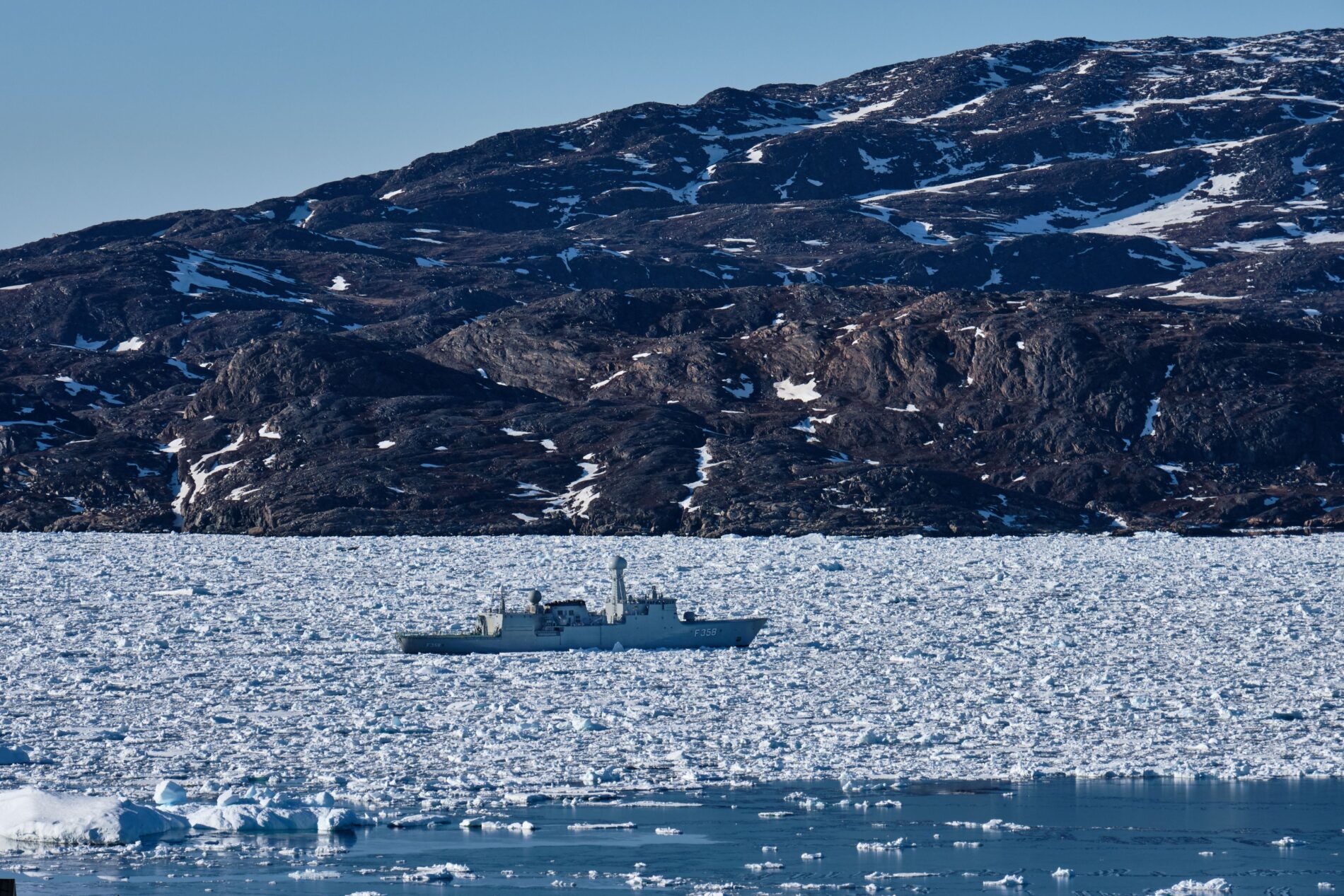
Furthermore, the security situation in the far north requires long-term planning. Other Arctic nations have been investing in ice-capable fleets for years. Germany, however, abandoned this capability when its last military icebreaker was decommissioned in 2006. Since then, the navy has lacked a key tool for demonstrating a presence in the Arctic.
German Armed Forces Focus on Reconnaissance Instead of Deployment
Against this backdrop, Defense Minister Boris Pistorius dispatched a small team of German Armed Forces to Greenland. The soldiers were tasked with quickly determining what military contributions were realistically possible. This focused primarily on fundamental principles, infrastructure, and opportunities for cooperation with Denmark. A maritime task force was never under consideration.
This decision underscores the operational reality. Without ice-capable vessels, the navy remains limited to peripheral tasks. The German Armed Forces can plan, analyze, and advise, but they cannot establish a permanent maritime presence. This also impacts Germany’s credibility in the Arctic security policy.
Airborne Capabilities as a Substitute
Instead, the focus is shifting to airborne capabilities. The German Navy operates high-performance maritime patrol aircraft, the P-3C Orion and the new P-8A Poseidon. These aircraft can monitor large areas and provide valuable data on the security situation. Such situational awareness is of strategic importance, especially around Greenland.
However, these systems do not replace ships. Aircraft cannot establish a permanent presence and cannot physically control sea lanes. Nevertheless, they currently form the core of Germany’s contribution. The German Armed Forces thus utilize capabilities that are deployable regardless of ice conditions.
New Frigates, Old Problems
The situation is not expected to change significantly until 2031. Germany plans to commission new F126 and F127 class frigates at that time. These ships will have an ice class of 1C and be able to maneuver in light ice. This would be an improvement for operations in the Arctic, but not a complete replacement for dedicated icebreakers.
Until then, the navy will remain limited. The security situation around Greenland is developing faster than German fleet planning. This leads to a discrepancy between political ambition and military reality. The Arctic, in particular, demonstrates how much a lack of capabilities limits strategic options.
Ministry Rejects Criticism
The Ministry of Defense has responded to criticism with marked restraint. A spokesperson stated that the navy can fulfill all its assigned tasks. Furthermore, navigating Arctic waters is fundamentally possible. The ministry declined to provide details regarding ice classes or operational limits.
However, this stance does not change the technical situation. Without suitable ships, Germany remains dependent on air support and partner nations. For Greenland, this means: The German Armed Forces can help, but not where ice dictates the deployment.