
In Leipzig, the gas trader VNG warned of a growing risk to Germany’s gas supply this coming winter, even though the war in Iran, according to the company, will not trigger an acute supply crisis in the short term. At the beginning of April, German gas storage facilities were at a historic low of only 22.18 percent, while the federal government requires a fill level of 80 percent by November 1st. According to VNG, the cause of this new uncertainty is the impact of the war on a key LNG tanker route, as this keeps purchase prices high and makes storage hardly profitable for many companies. At the same time, a previously visible upward trend reversed, even though the government and suppliers had recently sent more positive signals. The greatest risk, therefore, lies not in an immediate supply stoppage, but in the question of who will fill the nearly empty storage facilities in time and who will bear the costs. (welt: 01.04.26)
Gas trader sees brief easing of pressure as a false signal
As recently as the first week of April, spokespeople for the German government and several energy suppliers had indicated a cautious easing of the situation. On European overview websites, German storage facilities showed positive readings for the first time in a while, even though heating continued in many places. This seemed reassuring, but proved to be only a short-lived upturn.
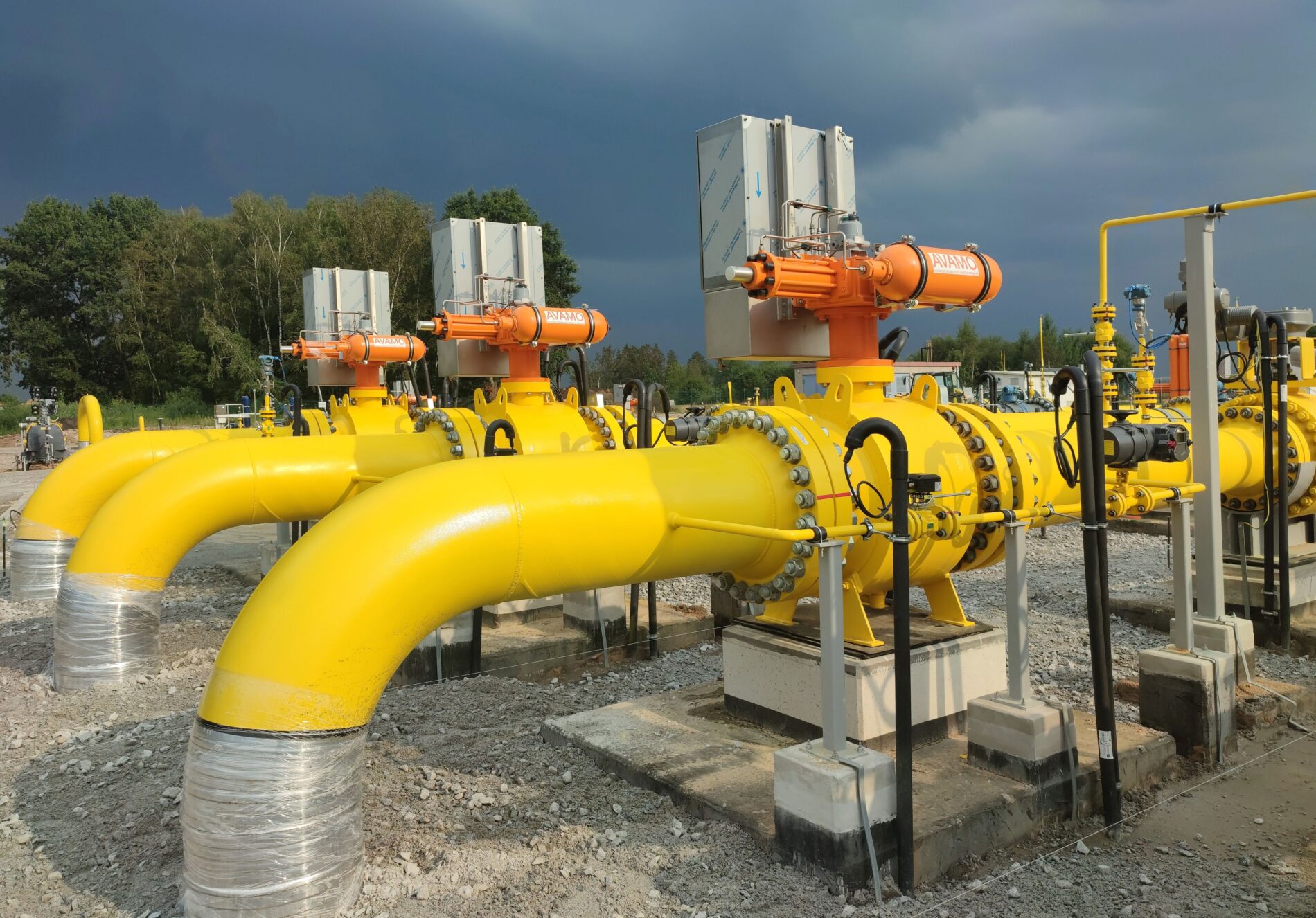
Then the picture changed again. Instead of further storage, the data once again showed negative figures, so gas continued to flow out of cavern and porous rock storage facilities despite record lows. This intensifies the pressure because, starting in mid-April, the utilities have only about six and a half months to massively increase their reserves by the beginning of November.
Market logic breaks down under price pressure
Normally, the storage business follows a simple logic. In the summer, traders buy natural gas more cheaply and store it, while in the winter they sell it at a higher price. However, this model is currently not working because the spread between summer and winter prices on the futures market is too small.
This is precisely what VNG CEO Ulf Heitmüller emphasizes. According to him, the so-called summer-winter spread was recently so weak that storage was no longer economically viable. In some cases, it was even below zero, and therefore companies lacked any incentive to buy larger quantities for the winter.
Gas trader VNG calls for early contingency planning from the government
Heitmüller is therefore urging early political preparation. He said: “Politicians should start thinking now about how they can fill the storage facilities if the companies are unable to do so.” He emphasized the importance of swift action, as intervention later could cost the government significantly more.
Heitmüller underscored the seriousness of the situation with a stark figure. “At times, we had a negative spread of six euros per megawatt-hour – it would have been suicidal to buy at that price.” This comparison recalls 2022, when the German government had to purchase gas on the global market itself through Trading Hub Europe, spending more than 13 billion euros.
Supply is considered stable, but new EU regulations are increasing the pressure
Despite the warning, VNG currently describes its own situation as stable. The Leipzig-based company supplies around 400 municipal utilities, regional suppliers, and industrial customers in Germany, Poland, and the Czech Republic. Furthermore, the company operates an approximately 8,000-kilometer-long pipeline network in eastern Germany, as well as four large underground storage facilities.
The company is also in a solid financial position. With revenues of around €18 billion, VNG achieved an adjusted EBITDA of €422 million. Heitmüller stated, “We don’t sell bad checks,” and added, “Our distribution partners are stable.”
New supply risks are further impacting the market
The gas comes from several sources, which provides short-term relief. The largest share flows via pipeline from Norway, with additional volumes coming from Azerbaijan and as LNG via North German ports. Furthermore, in 2024, VNG became the first company to order pipeline gas from Algeria and is negotiating larger volumes there.
However, new pressure is mounting, particularly in Algeria. The EU methane regulation requires suppliers outside the Union to provide detailed documentation of emissions during extraction and production, while high penalties are threatened for violations. Heitmüller stated, “As things stand today, we are unable to conclude new contracts with Algeria.”
Berlin relies on reserves and a new pragmatism
Federal Minister for Economic Affairs Katherina Reiche intends to implement the methane regulation in Germany pragmatically and cautiously. She also announced the establishment of a strategic gas reserve, which could be modeled on the national oil reserve. Berlin is responding to growing concerns that climate regulations and market conditions are simultaneously weakening security of supply.
VNG intends to leverage this approach for new projects as well. The company is exploring ammonia imports via Rostock, as well as hydrogen solutions and the development of a CO₂ infrastructure. However, one point remains crucial for the coming winter: storage facilities must be filled quickly starting in mid-April, even though the market currently offers little economic incentive to do so.