
On February 12, 2026, the fill level of Germany’s gas storage facilities was only 25.60 percent. This brings into focus a threshold that is often misunderstood: 20 percent is not a political figure, but a hard physical limit. Many debates revolve around “how much” gas is still available, but in an emergency, what matters is “how quickly” it is released from storage. It is precisely at this point that low fill levels become a risk, because porous rock storage facilities lose significant capacity as pressure drops and can feed less gas into the grid.
The Misconception About 20 Percent
Many might think, “20% is still a fifth,” but a porous rock reservoir doesn’t work like a car’s fuel tank that you can almost completely empty. The gas is trapped in porous rock, often sandstone, and distributed throughout tiny, interconnected pores. The emptier the reservoir becomes, the harder it is to extract the remaining gas, because the pressure drops with each withdrawal.
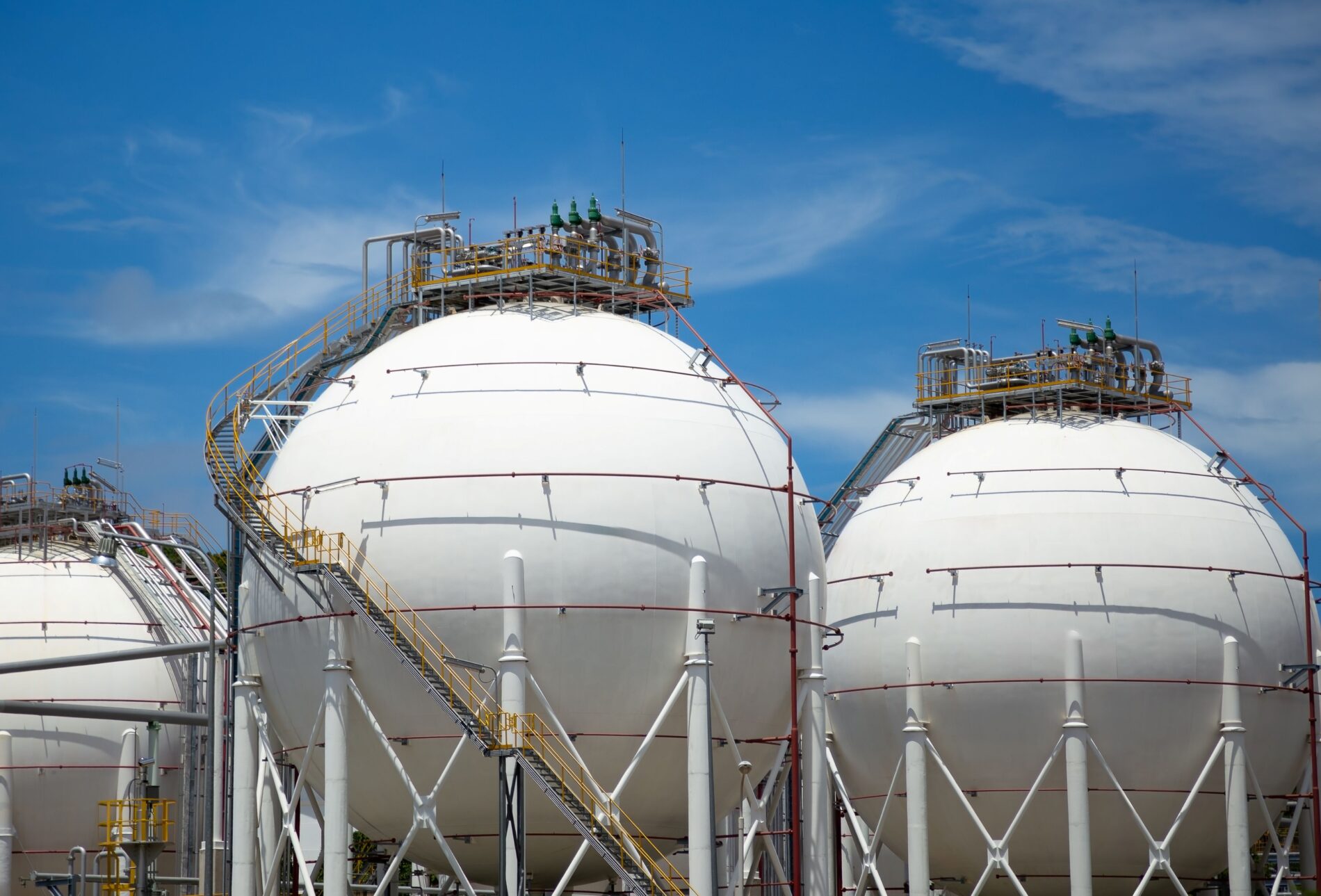
Operators and industry representatives have been pointing this out for years, and the German Association of Energy and Water Industries (BDEW) and the International Energy Storage Initiative (INES) also highlight the inertia of this type of storage. Porous storage tanks don’t simply deliver “less” gas; they deliver it more “slowly.” This may seem harmless on mild days, but during a cold snap, the hourly output, or more precisely, the mass flow rate, becomes crucial.
The reason lies in fluid dynamics, because gas must flow through porous material. If the pressure gradient decreases, the flow rate also decreases. As a result, a low fill level quickly becomes a performance problem. Then, what matters is not how much gas is left in the storage tank, but how quickly it can be extracted when many consumers suddenly need gas simultaneously.
Darcy’s Law: Physics as a Performance Limiter
In 1856, Henry Darcy described how fluids flow through porous media, and this physical relationship is decisive. Higher pressure means more gas flow. Lower pressure means less gas flow; therefore, the extraction rate decreases as the storage level drops.
Analyses by energy expert Markus Schall from February 2026 show a stable pattern. Up to about 50 percent capacity, withdrawals remain relatively stable. At 35 percent, output is already around 22 percent below the value of a full storage facility, but below 20 percent, it drops so sharply that peak demand can hardly be met.
This creates a dangerous impression of a reserve, because “gas present” does not mean “gas available.” In practice, what matters is whether the storage facility can deliver enough gas quickly. This very capability diminishes as soon as the pressure drops too low.
Porous storage vs. caverns – two systems, two roles
Germany relies on cavern storage and porous storage, but both fulfill different roles. Caverns in salt domes can be loaded and unloaded quickly. They act like a “turbocharger” for the gas network because they can absorb peak loads more quickly.
Porous storage, on the other hand, is large, but it reacts sluggishly and is pressure-dependent. A large portion of the capacity is located in such formations.
The imbalance was clearly evident at the end of January 2026, as Bavarian porous reservoirs were operating at approximately 25 percent capacity instead of the target of 40 percent. The largest reservoir, Rehden, was operating at around 11 percent. Such figures are not merely quantitative data, but also indicate a declining extraction capacity.
Why Multiple Effects Simultaneously Work Below 20 Percent
Below 20 percent, three mechanisms come into play, causing the situation to become abruptly more critical. First, the reservoir pressure at great depths decreases with each withdrawal. Second, the drop in performance is not linear, but rather disproportionate as the reservoir becomes significantly depleted.
Third, cushion gas plays a crucial role, as some of the gas must remain underground to maintain minimum pressure. Published fill levels usually refer to the working gas, but they don’t reflect the full pressure reality. This makes a “residual” amount appear larger at 20 percent, while the usable delivery rate simultaneously shrinks.
Ultimately, there’s a stark finding that is often overlooked: A porous rock reservoir can still contain gas at 20 percent. It simply can’t deliver it as slowly as cold temperatures drive up consumption.
Winter Demand: The Gap Arose from the Output
In winter, demand averages around 4 TWh per day. On very cold days, it rises to approximately 5 TWh. Pipeline and LNG imports currently deliver approximately 3.1 to 3.3 TWh daily. This means that 0.7 to 1.9 TWh per day must come from storage facilities; otherwise, a supply gap will emerge.
If porous reservoirs reduce their output due to pressure loss, the problem worsens because the shortfall is difficult to compensate for in the short term. At the same time, exports to neighboring countries can further exacerbate the situation, while domestic peak demand increases. This is precisely why the 20 percent threshold is so critical, as it marks the transition from a quantity bottleneck to a capacity bottleneck.
The core issue remains simple, yet inconvenient: Physics sets a limit. Policymakers can set targets, but physics dictates the flow rate. Those who want security of supply must manage storage facilities in such a way that the withdrawal rate remains stable even in winter. (KOB)