
The energy situation in Germany is worsening, and the risk of a gas shortage is increasing noticeably. On January 30, 2026, German gas storage facilities were at approximately 32.75% capacity, corresponding to about 82.3 TWh of stored energy. This level is close to the legally mandated minimum of 30% by February 1. This is critical because storage facilities must provide short-term flexibility during the winter. Pipeline flows cannot be increased indefinitely; therefore, peak demand is primarily met by withdrawing from storage. With typical winter consumption levels remaining constant, the remaining gas reserves will only last for a maximum of about six weeks in a tight scenario. The colder the weather, the faster the reserves will deplete, as daily withdrawals increase significantly on days with frost. (risknet: 01.02.26)
Gas Shortage – Norway, Largest Supplier, Cannot Compensate Short-Term
Norway remains Germany’s most important pipeline supplier. This often leads to the assumption that one can “simply order more” in the event of shortages. Technically, this is hardly possible.
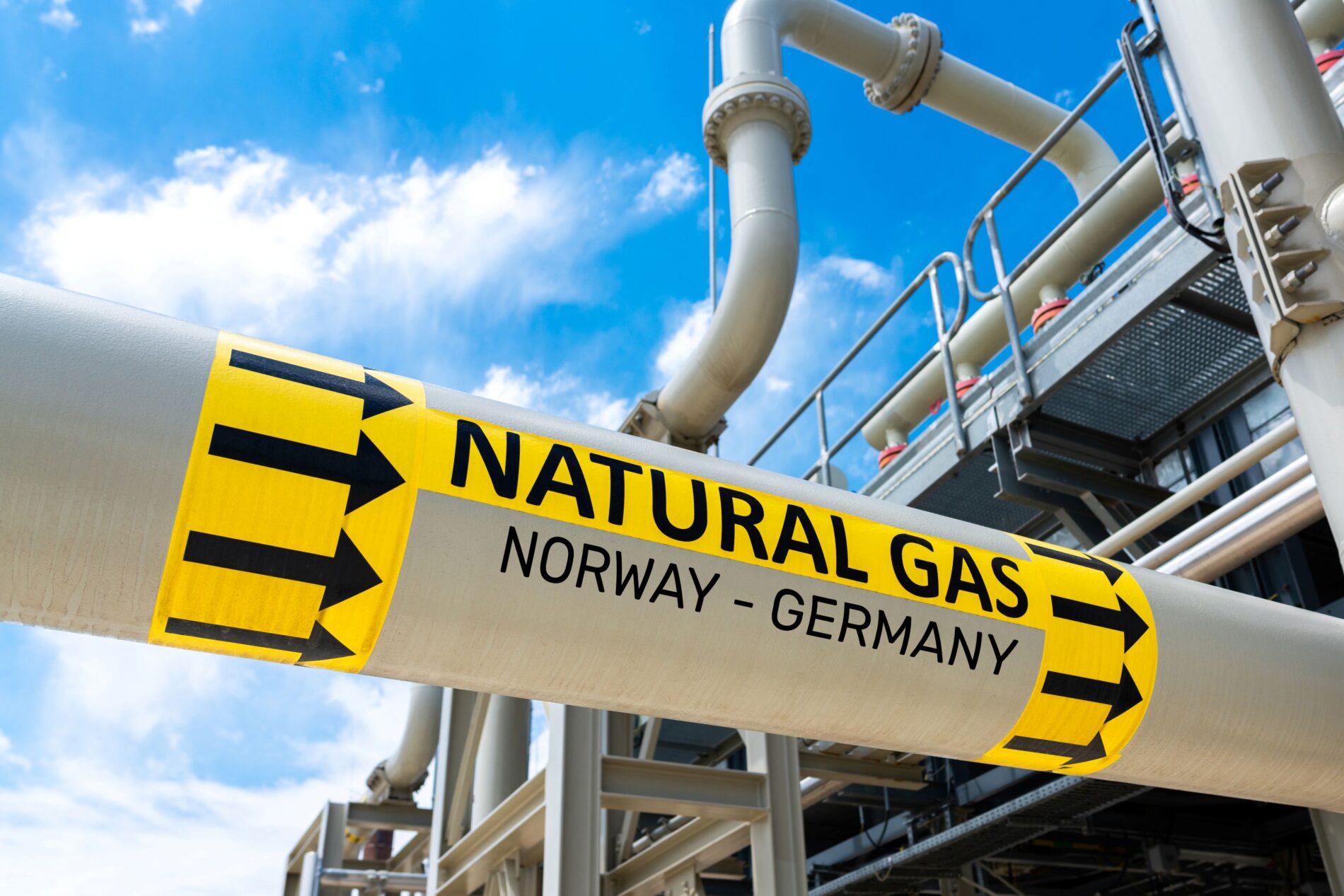
The pipelines to Germany are already operating near their capacity limits during peak demand. Additional quantities of 150 to 200 GWh per day cannot be extracted from the system in the short term because pipeline capacity, pressure control, and upstream facilities impose physical limitations. This diminishes Norway’s significance as a potential reserve if the gas shortage worsens further this winter.
The Netherlands: Even lower storage levels, less room for supply
In discussions about shortages, additional quantities from the Netherlands are frequently cited. The catch: Storage levels there are currently even lower than in Germany. This reduces the export capacity. In a shortage situation, countries prioritize securing their own supplies. Larger, reliably available additional quantities from the Netherlands are therefore significantly less likely. This increases the risk that a gas shortage cannot be mitigated by neighboring countries.
According to Gasco, the technical daily capacity of the three main pipelines to Germany is 48.0 million cubic meters per day for Europipe, 73.5 million for Europipe II, and 34.0 million for Norpipe – a total of 155.5 million cubic meters per day. Depending on the calorific value, this roughly corresponds to a theoretical upper limit of approximately 1.6 to 1.8 TWh per day. More than this is physically impossible to transport, and the remaining capacity serves as an operational reserve for pressure and stability. Therefore, no significant additional volumes are expected in the short term.
USA: Freeze-off reduces production and thus export capacity
The LNG market does not automatically provide relief either. Cold spells in the USA not only increase domestic consumption but can also directly dampen production. The cause is the so-called “freeze-off”: During severe frost, plants, valves, and pipelines freeze, which temporarily reduces production and sometimes also impairs processing and liquefaction. This further reduces the short-term available export volume. Even if European terminals are technically capable of handling the additional gas, the product will then be unavailable on the global market, or it will become significantly more expensive and fiercerly contested. In practice, this means that LNG is not a reliable emergency supply option for Central Europe during a severe cold snap, making a gas shortage more likely.
Electricity Mix – Gas Share and Periods of Low Wind and Solar Power as Amplifiers
Gas plays a role not only in heating and industry but also in electricity generation. In 2025, around 13.8% of Germany’s electricity came from gas-fired power plants. In January 2026, the share of natural gas in the electricity mix temporarily reached around 20.8%, significantly above the annual average, highlighting the stress caused by unfavorable weather conditions. During a prolonged period of low wind and solar power – little wind and little sunshine – the demand for dispatchable power plants increases. Gas-fired power plants then operate more frequently and for longer periods, further increasing gas consumption. A prolonged period of low wind and solar power thus acts as a multiplier, exacerbating the gas shortage.
Conclusion
The situation is becoming critical because several buffers are weakening simultaneously: low German storage levels, even lower reserves in the Netherlands, weather-related limitations in the USA, and physically limited expansion possibilities from Norway. If consumption and weather conditions remain unfavorable, the reserve will dwindle rapidly. Then, storage management, demand flexibility, and power plant deployment will determine how stable the system remains throughout the coming weeks of winter. (KOB)