
In Germany, with current fuel prices, the largest share of each liter goes to the state. In mid-March 2026, Super E10 cost an average of around €2.006 per liter, and diesel about €2.130. This high cost is due to energy tax, value-added tax, and CO₂ emissions charges. As a result, the state collects around €1.13 per liter of gasoline and about €0.99 per liter of diesel. Gas station operators, on the other hand, usually receive only about one cent. The remaining amount stays within the oil companies’ supply chain, covering everything from crude oil extraction and transport to refineries and distribution to gas stations.
Fuel Prices – Taxes Drive Up the Price per Liter
The largest fixed cost is the energy tax. The government levies 65.45 cents per liter on gasoline and 47.04 cents on diesel. These amounts do not change with the price of oil. Therefore, the government’s contribution remains high even when crude oil becomes cheaper.
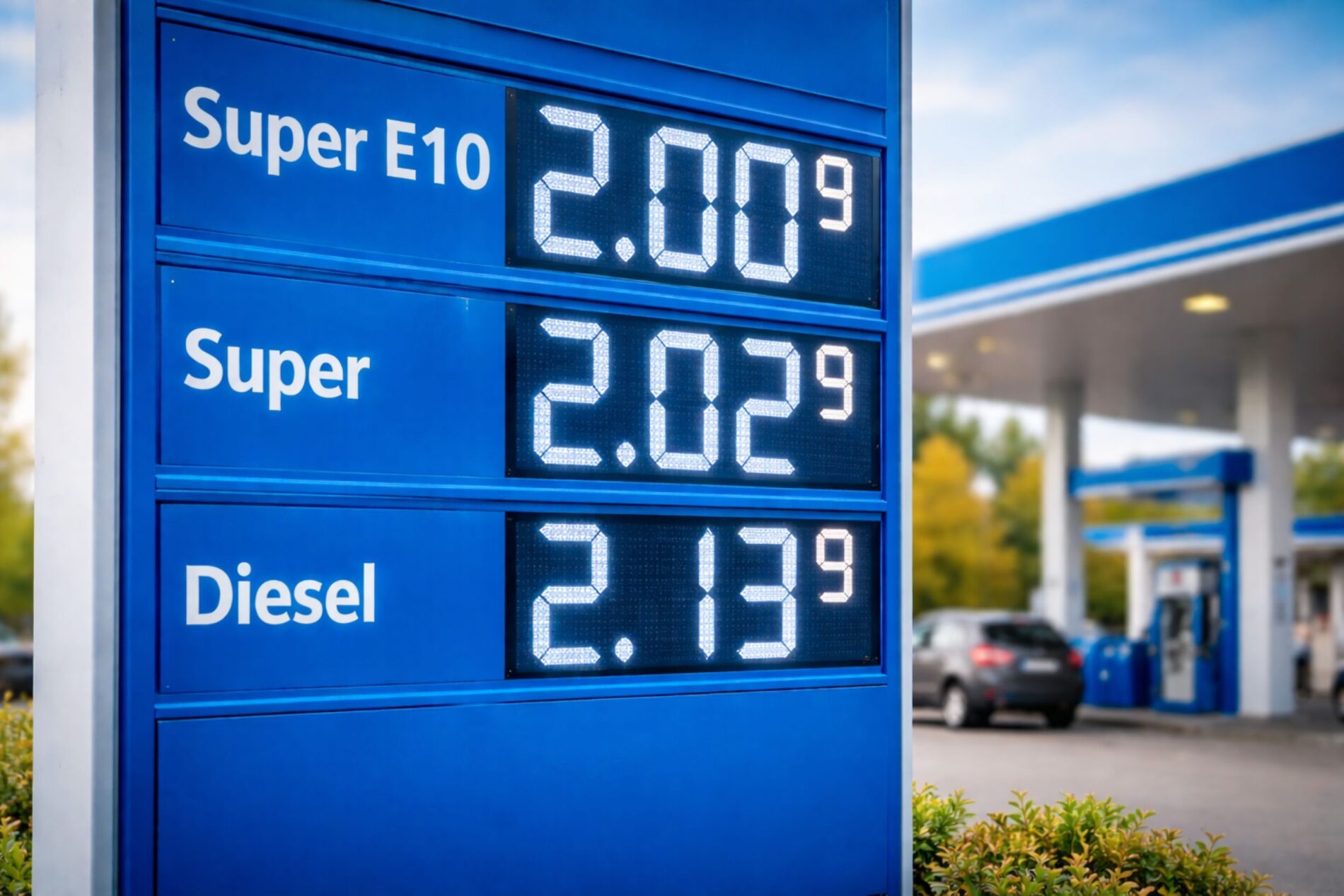
In addition, there is a 19 percent value-added tax (VAT) on the total final price. Therefore, if the price at the pump increases, the government’s share also rises. Furthermore, the national CO₂ price further increases fuel costs. For 2026, this price is set at €68 per ton. This results in CO₂ costs of approximately 16 cents per liter of gasoline and about 18 cents per liter of diesel.
Why gasoline and diesel are taxed differently
For gasoline, energy tax, VAT, and CO₂ costs add up to around 113 cents per liter. This means that currently about 56 percent of the final price goes directly to the government. For diesel, the government’s share is around 99 cents. This corresponds to about 46 percent of the average price per liter. Fuel prices therefore remain high, even if consumers hope for falling crude oil prices.
These differences arise from the tax structure. Diesel is taxed at a lower rate than gasoline with regard to energy tax. At the same time, diesel incurs higher CO₂ costs per liter. Furthermore, the higher final price also results in higher VAT. This shifts the composition of the revenue, while in both cases the state receives the largest single share.
Gas stations make little profit, the government makes the most
Many drivers assume gas stations make huge profits. In reality, according to industry estimates, they often only keep about one cent per liter. Therefore, many operators primarily earn their money from shops, bistros, or car washes. The price displayed on the sign thus masks the small margin at the pump.
The rest of the price per liter doesn’t simply go to the oil companies as pure profit. It covers the cost of purchasing crude oil, refining, storage, logistics, and distribution. Legal requirements such as the greenhouse gas quota also increase costs. In the end, only a significantly smaller profit margin remains, which fluctuates depending on market conditions. For consumers, however, the crucial point remains: the government is the biggest beneficiary of current fuel prices per liter. (KOB)