
High fuel prices are affecting almost all of Europe. However, government responses vary widely. While Italy, Austria, Slovakia, and Serbia are intervening directly, Germany is sticking to market regulations, price controls, and announcements. In Berlin, the proposed increase in the commuter allowance is now being considered. For many affected individuals, this would only provide relief later, as it would only take effect with the annual tax return. Furthermore, people in higher tax brackets would benefit more from such a measure than low-income earners, for whom the tax effect would be smaller. Pensioners would not be affected by this measure at all, even though they, especially those in rural areas, often rely on their cars and frequently have to manage on a smaller budget. Thus, this solution would not provide immediate relief to many consumers and would likely exacerbate social inequality.
Germany focuses on regulations instead of genuine relief
The German government plans to limit gas stations to only one price increase per day. Price reductions will remain possible at any time. This will be accompanied by the release of a portion of oil reserves.
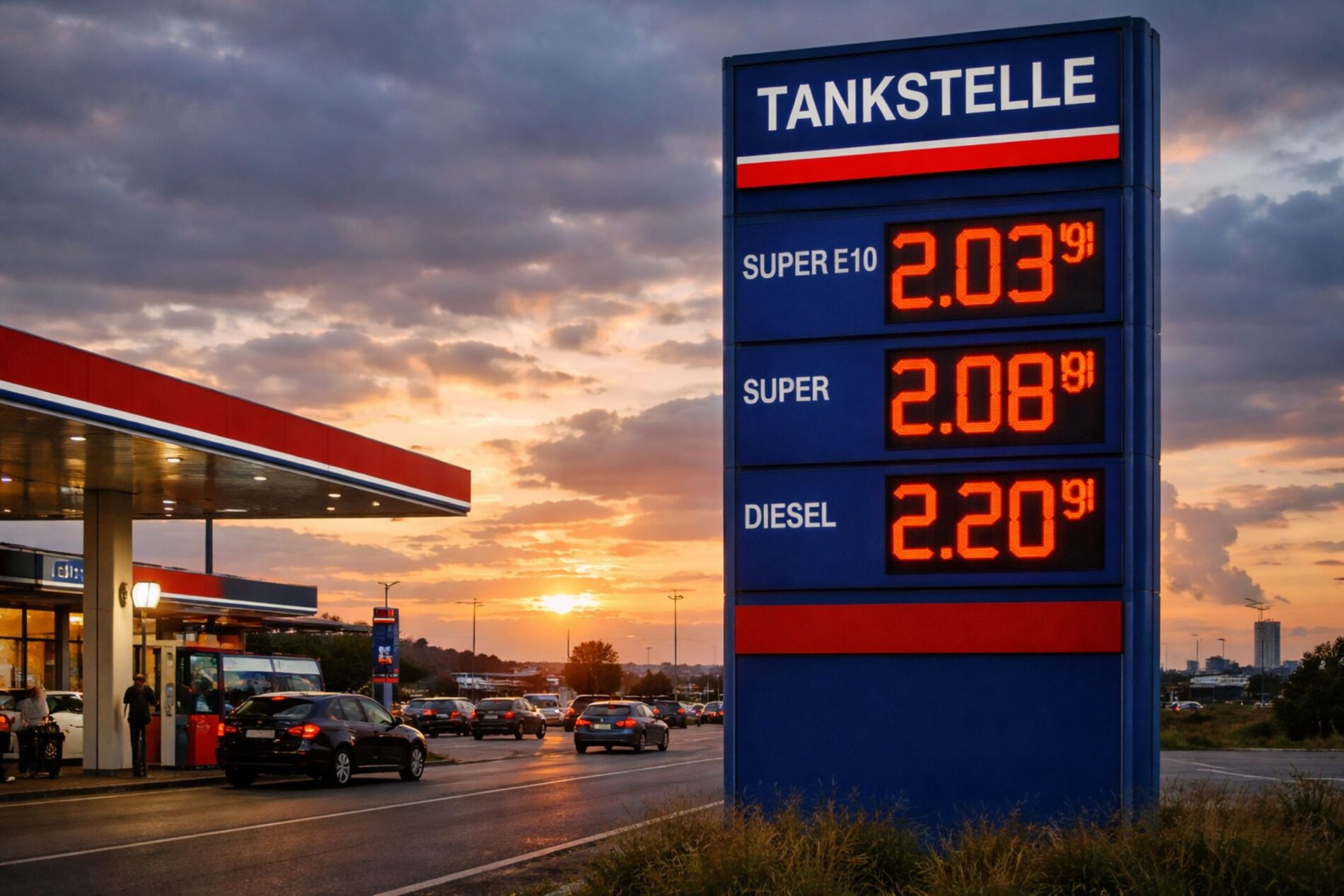
That sounds like action. But for individual drivers, it doesn’t bring immediate relief from the price per liter. That’s precisely the problem. Berlin is managing the crisis instead of effectively mitigating its effects. A genuine fuel discount or a broad tax cut isn’t a central policy focus, even though the government takes more than half of the fuel price through taxes and levies. The demand to impose a profit tax on oil companies, whose profits are significantly lower than the government’s own share of taxes, sounds all the more absurd.
Fuel prices fall in Italy and Austria thanks to tax cuts
Italy is taking a much more direct approach. The government has temporarily and significantly reduced the excise tax on gasoline and diesel. Austria is also taking this approach and lowering taxes on fuels. Both countries are thus aiming for immediate relief at the pump. This is precisely the difference compared to Germany. In Italy and Austria, the relief directly benefits drivers. In Germany, the focus is primarily on explaining why greater transparency and fewer daily price fluctuations should help. For drivers, this is a huge difference. One reduces the burden immediately. The other mainly changes how prices change.
Slovakia and Serbia are taking drastic measures in the market.
Slovakia is reacting even more harshly. There, gas stations are allowed to temporarily limit diesel sales to one full tank plus 10 liters. Additionally, higher diesel prices are permitted for vehicles with foreign license plates. Export restrictions are also in place. Serbia has temporarily halted the export of crude oil and fuels, released diesel from state reserves, and lowered excise taxes. One doesn’t have to like these measures. But they demonstrate that other governments are taking action when supplies are under pressure.
Germany is not taking this approach. Politicians apparently hope that new regulations for gas stations and slightly increased oversight will suffice. That may sound reasonable in the ministry. But little of it is actually reaching the pump. Those who rely on their cars every day continue to experience only one thing: high costs.
Other countries protect consumers, Germany remains passive
The international comparison is unfavorable for Berlin. Other countries are lowering taxes, capping prices, or temporarily closing their markets. Germany is limiting itself to intervening in price formation. This is a much weaker approach. Especially with fuel prices continuing to rise, this policy appears to be political passivity. The burden falls on commuters, tradespeople, delivery services, and families in rural areas.
Germany is paying the price for its reluctance
The message is clear. High fuel and energy costs are no longer an issue that other countries are addressing with mere appeals. They are taking action. Germany has not yet done so with comparable force. For drivers, this means: they have to continue paying while the government relies primarily on regulations. This is not decisive crisis management. This is shirking responsibility at the expense of its citizens. (KOB)