
Monobloc heat pumps can suffer severe frost damage during a multi-day power outage because their water-carrying components are located outside the building. As soon as the power fails, the circulation pump stops and the heating water no longer circulates through the outdoor unit. In sub-zero temperatures, pipes and heat exchangers can freeze. The ice expands and can burst pipes or components. This is precisely the scenario that threatened to occur in southwest Berlin, where around 50,000 households were affected, and prolonged cold weather exacerbates the risk of frost damage. (businessinsider: 05.01.26)
How frost damage occurs in the outdoor unit – and why Berlin can be particularly affected
Many owners underestimate frost damage because the system runs unobtrusively in everyday use. Monoblock units are located entirely outdoors, including the compressor and heat exchanger. Therefore, a prolonged power outage affects them more severely than systems with more technology inside the building. Furthermore, heat pumps are likely to be more common in areas like Nikolassee, Wannsee, Zehlendorf, and Lichterfelde because many homeowners there have recently modernized their properties.
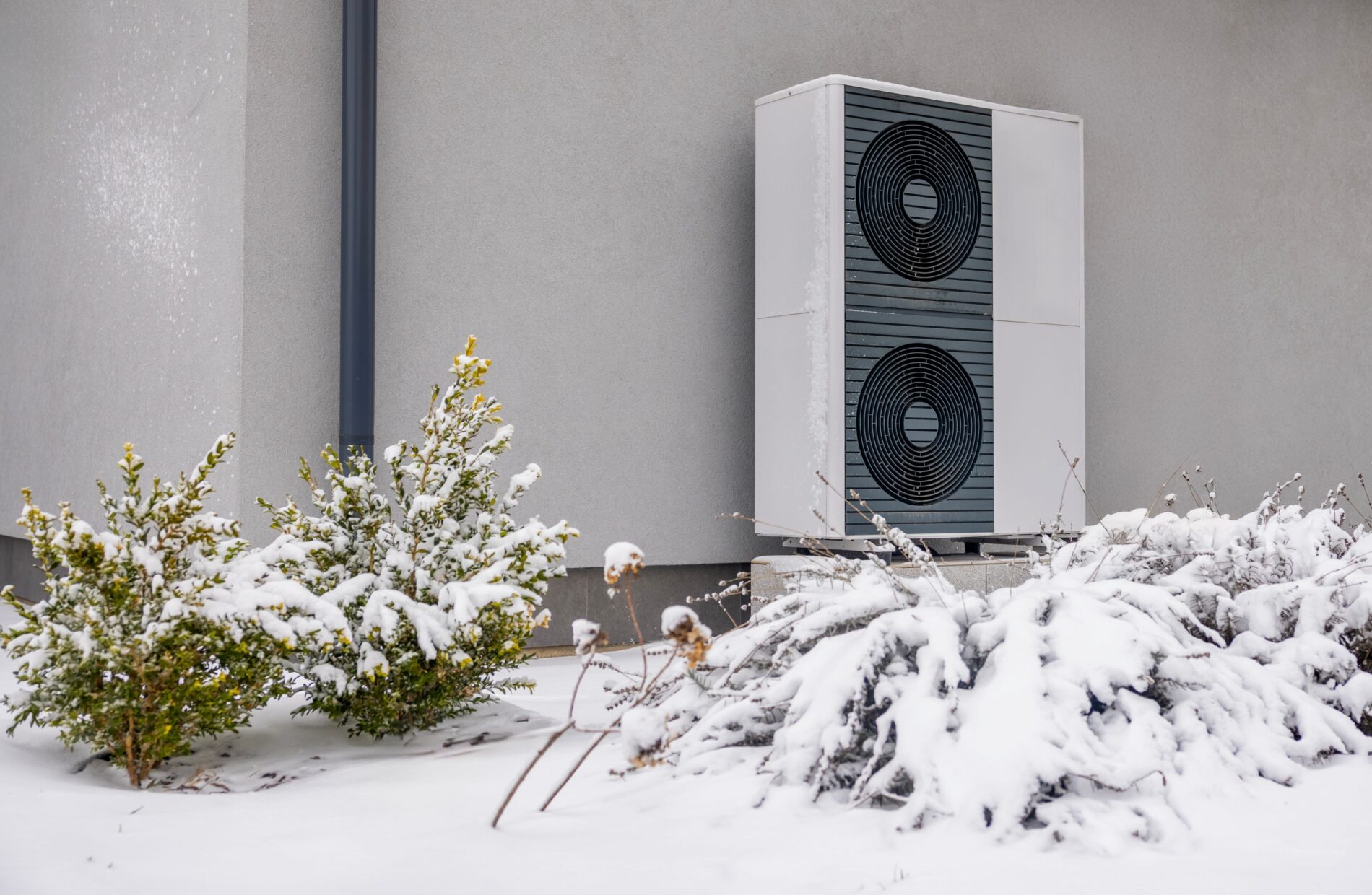
The problem lies in the heating water circuit, because heating water flows from the house to the outdoor unit and back again. As long as there is power, the circulation pump keeps the water moving, and the water in the pipes remains liquid. If the power supply fails, the water stagnates, and frost attacks the unprotected, above-ground sections first. Frost damage then often occurs suddenly because the ice bursts the components from the inside.
80 Percent Monoblock – High Prevalence Increases the Risk of Frost Damage
The Berlin Heating Guild estimates that around 80 percent of air-to-water heat pumps are monoblocks, thus increasing the number of potentially vulnerable systems. The industry portal IKZ Select has already warned against a false sense of security, even though many installations appear technically sound. The decisive factor remains the damage mechanism. IKZ puts it bluntly: “The fact is: If the heat exchanger freezes and bursts as a result, it is tantamount to total failure of the heat pump.”
Such a total loss is a double blow for operators, because in addition to the costs, time is also lost. Manufacturer service calls sometimes take weeks to arrive, leaving the house without a reliable heat source during this time. Afterward, discussions with insurers or service providers often begin. Therefore, anyone wanting to avoid frost damage needs a clear technical strategy.
Insulation, valves, draining: What helps against frost damage and where the limits lie
IKZ recommends massive pipe insulation, even up to “200 percent insulation,” but this often fails in practice. Many installers avoid huge wall penetrations of 40 or 50 centimeters because they are rarely feasible. Furthermore, insulation only buys time, because it “merely delays the cooling of the pipes; it doesn’t prevent it.” Even a thick layer of insulation can fail after several days of frost, despite offering short-term protection.
Shut-off and draining options near the outdoor unit appear more robust from a technical standpoint, because operators can then react accordingly. A classic thermostatic frost protection valve opens at low temperatures and releases heating water, leaving too little water in the heat exchanger for damaging pressure to build up. However, this valve consumes energy because it remains uninsulated and allows heat to escape. An internal version reduces losses, but the operator must open it manually as soon as a prolonged power outage is anticipated.
Scandinavian frost protection circuit – less frost damage, but noticeable loss of efficiency
In Scandinavia, many systems address the risk differently because winters there are long and cold. Operators often use an additional outdoor circuit with antifreeze, while the regular heating water remains inside the house. This reduces the risk of frost damage to the water-bearing components because there is no longer pure heating water standing outside. The system operates more reliably, but it comes at the cost of efficiency.
IKZ provides a specific figure for this: a water/glycol mixture with approximately 25 percent glycol reduces efficiency by around 15 percent. Nevertheless, many operators accept this drawback because they want to avoid outages due to freezing temperatures. In Sweden, the calculation is simpler because the electricity price there is regularly below 25 cents per kilowatt hour. Germany, on the other hand, is discussing costs more intensely, even though resilience to power outages is becoming increasingly important.
R290 Propane – If frost damage causes the heat exchanger to burst, there is a risk of explosion in extreme cases.
The issue becomes particularly critical when monobloc heat pumps use R290 (propane), because propane is flammable. Engineer Hans-Peter Höcker describes the technical process as follows: “If the heat exchanger in the outdoor unit bursts, refrigerant enters the water and the heating circuit and could leak into the basement,” and continues: “There would then, of course, be a risk of explosion.” He adds that he doesn’t want to “scare anyone, but simply explain, from a purely technical and physical perspective, what can happen.”
At the end of 2020, the Institute for Loss Prevention and Loss Research of the Public Insurers (IFS) investigated an explosion at an unoccupied house. The report describes a chain of events involving frost, leakage, and gas release. The report states: “First, the water in the secondary circuit froze—even though the heating system was in ‘heating mode’ according to the operating log,” and the ice forced connections apart. After thawing, gas escaped into the heating circuit and leaked into the building before igniting. IFS expert Matthias Klager concludes, “The propane gas accumulated there and was, for example, ignited by a spark from an ignition or switching device.”
Checklist after a power outage – how operators can recognize frost damage and act safely
Klager recommends that operators of R290 heat pumps check the pressure gauges on the outdoor unit, as low pressure can indicate a propane leak. If in doubt, specialist companies should inspect the system, and if there are signs of a gas leak, operators must call the fire department. Felix Förster of the German Renovation Consulting firm does not expect a wave of damage, but still advises caution before restarting the system. Operators should carefully remove any ice residue from the outdoor unit, using a hairdryer if necessary, and listen for any unusual noises.
Manufacturers also emphasize protective measures, but the fundamental technical principle remains that frost damage can destroy components. Stiebel Eltron states: “A plate heat exchanger is not necessarily destroyed by a single instance of freezing,” but adds: “However, the possibility exists.” The company further explains: “Our propane heat pumps are 100 percent safe in all conditions due to our safety concept,” and a shut-off valve closes automatically in the event of a power outage. In addition, the heat pump detects refrigerant loss and does not restart automatically when power is restored, allowing operators to better control risks.