
The Berlin power outage in early January 2026 hit the southwest of the city during a period of severe cold. Temperatures as low as minus 10 degrees Celsius were recorded in Berlin during the affected nights. These sub-zero temperatures increased the risk of frost damage because stationary heating systems could cool down and freeze. Therefore, heat pump expert Jens Dietrich warned of massive outages, citing a rate of 60 percent.(epochtimes: 27.01.26)
Frost Damage and the 60 Percent Estimate in Detail
Dietrich explains the figure by pointing to the particular vulnerability of many air-to-water heat pumps, referring primarily to monobloc systems. The expert assumes that such units are widespread in Berlin because they are frequently used in new construction and renovations. He also emphasizes that it is not minutes, but hours and days without electricity that are crucial.
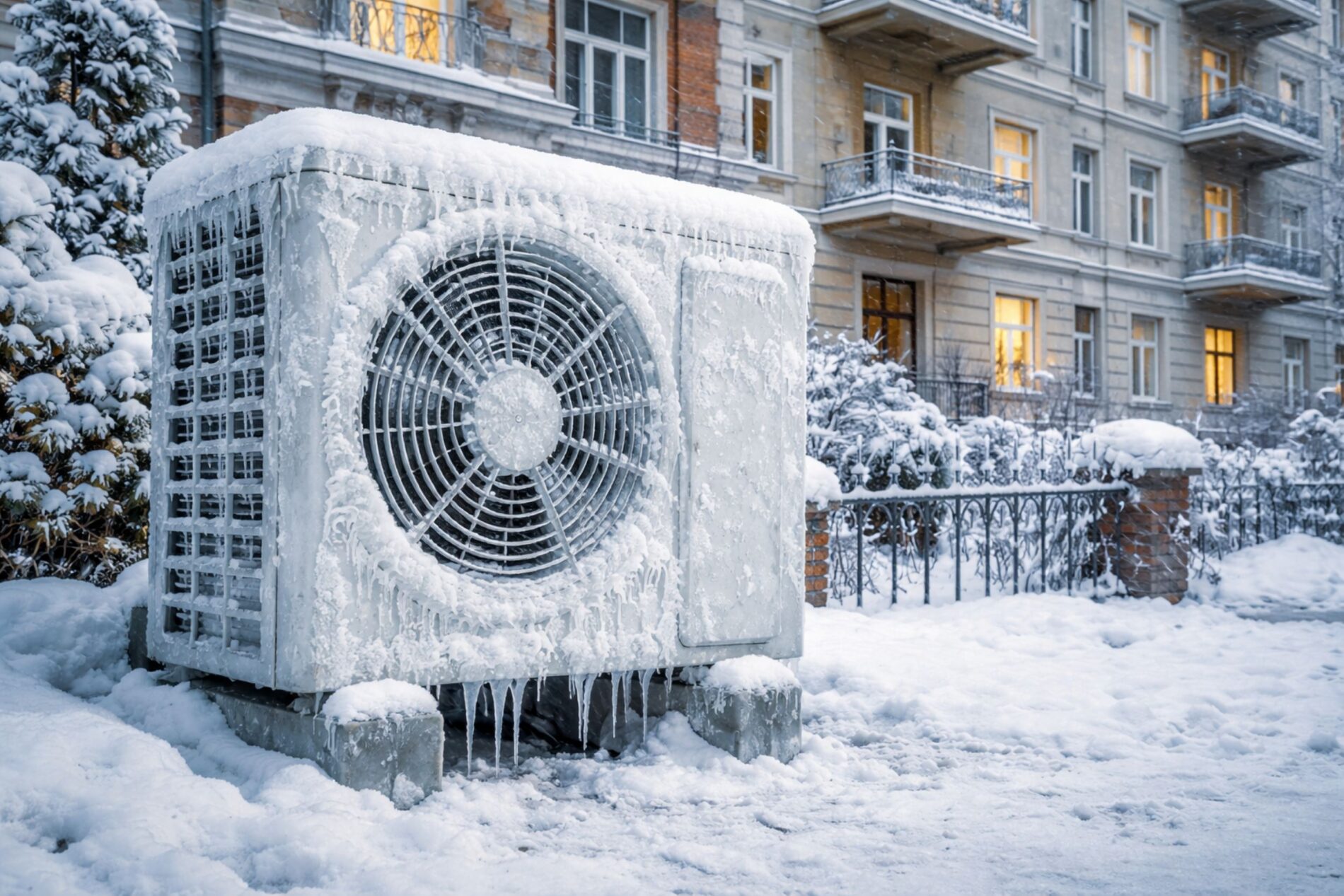
At its core, his statement remains a risk assessment: Many devices were idle while temperatures plummeted outside. This increases the likelihood of damaged components, such as those in the control systems and hydraulics. “A few may have survived, but overall, at least 60 percent of all systems are likely to be affected by a prolonged power outage,” says Dietrich.
Tradespeople report damage – heat pumps explicitly mentioned
Local businesses are already reporting numerous heating system failures, with heat pumps being mentioned more frequently than usual. The Tagesspiegel reports that heat pumps have been “partially severely damaged” because these systems can be sensitive to cold temperatures. This picture fits the scenario in which frost damage leads to expensive repairs or replacements. (tagesspiegel: 13.01.26)
In parallel, the German Heat Pump Association published information for affected households and pointed to support from the plumbing, heating, and air conditioning (PHVAC) sector. The association advises contacting specialist companies after power is restored in the event of a power outage, rather than attempting repairs oneself. This approach suggests a significant need for repairs, even though the association did not specify a figure.
Why a reliable assessment is still pending
The 60 percent figure dominates the headlines, yet there is still no publicly accessible, official count of defective heat pumps. This is partly because a review of the damage across various heating systems still needs to be conducted, while companies and insurers are still compiling reports. Therefore, it could take weeks before a reliable overview emerges from repair orders and damage files.
For homeowners, however, the cost risk remains acute, as Dietrich cites figures of more than €15,000 for a potential replacement. This gives frost damage a financial dimension that goes far beyond mere loss of comfort. At the same time, much depends on individual factors, such as the device design, the installation location, and the condition of the hydraulics after restarting.