
French nuclear power plants played a further significant role in stabilizing the German electricity grid in 2025. Nuclear energy once again accounted for the largest share of German electricity imports. Transmission system operators deployed them specifically for so-called cross-border redispatch. This was triggered by strong fluctuations in wind and solar power generation, which caused temporary overloads or bottlenecks in the grid. According to the Federal Network Agency, the volume of redispatch measures involving foreign nuclear power plants amounted to approximately 77 gigawatt-hours from January to September 2025. In the same period of the previous year, it was about 69 gigawatt-hours. This represents an increase of approximately 11.6 percent. The costs of these interventions arise for reasons of system security and are therefore passed on to households and businesses in Germany via grid fees. (welt: 21.03.26)
French nuclear power plants become a reserve for critical grid situations
Purchasing nuclear power from abroad is no longer just about cheap energy. For grid operators, the primary concern is being able to quickly compensate for critical situations in the electricity grid. Therefore, they utilize foreign nuclear power plants when the feed-in from wind and solar power does not match the grid demand. Cross-border redispatch is thus a tool for acute stabilization. The Federal Network Agency confirmed that such measures are on the rise.
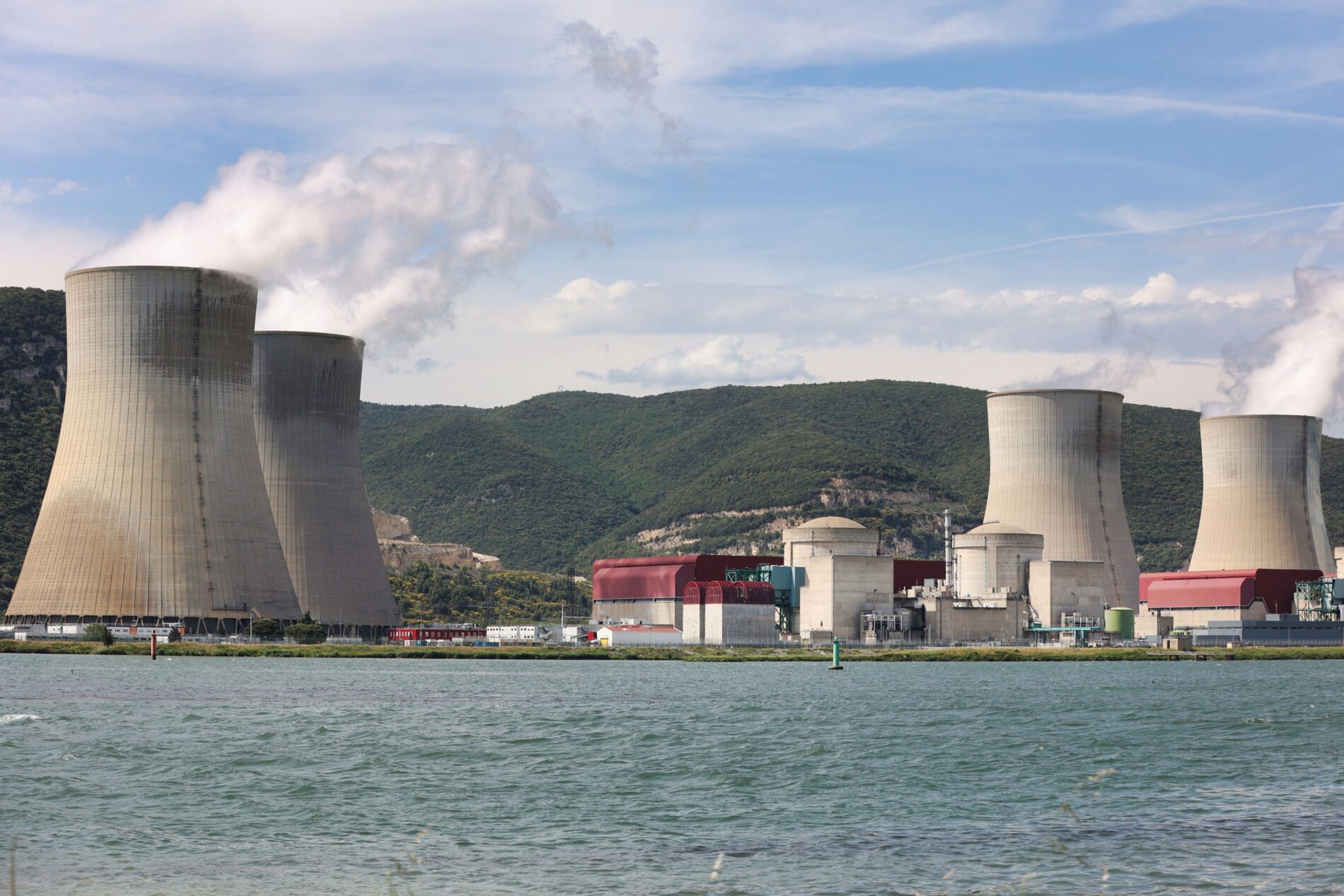
Sometimes, foreign nuclear power plants reduce their output when there is an oversupply of wind and solar power in the German grid. This relieves overloaded lines while maintaining system balance. In other situations, operators increase their production when wind and solar plants unexpectedly produce too little electricity. They then compensate for the shortfall and support the supply. Data from the Fraunhofer Institute for Solar Energy Systems also shows that German grid operators use nuclear power plants abroad for both negative and positive redispatch. French nuclear power plants play a particularly important role in this.
France supplies the largest share of imported nuclear power
Since the shutdown of the last German nuclear power plants in 2023, Germany has been a net importer of electricity. This has increased its dependence on foreign suppliers, while balancing the domestic supply has become more difficult. According to data from the Federal Network Agency, Germany imported more than 60,000 gigawatt-hours of electricity from abroad last year. Of this, 14,331 gigawatt-hours were nuclear power. Nuclear power thus accounted for the largest share of total imports. France supplied around 9,500 gigawatt-hours, clearly ahead of Belgium, the Netherlands, Switzerland, the Czech Republic, and Sweden.
According to information obtained by Die Welt, French nuclear power plants were also primarily used in grid stabilization measures. However, it could not be definitively determined which of the four German transmission system operators specifically utilized these foreign nuclear capacities. The Federal Network Agency explained: “The requirements represent a joint optimization effort by the four German transmission system operators.” The companies in question are Amprion, Tennet, 50Hertz, and TransnetBW. The consequence for electricity customers is clear: these interventions cost money and increase pressure on grid fees. At the same time, this development demonstrates how heavily Germany’s electricity system relies on capacity from France when renewable energy generation fluctuates.