
In Bern and Schaffhausen, winter is forcing new electric buses into a difficult conflict of objectives. With the heating system running at full power, the vehicles are sometimes unable to reliably complete their scheduled routes. The reason is simple and frustrating for passengers: the heating consumes so much electricity that the battery loses too much range. This threatens shortened routes, unplanned charging stops, or even breakdowns. As a result, it remains cold inside the bus, even though it’s freezing outside. (srf: 20.01.26)
Heating or driving: The battery dictates everyday life
The equation is brutal. Every degree of warmth reduces range. As soon as it freezes outside, the heating systems reach their limits. Companies can’t simply “turn up the heat.” Additional heating power draws a significant amount of electricity, which is then unavailable for driving.
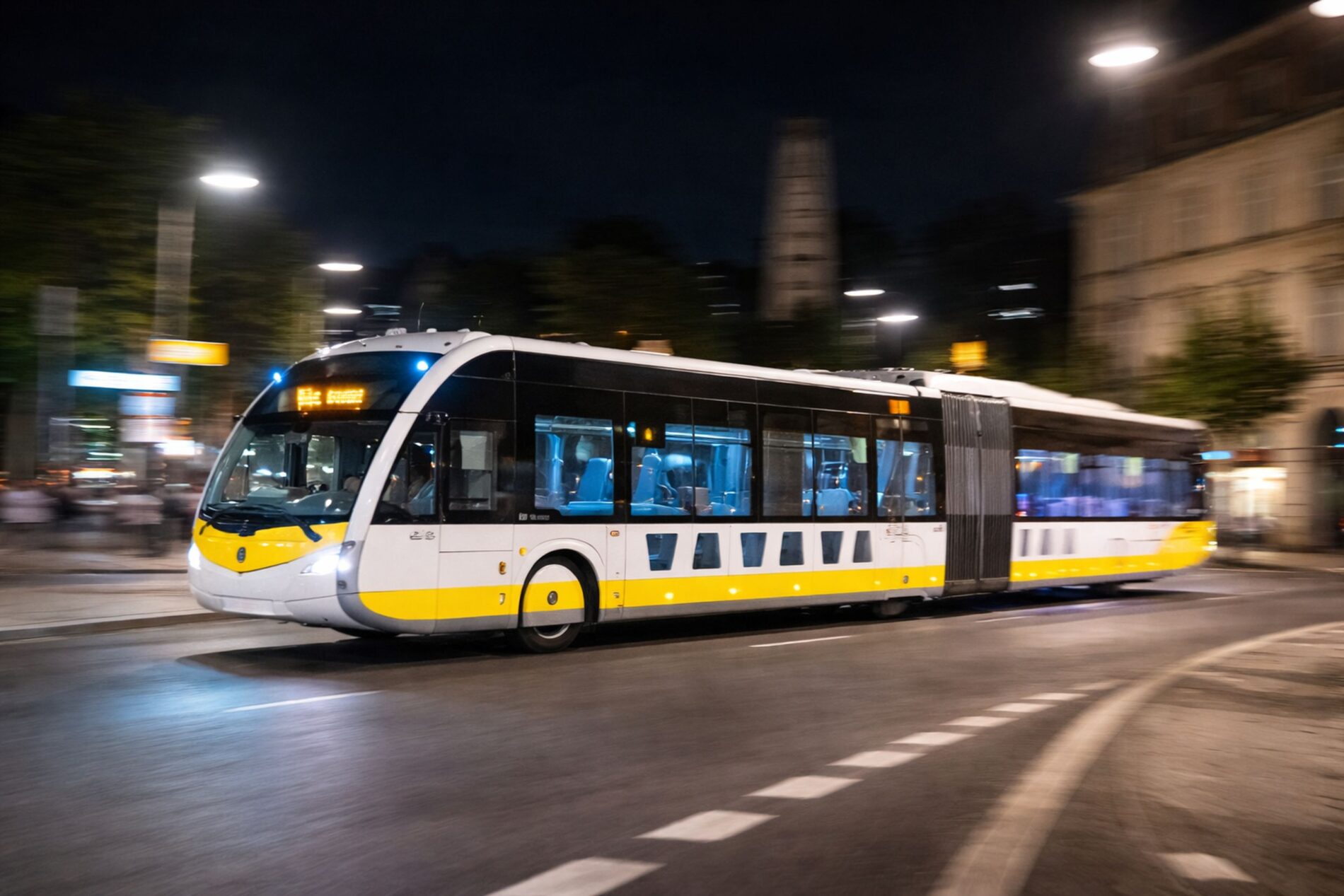
Bernmobil and the Schaffhausen public transport company confirm the complaints. Patrick Altenburger says: “They sometimes find it too cold.” Despite this, there’s little room for maneuver. If the battery is under too much strain, the timetable becomes disrupted, and service disruptions are likely. Therefore, the operators reduce the heating, even though that’s precisely when warmth is needed.
Modern Irizar buses, but a comfort problem in winter
Both cities use battery-electric buses from the Spanish manufacturer Irizar. In Bern and the surrounding area, 26 vehicles are in operation. Schaffhausen has an additional 13. The buses appear modern. They are quiet. They are supposed to be climate-friendly. But in winter, they don’t deliver what passengers expect.
The target temperature is around 15 degrees Celsius as soon as it’s zero degrees or colder outside. This temperature is sometimes clearly missed in the Irizar buses. Everyone notices the consequences immediately. Jacket zipped up, hat on, hands in pockets. Those who sit cool down faster, even though the journey is often long.
Heat pump at its limit: More heat reduces range
Heating is provided by a heat pump on the roof. It extracts heat from the outside air, then compresses it using electricity. Finally, it blows the heat into the bus from above. This works better in mild temperatures. In freezing conditions, efficiency drops significantly.
Didier Buchmann from Bernmobil explains the core issue: “When a heat pump reaches its limit, you have to use even more electric heating, but that reduces the battery range.” This is precisely the point that necessitates a cold-weather strategy. More electric auxiliary heating would help, but the battery would drain faster, and the bus would therefore run out of power sooner.
Emergency operation in everyday life: Somewhat warm in the front, often freezing in the back
In Schaffhausen, they are currently trying to at least heat the front section, where the driver spends the most time. But even this is a compromise. The bus doesn’t actually get “warm.” It only makes one spot “not quite so cold.” For passengers in the back, the situation remains unpleasant.
In Bern, they are also looking for ways to adjust the system. According to the operator, a software update and parameter adjustments have brought about a slight improvement. But the big breakthrough is still missing. Didier Buchmann says: “We’re staying on top of it and hope that we’ll be back to the target value in the next few weeks.” Until then, the rule is: those expecting heat won’t get it reliably.
Operators defend themselves against the blanket suspicion.
The transport companies emphasize that it’s not electromobility itself that’s failing, but rather the winter-readiness of the specific air conditioning systems. Patrick Altenburger warns: “Calling questioning the entire concept of electromobility now is the wrong approach.” Nevertheless, the damage remains real in everyday life. Passengers aren’t talking about systemic issues; they’re talking about cold buses.
The crucial factor will be whether improvements can quickly alleviate the problem. Public transport that only functions with reduced heating in winter loses credibility. Moreover, it particularly affects commuters, senior citizens, and people who have to wait a long time for connections. And these are precisely the groups who often can’t easily afford to simply dress warmly.