
Scientists at Fraunhofer Austria have developed a prototype in the “iLESS” research project that calculates the economic viability of private battery storage systems for photovoltaic installations. The core question is which storage size is cost-effective under real-world conditions. However, the evaluation of test households reveals a clear risk: many private storage systems are oversized and only pay for themselves very slowly. In a typical household with standard appliances and a heat pump, even a 5 kWh storage system takes around eight years to recoup its costs. According to the study, a frequently recommended 10 kWh battery is usually not economical. This diminishes the benefits for operators because batteries have a limited lifespan and incorrect decisions can be costly. (ingenieur: 27.03.26)
A new tool aims to prevent costly mistakes when buying battery storage systems
For many owners of a photovoltaic system, the question of storage is crucial, as a battery can increase self-consumption. However, a freely accessible tool that enables reliable selection is often lacking. This is precisely where the Fraunhofer Austria team comes in, because until now, the decision often failed not due to a lack of data, but rather due to the difficulty of analyzing it.
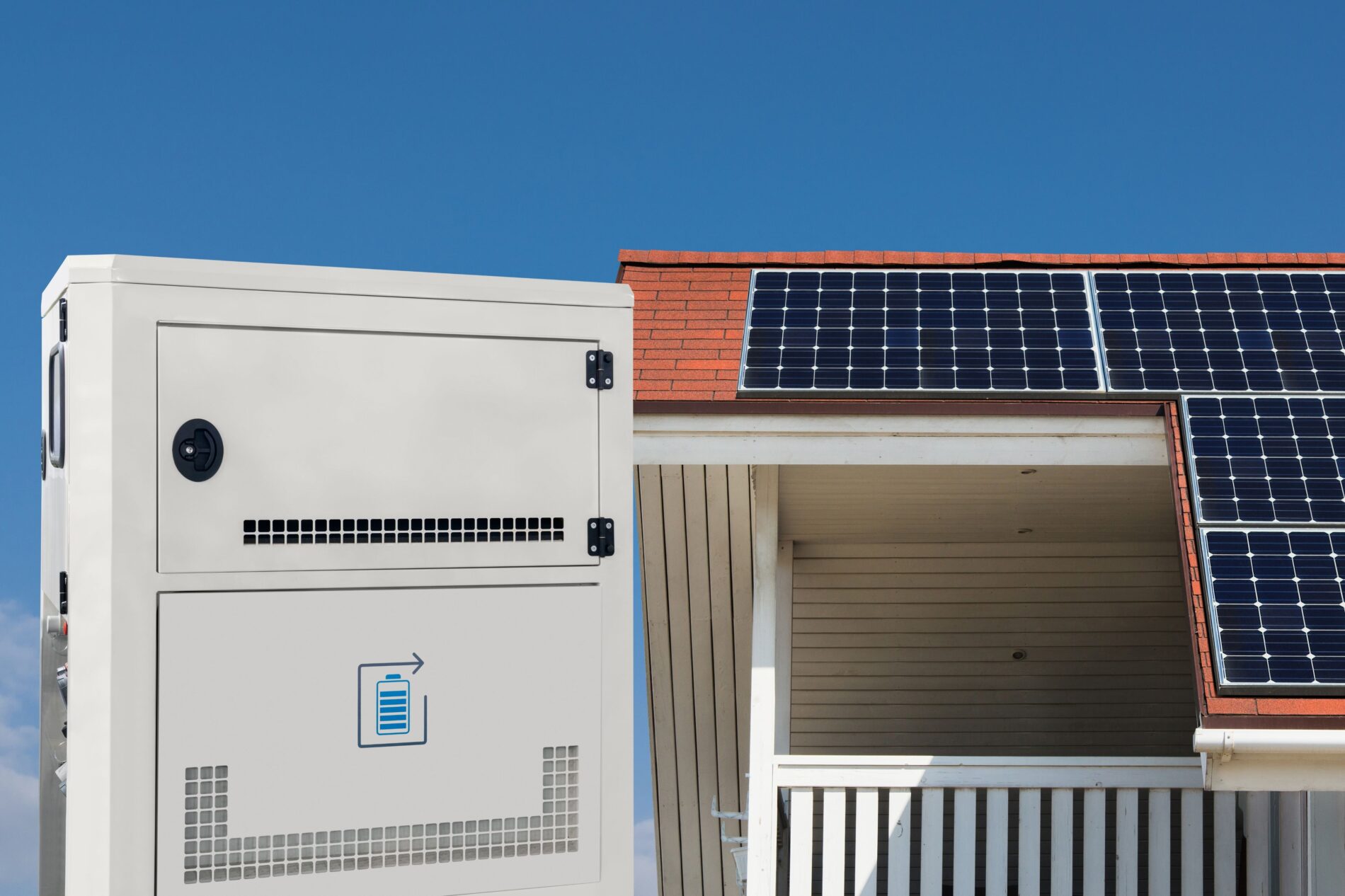
“In our research on renewable energies, we discovered that there are no freely available calculators that allow private individuals to select the optimal battery storage system for their needs,” says Marco Hudelist from the Fraunhofer Austria Innovation Center for Digitalization and Artificial Intelligence. Therefore, the team developed a prototype simulation to serve as a proof of concept. The goal was not only a technical demonstration but also greater transparency for private operators.
Test households reveal clear limitations of large storage systems
The results from the sample households are sobering. A 5 kWh storage system only pays for itself after eight years, even though this size is significantly smaller than many market offerings. In contrast, a 10 kWh battery proved to be oversized and economically unattractive in the typical household studied.
This point is particularly critical because suppliers often recommend larger storage systems. However, the simulation reveals whether a battery is actually fully charged regularly in everyday use. “The simulation clearly shows whether a battery of a specific size would ever fully charge in this configuration, when electricity would be fed into the grid, and when battery power would be used,” explains Claudia Maußner, research associate at Fraunhofer Austria.
Smart meter data is often sufficient for a reliable assessment
The basis for such calculations is manageable, which is why such a calculator could be helpful to many households. Among other things, the efficiency of the PV system and battery, the price of the storage per kilowatt-hour, the installation costs, the electricity price for grid consumption, and the feed-in tariff are required. Additionally, the program needs a load profile that depicts consumption and generation over time, and modern smart meters provide precisely this data.
From this information, it’s possible to simulate how the battery’s state of charge changes throughout the day and year. The result is an overview that directly compares different battery sizes with their payback periods. This is important for operators because a battery with a lifespan of around ten years offers only limited economic flexibility, and late repayments increase the investment risk.
Economic efficiency isn’t everything, but transparency remains crucial
Fraunhofer also emphasizes that the decision doesn’t have to depend solely on money. Those seeking greater independence from the power grid can consciously opt for a larger storage system, even if it doesn’t make financial sense. “The decision doesn’t have to be based solely on the amortization period. Of course, one can deliberately choose a larger battery for the sake of energy independence, even if it doesn’t make economic sense.”
The program is not yet a finished market solution, but rather a prototype from a research project. Manual data preparation is currently required before use, which is why private users cannot immediately employ the tool. The team is therefore seeking partners for further development, while the public sector, battery and PV system manufacturers, and other stakeholders could expand the concept into a productive software solution.