
France is changing its energy policy by decree and implementing a new legal framework. This includes lowering targets for wind and solar energy, while significantly strengthening nuclear power. At the same time, the share of decarbonized electricity in total energy consumption is to increase rapidly, thereby reducing the importance of oil and gas. Furthermore, a new planning horizon is being established, intended to provide greater certainty for investors and the state-owned energy company EDF. (france24: 12.02.26)
Nuclear power remains central – Paris enshrines change of course
Finance Minister Roland Lescure clearly stated the guiding principle: “We must stop fighting our internal family squabbles. We need both nuclear power and renewable energies.” With this statement, the government justifies a course that officially encompasses both, but visibly focuses on nuclear energy. Furthermore, the new law overturns a previous requirement to shut down 14 reactors. This step ends a long-running dispute in parliament and eliminates old decommissioning plans.
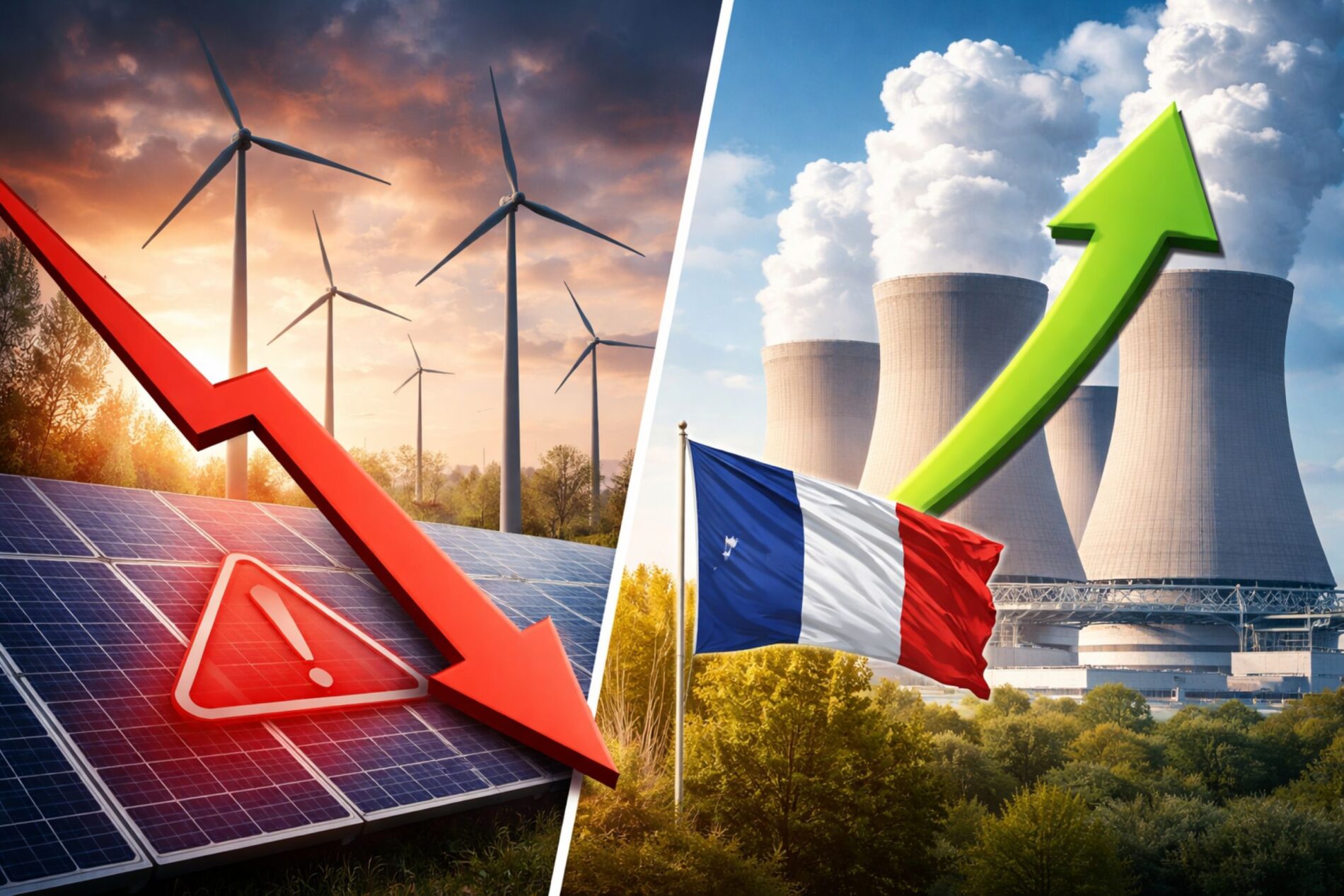
The shutdowns stemmed from a promise made during the 2017 election campaign. President Emmanuel Macron had initially pledged to shut down 14 reactors, but later changed his stance. He then backed a nuclear offensive and supported the construction of at least six new reactors. This significantly shifts the focus of France’s energy transition, even though the government continues to emphasize renewables.
PPE until 2035 – EDF to produce more nuclear power
The centerpiece of the package is the new ten-year PPE plan. It defines how France manages its power plant fleet and how tenders for wind and solar projects are organized. For EDF, this means relief, as the company no longer has to reduce its nuclear portfolio for political reasons. EDF operates 57 reactors, and this fleet is to be utilized more efficiently in the future.
The pressure on EDF comes from the European electricity market. Abundant wind and solar power is driving down wholesale prices, forcing some nuclear power plants to reduce their output. This negatively impacts competitiveness, even though fixed costs remain high. The PPE therefore includes a concrete production target: EDF is to generate 420 terawatt-hours of nuclear energy with its existing reactor fleet by 2035, roughly five percent more than previously planned.
First new nuclear power plant from 2038 – EDF signals approval
Roland Lescure underscored the strategic role of nuclear energy with a clear statement. “Nuclear power is the backbone of our electricity system,” he said. At the same time, he outlined a timeframe, as the first new reactor is scheduled to go online in 2038. With this, Paris is linking the expansion to a firm timeline, something that has long been lacking in France.
EDF CEO Bernard Fontana welcomed the draft because it secures the company’s targets. This allows EDF to plan investments and prioritize technical programs. At the same time, financing remains politically sensitive because France is struggling with high national debt. Nevertheless, the legal framework is intended to create facts now so that the debate is not bogged down again for years.
Wind and solar are being cut back
Despite the official dual strategy, the expansion corridors for renewables are being significantly reduced. For wind and solar combined, the plan now only calls for 105 to 135 gigawatts of installed capacity by 2035. Previous drafts had projected 133 to 163 gigawatts, making the reduction substantial. At the same time, the tenders for renewable energy depend on the PPE (Plan for the Development of New Energy and Solar Power), so any delay will hamper investment.
For offshore wind, the target for 2035 is being reduced to 15 gigawatts. As recently as 2024, the government had proposed 18 gigawatts for consultation, and this difference is seen in the industry as a clear negative signal. Onshore wind is now only expected to reach 35 to 40 gigawatts, down from the previous target of 45 gigawatts. Solar is also being scaled back, with the target range falling to 55 to 80 gigawatts instead of 75 to 100 gigawatts.
Greenpeace warns
Greenpeace France sharply criticized the plan. “If this PPE is more than two years too late on paper, then it is at least a decade behind in its vision of an energy transition,” the organization declared. This intensifies the conflict, as climate activists expect a faster expansion of wind and solar power. At the same time, the government maintains its core argument that nuclear energy should provide stability and security of supply.
In addition to expansion targets, the law also sets consumption targets. France aims to cover around 60 percent of its energy consumption with decarbonized electricity by 2030, even though currently about 60 percent still comes from fossil fuels. By 2035, the share of decarbonized electricity is even supposed to rise to up to 70 percent, further displacing oil and gas. However, Emeric de Vigan of the consulting firm 42 Advisors does not expect significantly lower end-customer prices, which is why the transition to electrification could proceed more slowly.