
France is abolishing low-emission zones in many cities. The system disproportionately affected drivers of older cars, often people with limited budgets. Mobility became a question of cost, even though many depend on their cars. At the same time, political pressure mounted because the unfairness significantly impacted daily life. (lemonde: 21.01.26)
January 20, 2026: Abolition confirmed by the conciliation committee
The procedural stage is crucial. On January 20, 2026, the abolition of the zones was confirmed by the conciliation committee, the Commission mixte paritaire (CMP), and incorporated into the compromise text. This committee, comprised of members of parliament and senators, agreed on the text of the law to “simplify economic life.” The final votes in both chambers followed, formally securing the compromise.
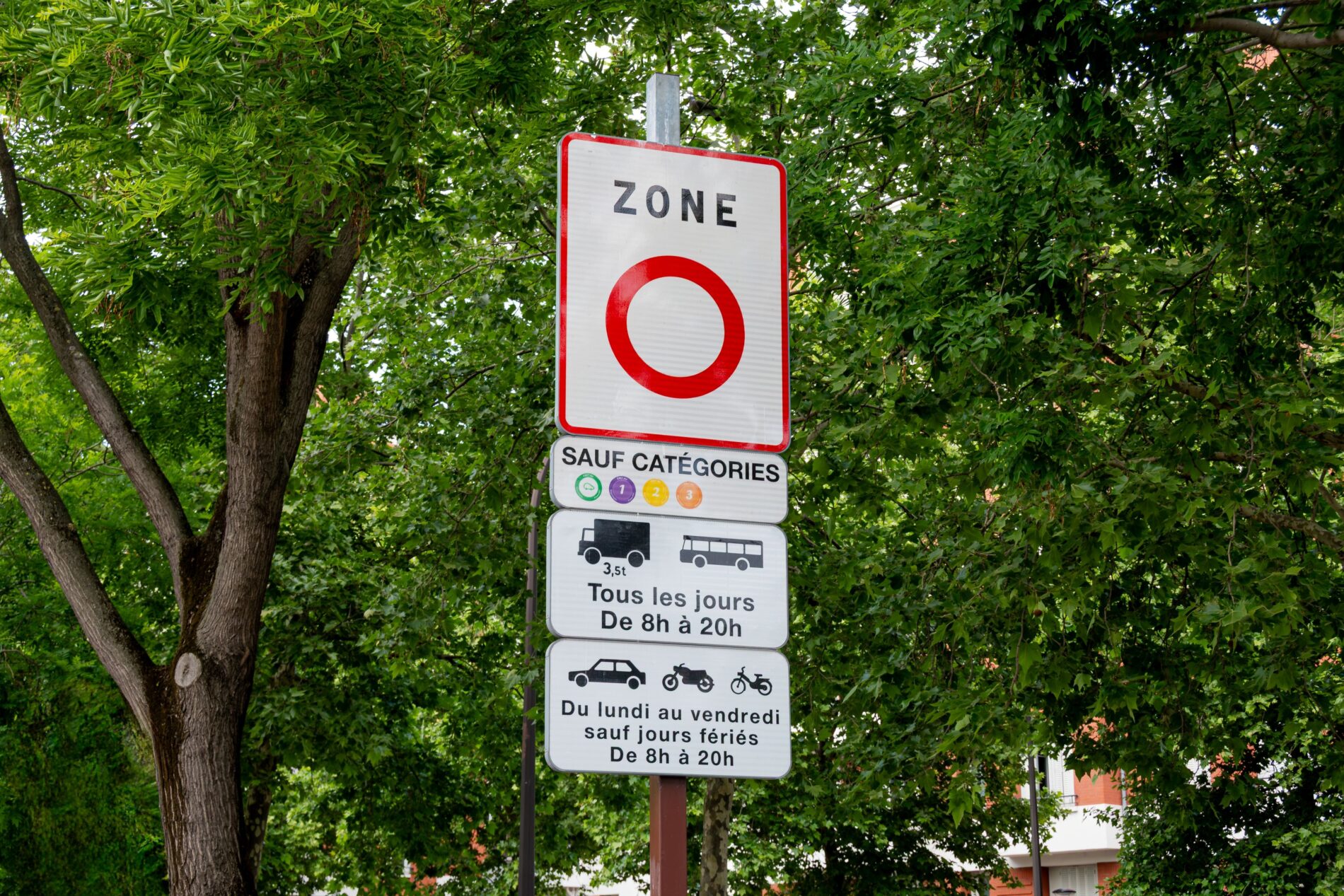
From the perspective of many parliamentarians, it was no longer just about air quality. It was about access to work, appointments, and essential services. Driving an older car doesn’t automatically mean you’re living an unreasonable lifestyle. However, realistic alternatives were lacking in many places, especially outside major metropolitan areas, leading to social inequality. Many politicians believe this social inequality outweighs the environmental benefits.
Low-Emission Zones Since 2015 – Everyday Effects Instead of Theory
Since 2015, Low-Emission Zones (ZFE) have been in effect in French city centers. Older vehicles were banned in many areas. This hit commuters from rural areas particularly hard because trains and buses don’t run everywhere. Therefore, the measure acted like a filter, sorting people by income.
Tradespeople also felt the effects. Material deliveries can’t be postponed indefinitely. Customers expect reliability, and construction sites are often located in restricted zones. Furthermore, replacing a vehicle can quickly cost five-figure sums, which many businesses simply don’t have.
Political Pressure: RN Puts the Issue on the Agenda
The National Rally (RN) made the abolition of the tax a strategic goal. On May 28, RN MPs introduced an abolition clause into a reform package. This package, titled “Simplifying Economic Life,” was presented in parliament as a larger initiative. This gave the issue greater visibility and more momentum for a vote.
On June 17, a majority approved the entire package. With this, the end of the tax was practically a political foregone conclusion. Nevertheless, the CMP’s vote on January 20 remained the decisive factor, as it finalized the compromise. Only then could the change of course be presented as having parliamentary approval.
Interview Voices: “Punitive Ecology” and “Relief” as Key Messages
Marine Le Pen described the new vehicle registration system (ZFE) as “punitive ecology.” By this, she means an environmental policy that governs through bans and sanctions. At the same time, she spoke of a great relief for millions of drivers. Her message was clearly aimed at everyday life and people’s wallets, not at expert-level debates.
Member of Parliament Pierre Meurin interpreted the result as another success for the National Rally (RN) party. He linked it to a political principle: rules should be measured against real life. Meanwhile, other factions backed away from a strong defense of the ZFE because the resistance remained persistent. Thus, the social aspect ultimately won the majority.
What the step means in practice – and why Germany is watching
For many drivers, the abolition means less bureaucracy and more planning certainty. Commuting to work, to the doctor, or to clients will become easier again. At the same time, the pressure to buy a new car at short notice will decrease. This immediately changes everyday life because mobility becomes more reliable again.
Germany is following this development closely. Here, too, there are rules that keep vehicles out of certain areas. However, France shows how quickly acceptance can turn sour when a measure is perceived as unfair. Ultimately, the question arises whether politics treats mobility as a basic need or as a tool to control certain groups.