
The Berlin power outage last winter affected around 45,000 households. Energy economist Claudia Kemfert, head of the Energy, Transport, and Environment department at the German Institute for Economic Research (DIW Berlin), draws a clear conclusion: emergency power should be mandatory in new buildings. In her view, the problem wasn’t so much the grid itself, but rather the inadequate preparation for emergencies. Therefore, she calls for binding regulations to mitigate future power outages. (fr: 26.01.26)
Prevention must become the guiding principle
Kemfert states clearly: “What we need is prevention.” Germany often only reacts when damage is already visible, and this gives crises too much space. Furthermore, the blackout demonstrates that crisis procedures are rarely practiced. This increases the risk of a local outage quickly spreading.
From Kemfert’s perspective, the weakness lay not in the power grid as a whole, but in processes and communication. Responsibilities remained unclear in some cases, while the situation became increasingly dynamic. Nevertheless, standards are needed that function even in complex scenarios. After all, a blackout doesn’t just affect technology, but also the daily lives of entire residential areas.
Emergency Power in New Buildings as a New Standard
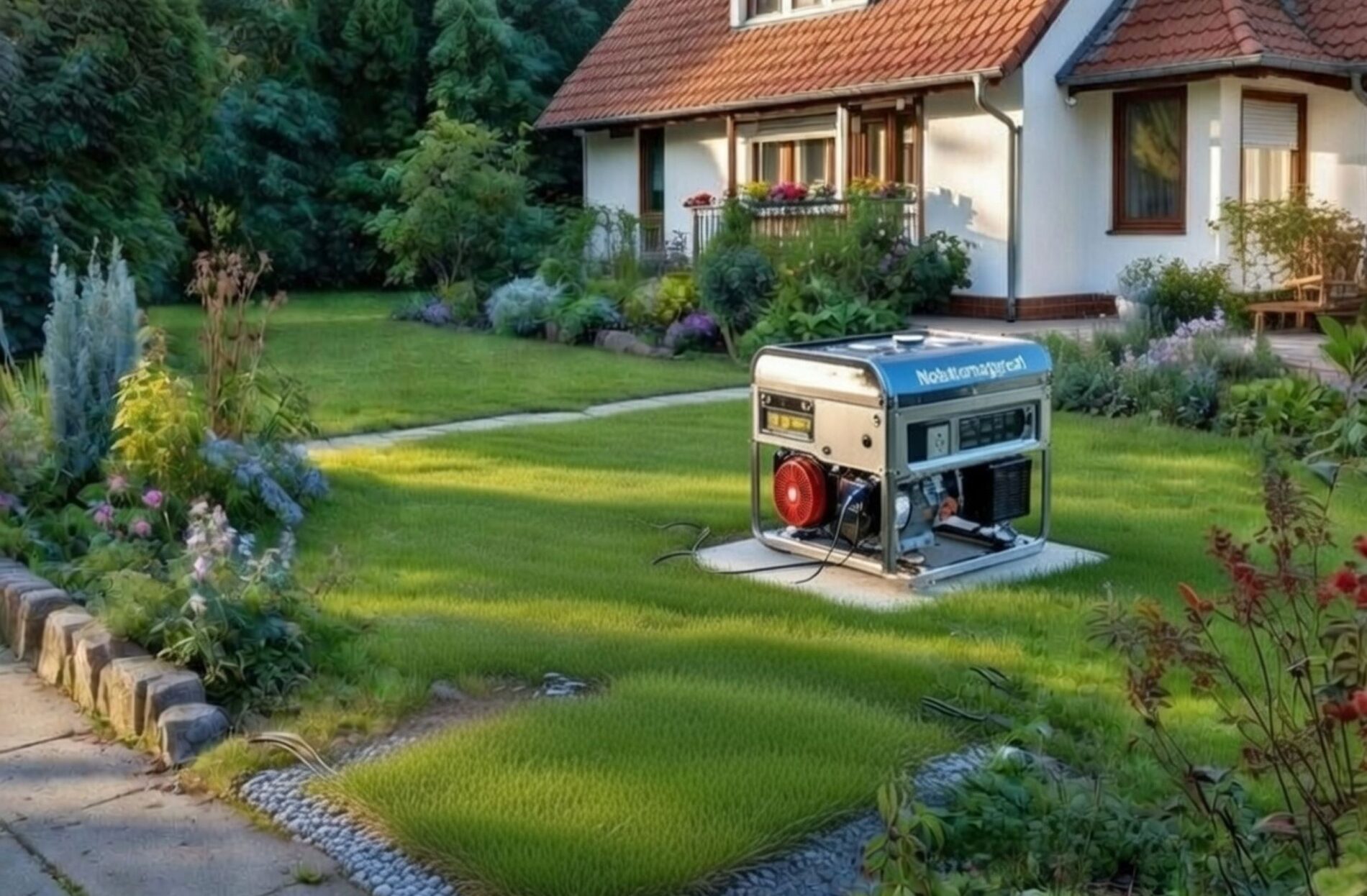
From her analysis, Kemfert derives a requirement with immediate impact: “Emergency power should be standard, at least in new buildings.” She is aiming for a minimum power reserve that ensures basic building functions. Just as smoke detectors save lives, an emergency power solution can at least mitigate the impact of a power outage. And she emphasizes that owners and landlords bear responsibility because a problem in the grid can quickly affect entire blocks of houses.
Kemfert is not calling for a luxury solution, but rather a reliable minimum level of preparedness. Extreme weather, technical malfunctions, as well as sabotage and cyberattacks increase the probability of a power outage, and therefore the pressure to act is growing. At the same time, a simple standard can limit costs, because consequential damages are often expensive. This puts construction practices at the heart of the debate.
Solar Energy and Storage as Resilience Boosters
Kemfert points to solar energy combined with storage as a viable option, because it allows for the creation of local reserves. The technology is now very affordable and can be sensibly integrated into homes or neighborhoods. This would allow essential consumers to continue operating even when the main grid is experiencing problems. At the same time, it would offer practical benefits in everyday life, as storage systems can buffer peak loads.
For Kemfert, the system logic is crucial, not just the hardware. Even those who own a solar power system today often cannot use their own electricity during a blackout because protective mechanisms disconnect the system from the grid. Therefore, concepts that enable off-grid operation are needed. Without this capability, even the most advanced technology remains ineffective in a crisis.
Island Grids and Municipal Responsibility
Kemfert describes the principle of island grids, meaning local power systems that disconnect in an emergency and remain stable independently. Hospitals and data centers have long used this approach because they cannot tolerate outages. Private households often lack this infrastructure, even though the need becomes apparent during a blackout. Therefore, neighborhoods should prepare for island operation, both technically and organizationally.
At the same time, Kemfert criticizes the political focus on protecting critical infrastructure. The focus is often on operators and facilities, while municipalities and administrations are insufficiently involved. Yet, it is precisely cities and districts that decide on contact points, communication, and assistance for those affected. And particularly vulnerable people need clear safety nets to ensure that support arrives quickly and reliably.
Calls for Preparedness Were Long Classed as Right-Wing Fearmongering
In public discourse, calls for preparedness were long considered a topic that many media outlets and commentators associated with the right wing. Therefore, recommendations for water, batteries, or an emergency radio were often dismissed outright, even though preparedness is also part of disaster preparedness. In the ZDF program “Terra X”, Professor Harald Lesch commented on the headline “This is what you need in case of a blackout” with the words: “That’s all nonsense, it’s really fear-mongering”.