
The Federal Court of Auditors’ criticism strikes a nerve with current fiscal policy because it doesn’t moralize, but rather focuses on the facts. This makes it all the more serious that Lars Klingbeil intends to cut funding for the auditing authority itself in the 2026 budget, while the debt program increases interest rate risks and the budget is already under strain.
Criticism as a System Test: When Spending Policy Displaces Control
The Federal Court of Auditors acts as a counterweight to the political temptation to legitimize spending with grand pronouncements. It demands reliable assumptions, transparent cost trajectories, and proof of impact—in other words, those minimum standards without which the 2026 budget becomes nothing more than a wish list. This very role generates resistance, because while oversight slows down decisions, it also prevents errors.
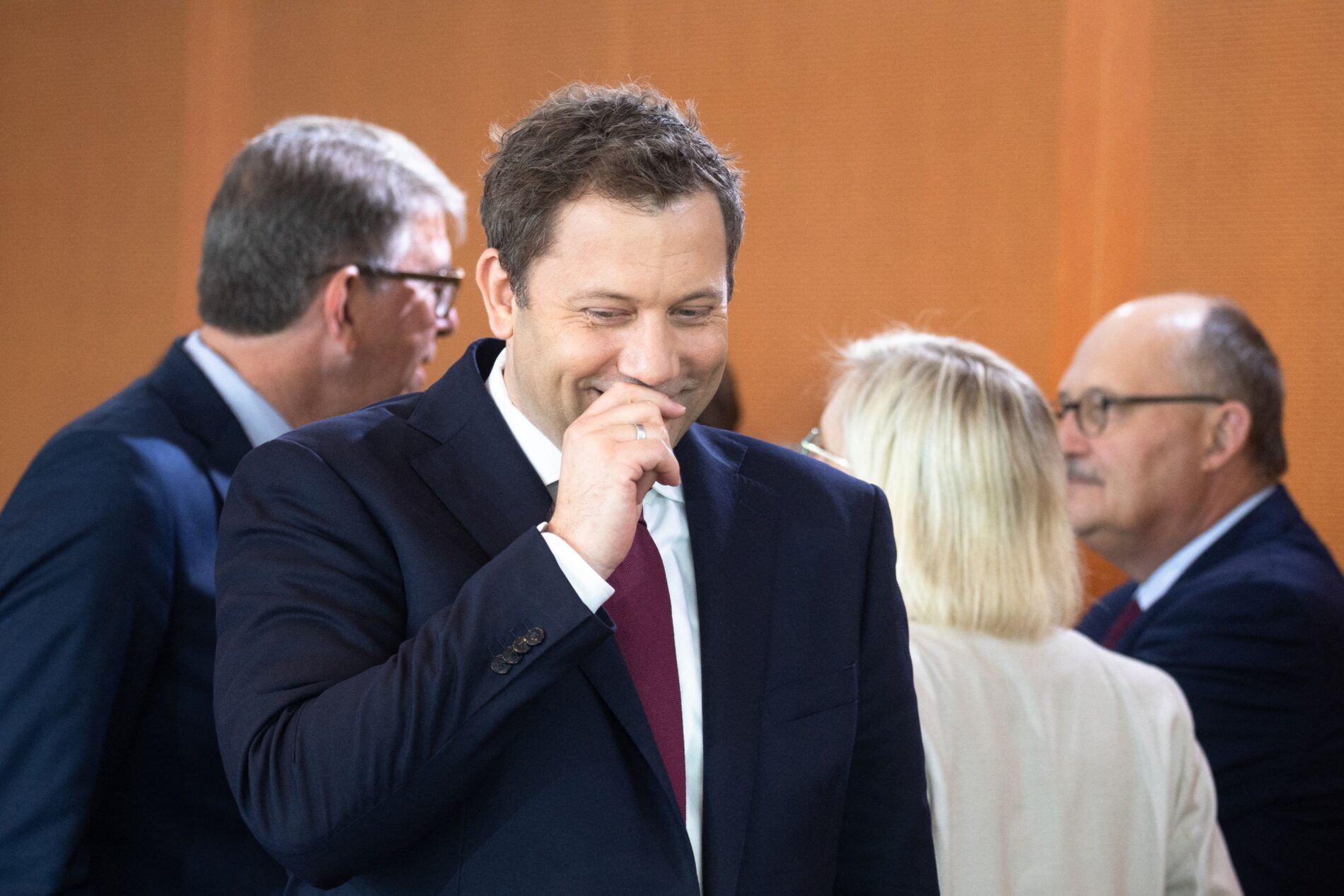
Photo by Emmanuele Contini via AFP
The planned cuts from Lars Klingbeil’s area of responsibility don’t target the projects that drive up expenditures, but rather the body that audits them. An additional level of auditing is to be eliminated, thus shifting the system’s balance. Less auditing doesn’t automatically mean less bureaucracy, but often less evidence when billions are poured into programs.
This move also appears to be a power play because the Federal Court of Auditors itself has been cutting costs for years. It reduced staff and structures while other agencies grew and responded to new tasks with new positions. Anyone who, in this situation, cuts again at the auditors’ level undermines frugality as an organizational principle and simultaneously signals that criticism is politically unwelcome.
Criticism in the Budget Committee: A single sentence that derailed the debate
How quickly expert review can turn into political defensiveness was demonstrated in the Budget Committee. An employee of the Federal Court of Auditors presented information on the cost development of the planned “Future Center for German Unity and European Transformation” in Halle. He cited €200 million in construction costs, 110 positions, and €15 million in personnel costs at the outset.
Then he said, and I quote: “Allow me a personal remark.” He questioned whether a project of this magnitude still set the right priority 35 years after reunification, given that many people in East Germany expected functioning infrastructure and sustainable living conditions. This wasn’t an ideological argument, but rather a criticism aimed at reviewing priorities.
The political response, however, focused on a different point. A Green Party representative interpreted the statement as a questioning of democratic efforts, and an SPD member warned of applause from the AfD. This didn’t address the criticism, but rather reframed it, which is disastrous in the realities of budgetary practice because it shifts the discourse from numbers to ideology. Lars Klingbeil reinforces this mechanism when his proposed cuts weaken the review system instead of forcing a debate about purpose and impact.
Budget 2026 Under Pressure: When the Debt Program Extends the Bill
The financial situation is now too significant to be glossed over with rhetoric. The 2026 budget has a gap of €182 billion, even though tax revenues are high and debt continues to rise. The debt program provides short-term relief, but it creates long-term commitments because interest rates and repayment schedules constrict the budget.
Economically, this creates a classic intertemporal conflict. Resources are allocated today, while tomorrow the available leeway shrinks, and the bill typically falls on those expenditures that are least politically protected. Veronika Grimm has pointed out that by 2030 at the latest, almost the entire federal budget could be tied up in defense, social programs, and interest payments. If this happens, the competition for the remaining funds will become brutal, and every euro for education and research will be sorely missed.
From this perspective, the Federal Court of Auditors’ criticism is not a luxury, but a necessary risk mitigation measure. Reducing the size of the auditing authority in the 2026 budget weakens the instrument that identifies misallocations early and limits path dependencies. A loan package without rigorous oversight can easily turn into a long-term program whose effectiveness is never reviewed.
Criticism of Political Practice: The Bundestag Provides a Case Study
The sensitivity to scrutiny is also explained by the practices repeatedly documented by the Federal Court of Auditors. Despite a smaller number of members of parliament, budget items in the Bundestag are increasing, with travel expenses being one of the biggest drivers. Between October 2023 and February 2025, a total of 546 trips abroad were approved, and business class is once again permitted for flights exceeding two hours.
The Bundestag administration is also expanding its staff despite the declining number of members, and the Court of Auditors noted: “The Bundestag administration failed to explain why it intends to fill these positions despite the lower number of members.” Such statements may not seem spectacular, but they are politically explosive because they expose the discrepancy between the stated objective and the justification. This is why criticism provokes defensiveness, and why Klingbeil’s proposed cuts appear to be an attempt to narrow the source of such complaints.
The problem lies not in a single decision, but in the underlying logic. When the government increases spending, it needs stronger oversight, not weaker oversight. Cutting funding for the Federal Court of Auditors in the 2026 budget creates incentives that will ultimately be more expensive, because mistakes will have to be corrected later and are then almost impossible to reverse politically.