
The fixed feed-in tariff has made solar expansion on German rooftops predictable. This safety net for new solar installations is set to disappear in 2027. Economics Minister Katherina Reiche (CDU) and Environment Minister Carsten Schneider (SPD) are announcing contracts for difference (CfDs) as a replacement. At the same time, EU approval for the current solar subsidy expires at the end of 2026. A replacement is therefore mandatory. Those who install solar panels in 2026 will continue to benefit from the existing system. Since February 1, 2026, the feed-in tariff has been 7.78 cents per kilowatt-hour.
Direct Marketing as a Mandatory Obligation – Market Logic Replaces Planning Security
There is still no amendment to the Renewable Energy Sources Act (EEG), but the direction is clear. The fixed feed-in tariff is to end. In the future, operators will be required to sell their electricity through direct marketers. This will transform a simple billing process into a contractual model with a price corridor. If the market price falls below the agreed-upon range, the contracting partner will compensate for the difference. If the price exceeds the range, the plant owner must pay the contracting partner. This risk did not exist under the previous EEG system.
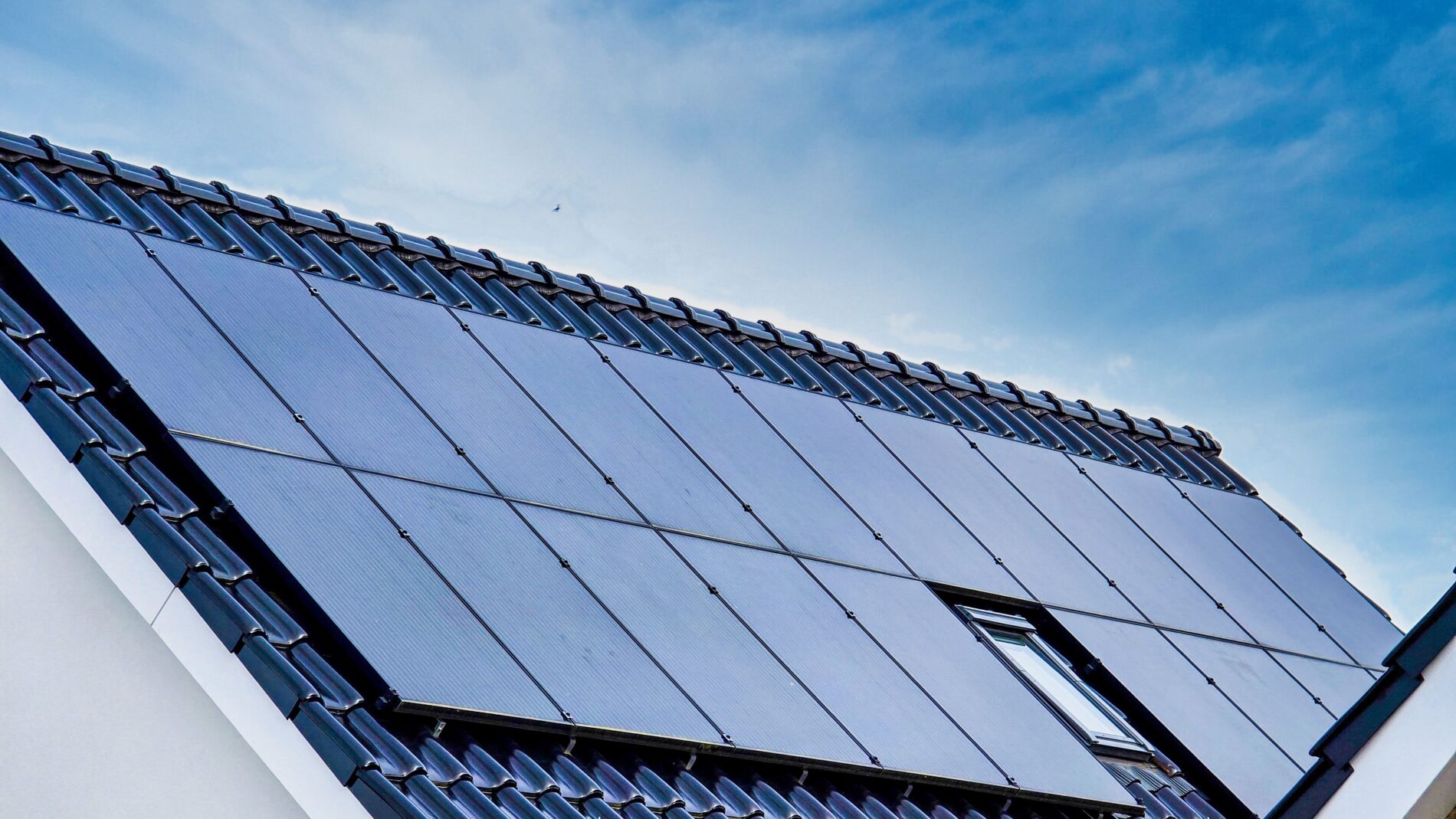
Politically, the model is justified on the grounds of grid stability. Critics of the feed-in tariff point to the uncoordinated feed-in on sunny days. On such days, the market price sometimes falls below zero. This is seen as a signal that the system is temporarily receiving more electricity than it can efficiently absorb. At the same time, experts point to local bottlenecks when grids are overloaded. The restructuring of the market design is intended to reduce such effects.
Small PV rooftops are losing economic ground
A study by the Fraunhofer Institute for Solar Energy Systems ISE, commissioned by Elektrizitätswerke Schönau (EWS), warns of a sharp decline in the small-scale PV system segment. The focus is on the mandatory direct marketing of electricity from rooftop systems up to 30 kWp. “Our calculations show that, for direct marketing of electricity from small rooftop PV systems up to 30 kWp, a self-consumption rate that is currently about 15 percent higher would be necessary to achieve the same economic return as under the feed-in tariff,” says Dr. Verena Fluri, project manager and co-author of the study.
This affects households that consume little electricity during the day. Those who don’t charge an electric car and don’t have large appliances in their homes often don’t reach these targets. However, this is precisely the group that shapes the mass market for single-family home rooftops. If systems become less profitable there, a key driver of expansion disappears.
Fees eat up revenues – direct marketing becomes a profit killer
The study shows that the revenues from solar power are significantly eroded by marketing fees. Depending on the self-consumption rate, these costs could amount to up to 69 percent of the revenues over 20 years. This reduces the cash flow that finances the investment. The amortization period is extended by several years. “Many systems would therefore either be smaller or not built at all,” the authors warn.
A second obstacle lies in the effort involved. Direct marketing requires choosing a contract, understanding billing procedures, and forecasting future market prices. “Buyers would have to familiarize themselves with the direct marketing system and estimate the income. Estimating income is subject to considerable uncertainty, as it depends heavily on many factors (…). In contrast, the feed-in tariff offers the security of guaranteed income for 20 years.” For private owners, this uncertainty is often more crucial than a theoretical increase in yield.
Grid-friendliness is possible without drastic cuts to subsidies
The study authors point to instruments that should be expanded first. These include a faster rollout of smart meters. Without comprehensive metering, everyday control remains limited. Dynamic electricity tariffs also send price signals that motivate consumers to shift their load. A dynamic feed-in tariff could steer feed-in at specific times without forcing small-scale installations into complex contract models.
The authors also mention subsidized direct marketing as an interim step. This creates incentives when market prices are high without overwhelming small operators with excessive fees. The core recommendation is: first create infrastructure and regulations, then expand obligations.
EWS warns against hasty action: Without smart meters, the foundation is missing
EWS, which commissioned the study, urges a sequential approach and a realistic perspective. “Currently, there is neither a nationwide rollout of smart meters to accurately record the feed-in of solar power into the grid, nor do we have consistently standardized market communication regarding this in Germany,” said EWS board member Alexander Sladek, according to a press release.
Sladek fears disruptions for small investors. “A hasty exit from the feed-in tariff would directly impact small investors, such as community energy projects, because the systems would hardly be profitable anymore.” He links this to a warning against further expansion: “And above all, the energy transition would be slowed down because fewer and smaller systems would be built.” The Ministry of Economic Affairs is expected to present a draft proposal in the coming weeks. Meanwhile, the degression of the feed-in tariff continues. The tariff will be reduced again on August 1, 2026.