
Germany experienced a noticeable loss of purchasing power between 2020 and 2025 because prices rose significantly faster than incomes. The Federal Statistical Office published new analyses on this topic, which were commissioned by the Sahra Wagenknecht Alliance (BSW). The period under review thus encompasses the years since the beginning of the COVID-19 pandemic. Inflation averaged 21.8 percent over this period, while incomes rose by only 11.2 percent. The decisive risk factor is this persistent gap, which resulted in a significant real decline in prosperity for average earners. (welt: 04.03.26)
Purchasing power is declining – inflation is outpacing income
While many people received more money in nominal terms, inflation has made everyday life much more expensive. This immediately impacts households because basic expenses rarely decrease. Furthermore, the financial cushion for repairs, savings, and major purchases is shrinking.
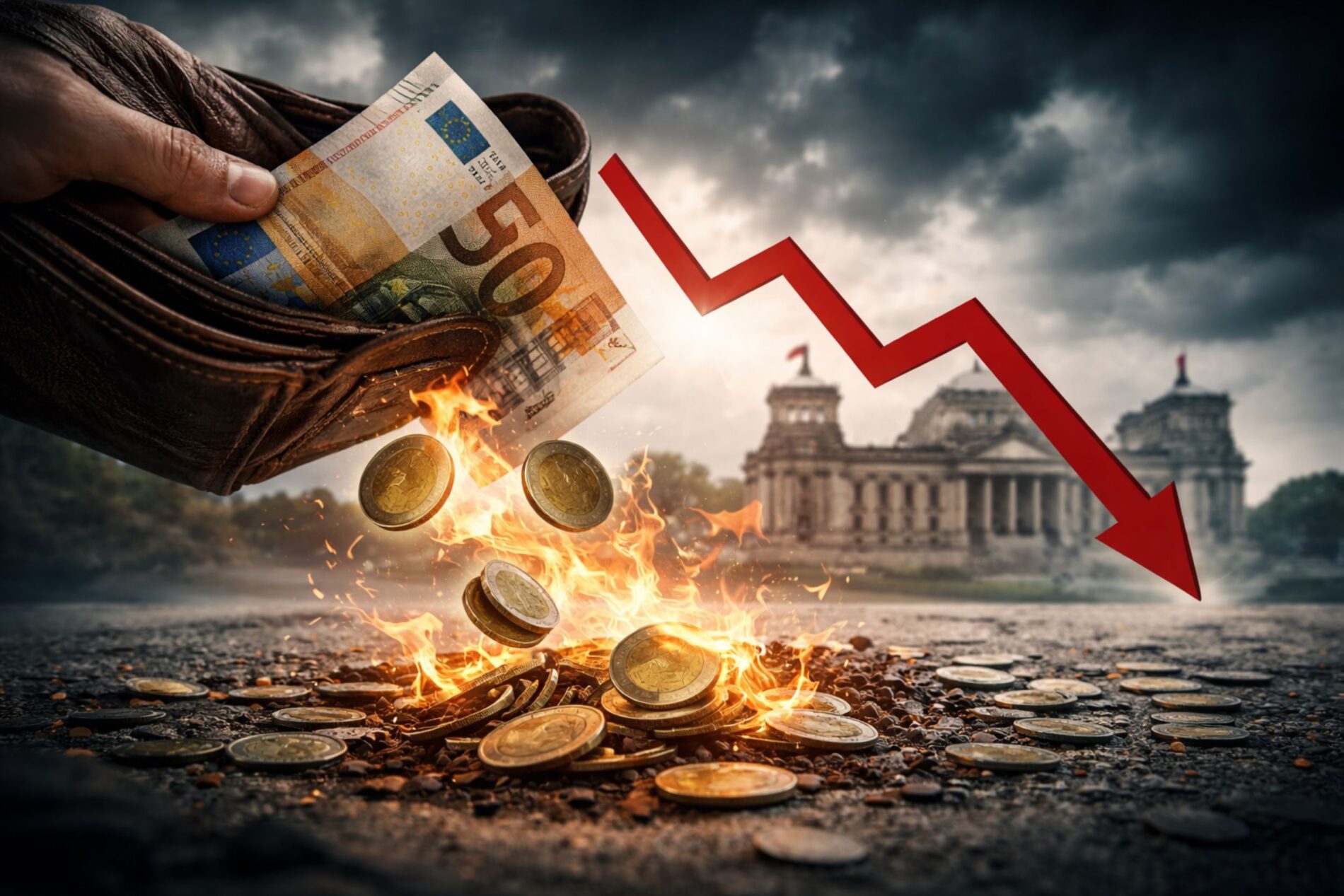
The figures illustrate the problem with two key indicators. Median income rose from €26,008 to €28,913, an increase of 11.2 percent, while prices rose almost twice as much. Average income also increased only slightly, from €29,896 to €33,385, representing a rise of 11.7 percent. The median is considered the more robust indicator because extreme salaries have less of an impact on it compared to average income.
Median and Average – The Middle Class Is Slipping
The analysis includes all income types, including those of the self-employed and freelancers, thus providing a broader picture. This reveals the strain across all sectors, while many income streams are not growing at the same pace. At the same time, this development particularly affects average earners, as they cannot absorb price increases as easily as high earners.
The analysis includes all income types, including those of the self-employed and freelancers, which is why the picture is broader. BSW founder Sahra Wagenknecht addressed the findings politically, stating: “The new figures show that the majority of citizens have suffered a significant loss of prosperity since the coronavirus pandemic and the war in Ukraine. These are not minor cutbacks, but massive losses in purchasing power. The policies of the past five years have made Germans considerably poorer.” She therefore calls on the federal government to abolish the CO2 price, reactivate Nord Stream, and resume importing Russian oil.
Energy as the Next Price Driver
Wagenknecht also links this to a warning of new shocks. Because of the attack on Iran, consumers face the threat of “new price shocks at the gas pump and in the boiler room, as does industry.” This increases the risk of further price waves, while many budgets are already tightly calculated. Therefore, energy remains a lever that can further exacerbate the loss of purchasing power.
While there has recently been a rebound in wages, it is coming late. The Federal Statistical Office reported that real wages are recovering. In 2025, the real wage index almost reached the real wage level of 2019, i.e., before the pandemic. This provides short-term relief, but at the same time, the dip in purchasing power from previous years remains a tangible reality for many households.