
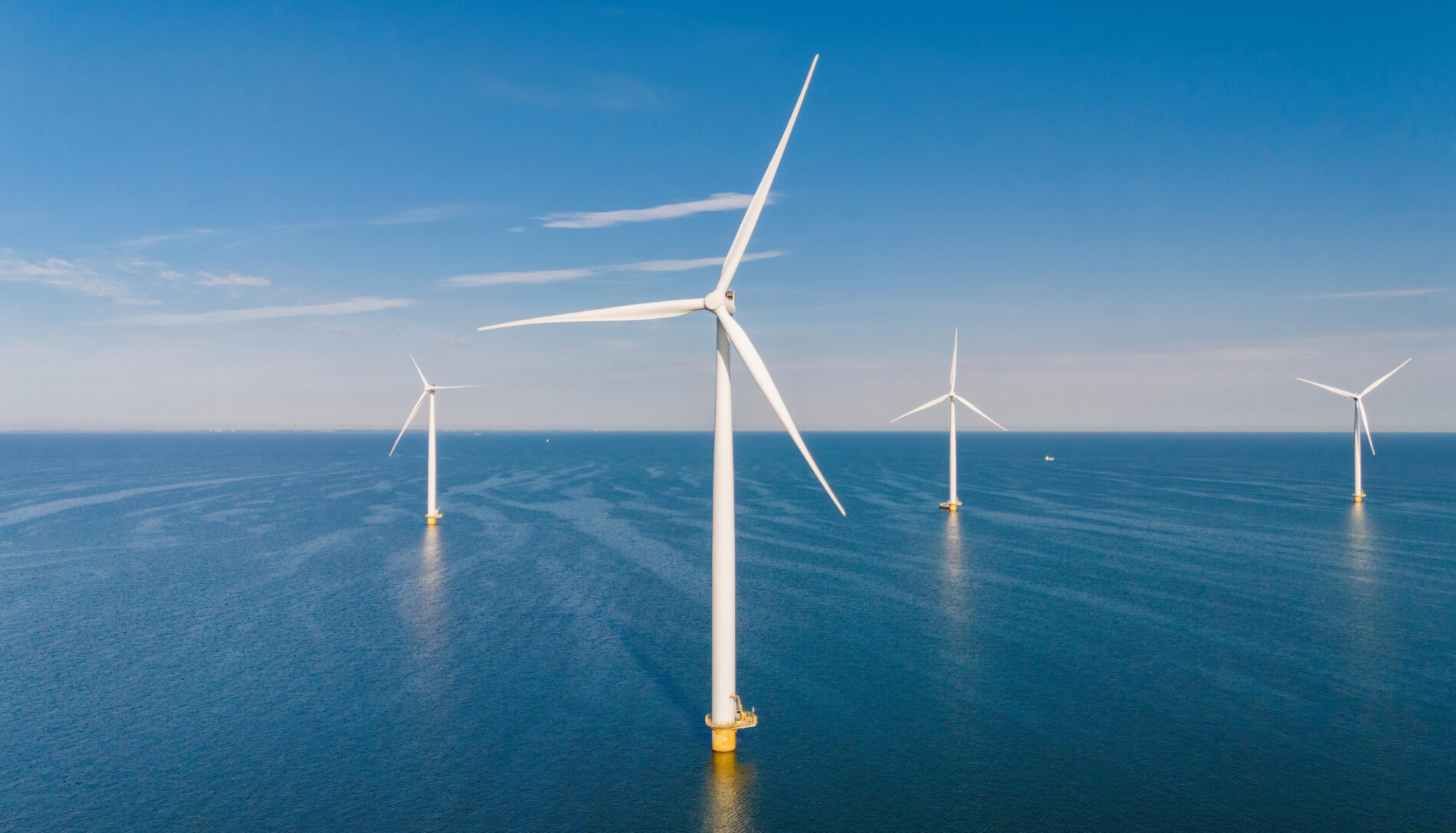
As is well known, the North Sea, with its strong winds, is an ideal location for wind power generation. The relatively shallow waters make the construction of wind farms comparatively inexpensive. This has attracted investors in the past, such as the energy companies BP and Totalenergies, which paid a total of €12.6 billion for new wind farm sites as recently as summer 2023. Another wind farm auction for sites off the German coast took place in summer 2025, but this time it was a complete flop: not a single bidder came forward. (msn, 29.11.2025)
Declining Interest in Offshore Wind Farms
This is a global phenomenon: Reports from Great Britain, the Netherlands, Denmark, Belgium, Japan, and the USA indicate a sharp decline in interest in offshore wind power. Following interventions by the Trump administration, Ørsted, the world’s largest wind farm developer, announced a halt to all activities off the US coast. RWE is also no longer building offshore wind farms there. The industry giant Equinor is currently working to complete the projects it has already approved.
Søren Lassen heads the wind energy division of the energy consultancy Wood Mackenzie. He reports that practically only in China is there still growth in this sector. Elsewhere, planned projects are being halted, or at least scaled back considerably. Lassen predicts a “collapse” in the construction of new offshore wind farms by around 2028. This has serious economic consequences for the specialized companies. The share price of the world market leader Ørsted has fallen by 80 percent since 2021. The IEA (International Energy Agency) is also drastically lowering its forecasts.
Originally, it had expected an increase in offshore capacity from the current 50 gigawatts to 214 gigawatts by 2030, but now estimates the growth at a target of only 140 gigawatts. This is regrettable, because one gigawatt can supply around one million households with electricity. The global energy transition appears to be jeopardized by the current situation.
What is the root cause of the offshore wind power crisis?
A combination of factors has led to this situation. Falling revenues are met with rising costs, driven by higher interest rates and commodity prices. Added to this are drastic supply chain bottlenecks and political resistance, particularly evident in the US under Trump. The cost explosion of up to 40 percent since the early 2020s is likely the most significant reason for investors withdrawing. The fact that many countries – including Germany – have recently drastically reduced or even completely eliminated their subsidies for wind power certainly also plays a role. In this respect, companies that invested in this sector years ago have proven to have a lucky touch, such as ENBW from southern Germany.
In 2017, the company acquired land near Heligoland for the “He Dreiht” wind farm, which has been generating electricity since November 2025. Connecting the first 15 MW turbine from the global market leader Vestas was a sensation, as the rotor has a diameter of 236 meters and can supply four households with electricity for a day with a single rotation. ENBW plans to connect the remaining 63 wind turbines by mid-2026. Major customers like DHL, Bosch, and Fraport, who have signed long-term power purchase agreements with ENBW, are waiting for the electricity. Why haven’t such success stories continued since 2025?
A Failure foretold
Stefan Thimm, head of the German Offshore Wind Energy Association, criticizes the ever-increasing risks imposed on companies by policymakers. In this sense, he considers the collapse of offshore investments a “failure foretold,” while Federal Minister for Economic Affairs Katharina Reiche (CDU) blames the crisis on unfavorable geological conditions and falling electricity prices. She proposes adjusting the tender conditions for offshore auctions, aligning them with the conditions in other North Sea coastal states.
But even in Great Britain, these types of auctions are no longer successful. The government offers companies Contracts for Difference (CfDs) to hedge against falling electricity prices, but the instrument is hardly gaining traction. Nevertheless, Germany is now considering a new tender design intended to make wind auctions more attractive again. Minister Reiche has embraced the idea of Contracts for Difference but also wants to give greater weight to qualitative criteria. In her view, this includes the grid-friendly integration of wind farms into the electricity network. This aspect is certainly relevant when we follow the discussion about power lines intended to transport offshore wind power from the North Sea to southern Germany, the construction of which is being delayed due to bureaucracy, costs, and legal objections from local residents.
Reiche doesn’t have much time for her legislative initiatives. A similar situation with excessive bureaucracy and other difficulties occurred after 2010. At that time, this situation led to a “break in the thread” in the expansion of renewable energies: Some companies that had made advance investments even had to file for bankruptcy after projects were halted.