
The Expert Council on Climate Issues has issued a scathing verdict on Germany’s climate policy. The oversight body has rejected the optimistic assumptions put forward by the Federal Environment Agency and the Federal Government. This rebuke stems from the assessment that the Agency significantly underestimated projected emission levels through 2030. Instead of a buffer of 4.5 million tons of CO₂, the country now faces a shortfall—or overshoot—of between 60 and 100 million tons. Consequently, Germany is set to miss key climate targets, despite massive subsidies, high electricity prices, and sweeping interventions across the energy, transport, and building sectors. A particularly alarming aspect of this situation is that costs are spiraling and the economy is being plunged into crisis, while tangible results remain conspicuously absent. (welt: 18.05.26)
Expert Council Calls Climate Plan into Question
The Federal Environment Agency had initially provided some relief to the Federal Government. At the time, UBA President Dirk Messner stated: “The projection data show that the goal of reducing greenhouse gas emissions by 65 percent by the end of the decade remains achievable.” However, in light of the Expert Council’s assessment, this statement now appears to be merely wishful thinking.
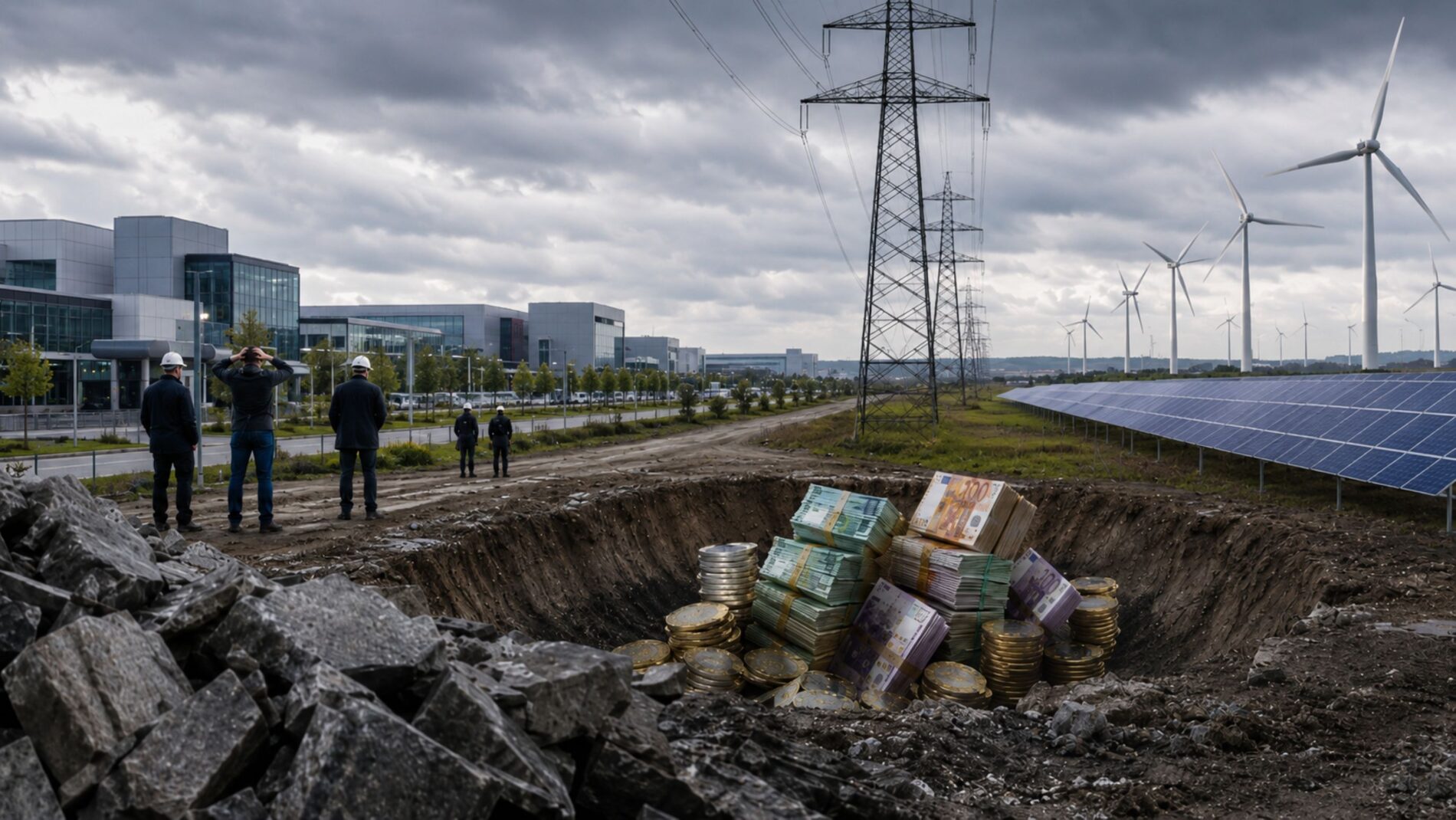
The expert panel has reached a significantly harsher verdict. They identify not merely minor deviations, but a structural failure to meet objectives. Furthermore, they consider the emissions-reduction impact of the climate protection program to be overestimated. This undermines the political narrative that Germany simply needs to channel more money in the same direction.
67 Measures, Eight Billion Euros—Yet Still Insufficient Impact
With the 2026 Climate Protection Plan, Federal Minister for the Environment Carsten Schneider presented a total of 67 measures. These include the construction of 2,000 additional wind turbines by 2030. He also announced a further eight billion euros in funding. However, it is precisely this program that fails to convince the expert council.
This lies at the heart of the problem. Germany continues to pump billions into the energy transition, yet its climate targets remain out of reach. While consumers and businesses shoulder heavy costs, progress in key sectors remains too slow. This creates the impression of a policy that is expensive but fails to deliver on its central promise.
Transport and Buildings Lag Behind Despite Subsidies
This failure is particularly evident in the transport and buildings sectors. Substantial subsidies for electric vehicles and heating systems are failing to generate the necessary reduction in emissions in these areas. Moreover, the measures implemented to date are insufficient to ensure compliance with European mandates. Under the Effort Sharing Regulation, Germany is required to halve emissions in several sectors—relative to 2005 levels—by 2030.
These sectors include domestic transport, buildings, agriculture, small-scale industry, and waste management. Germany also risks failing to meet its obligations regarding agriculture and forestry. Furthermore, it remains unclear how carbon dioxide that has already been emitted is to be technically or biologically removed from the atmosphere. Thus, it is not merely a single objective that is failing, but an entire climate strategy.
Electricity Prices Burden Industry and Consumers
The economic consequences are severe. According to calculations by the Institute for the German Economy (IW), the federal government subsidizes the energy sector to the tune of nearly 30 billion euros annually in an effort to dampen electricity prices. Nevertheless, Germany ranks among the most expensive locations for electricity in Europe. Consequently, industrial firms are increasingly citing energy prices as the reason for relocating operations or shutting down.
At the same time, the share of fossil fuels in energy consumption remains high. Even after 26 years of the Energiewende (energy transition), gas, oil, and coal still meet around 78 percent of Germany’s energy demand. This figure highlights the imbalance with particular clarity: despite colossal expenditures, Germany has secured neither affordable energy nor the achievement of its climate targets.
The Role Model Becomes a Credibility Risk
For years, Germany presented its energy transition as a blueprint for other nations. Furthermore, with climate aid recently amounting to around ten billion euros annually, the Federal Republic ranked among the largest financial contributors to international climate projects. However, a blueprint loses its value if it fails to work in its country of origin. This is precisely what the new assessment now exposes.
German climate policy sought to demonstrate that climate protection and economic strength could go hand in hand. Instead, costs are rising while both industry and citizens feel the pinch of restrictions. Moreover, Germany’s own share of global CO₂ emissions stands at approximately 1.6 percent. Consequently, the overall verdict is particularly harsh: high expenditure, negligible global impact, and missed national targets.
New Obligations Loom Ahead of the Next Federal Election
Environmental organizations, however, are demanding a faster pace. The Klima-Allianz Deutschland (Climate Alliance Germany) advocates for a greater reliance on renewable energies, climate-friendly heating systems, and improved local public transport. The WWF further criticizes the fact that the watered-down amendment to the Heating Act was not factored into the calculations; as a result, the organization identifies even larger gaps in the plan.
Politically, however, the situation is becoming precarious. While rising prices for fossil fuels could indeed encourage investment in renewable energies, economic concerns and fears regarding job security are simultaneously dampening the willingness of many consumers. If targets are once again missed, the Federal Government must implement additional measures. This would threaten to impose new burdens on citizens and the economy—even though the billions already spent have failed to achieve their objectives.