
The European Commission has warned Spain over its planned reduction of the value-added tax (VAT) on fuels from 21 to 10 percent, classifying the move as a violation of current EU law. This is according to a letter dated March 28 to the Spanish authorities, as reported by El País. The warning stems from a new package of measures by the government in Madrid, a response to sharply rising energy prices related to the war in Iran. Madrid intends to provide relief to households, the self-employed, and businesses with the lower fuel tax, but Brussels sees a key risk factor: the measure could violate the VAT directive, distort the internal market, and simultaneously promote the consumption of fossil fuels. The EU therefore issued a warning but has not yet initiated infringement proceedings. (elpais: 07.04.26)
Brussels sets clear legal limits for Spain
According to the Commission, the European VAT Directive does not permit a reduced rate on fuels. A spokesperson for the Commission explicitly referred to the current legal situation, stating that “the VAT Directive does not provide for the possibility of applying a reduced rate to the supply of fuel.” Brussels thus clarifies that the Spanish plan, in its current form, is not permissible.
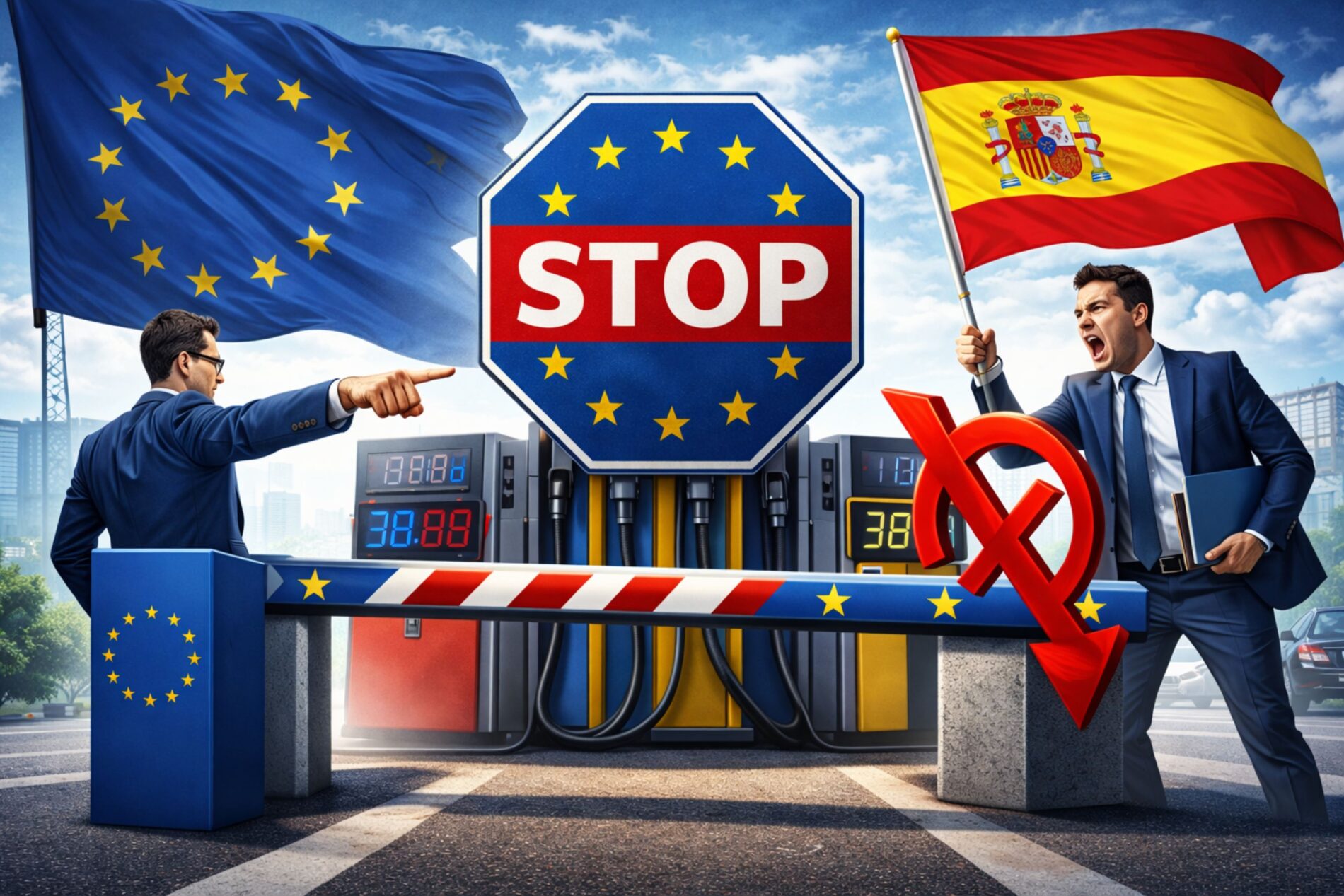
The warning, however, does not yet signal an escalation. The Commission is currently refraining from initiating formal proceedings against Spain. Nevertheless, the signal is clear, because Brussels is clearly defining the limits for national relief measures in the energy crisis. Member states are permitted to provide assistance, but must adhere to EU rules.
Spain’s fuel tax plan aims to relieve consumers
The government in Madrid defends the measure as a temporary response to an exceptional situation. It argues that high energy prices necessitate rapid support. Therefore, the reduction is intended to directly relieve the burden on consumers and businesses. Private households, the self-employed, and companies are the primary focus.
Brussels, however, does not reject relief measures outright. The Commission recommends interventions in excise duties on mineral oils instead, as this approach would be permissible under EU law. At the same time, it demands targeted and time-limited aid. These measures should neither increase the demand for oil and gas nor create new distortions in the internal market.
EU insists on temporary aid and reduced fossil fuel consumption
EU Economic Affairs Commissioner Valdis Dombrovskis reaffirmed this position after the latest Eurogroup meeting. He stated: “Any effective national policy to protect our economy and our citizens must be aligned with certain fundamental principles. These include the need to be selective and temporary, to avoid increasing overall demand for oil and gas, and to be consistent with the need to further decarbonize our energy system.” The Commission is thus directly linking the current price issue to the EU’s long-term climate goals.
This creates a twofold problem for Spain. On the one hand, political pressure is mounting to quickly mitigate the consequences of high energy prices. On the other hand, Brussels is significantly limiting the scope for fuel tax relief. For now, therefore, it remains a warning, while Madrid points to its crisis management strategy and the EU presses for legally sound alternatives.