
Poland is explicitly targeting Chinese electric cars with its new security regulations because connected vehicles generate and transmit vast amounts of data. Cameras, sensors, and radar systems record the environment, routes, and driving patterns. From the Ministry of Defense’s perspective, this very data trail can become relevant for espionage if access and data flow are not securely controlled. Therefore, Warsaw is focusing on security zones and digital interfaces: access restrictions to military sites, parking bans near sensitive locations, and the linking of official smartphones to the vehicle’s onboard computer. (tvpworld: 19.01.26)
Espionage Risk: Military Zones Are Off-Limit and Parking Prohibited in Sensitive Areas
The Polish Ministry of Defense is taking a clear stance. Vehicles from Chinese manufacturers are no longer permitted to enter military areas. Furthermore, parking near strategically important sites is prohibited. This effectively creates restricted zones, even though no nationwide driving ban has been issued. The rule targets locations where even seemingly insignificant location data and camera images can be security-relevant.
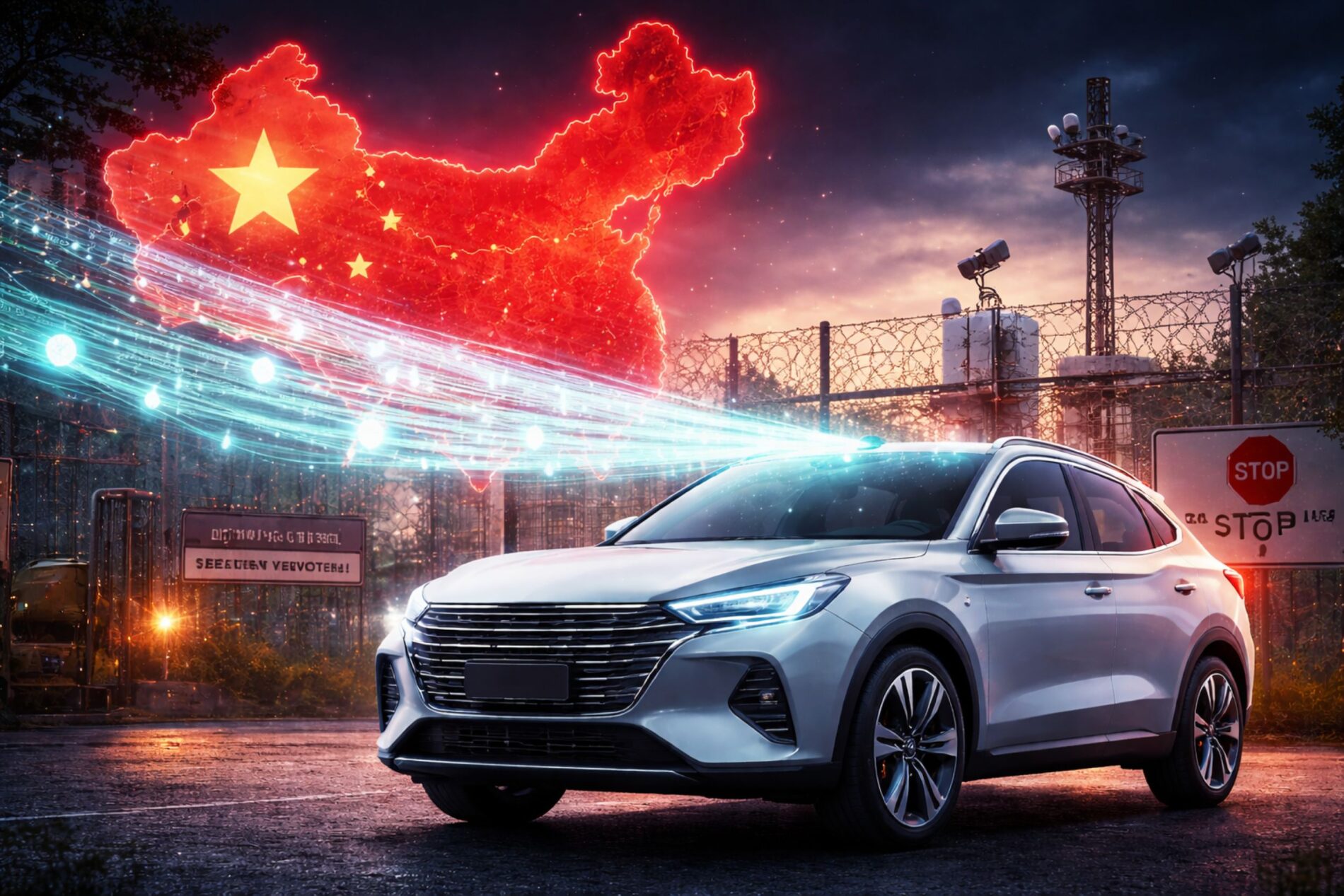
In addition, the army is targeting digital connectivity. Military personnel are no longer permitted to connect their service smartphones to the onboard computers of such vehicles. While a formal decision has not yet been issued, the practice is already being implemented. A spokesperson announced that a decision will be presented in the coming days. Polish media also report that the measures could potentially affect Tesla as well.
Data leakage is at the heart of the security debate
Poland is not considering the technology itself to be the problem. Comparable sensors are also found in Western models. The crucial issue is where the data is transferred and who can analyze it. European manufacturers operate under strict data protection and compliance regulations, while Chinese companies operate under a different legal framework. Experts point out that companies in China may be obligated to cooperate with state security agencies.
This increases the risk that driving profiles or camera data could become available outside of Europe. Security authorities are not thinking in terms of marketing categories, but rather in terms of access paths. Even the mere possibility of reading movement and environmental data from the vicinity of military installations can be considered espionage. Therefore, Warsaw is focusing on zones where every detail has a higher value.
Study from Warsaw Increases Pressure on Europe
A report from the Warsaw Center for Eastern Studies has brought the issue into sharper focus. Titled “Smartphones on Wheels,” it describes connected vehicles as potential data sources in a security context. The warnings align with the official line of the authorities, which is why the issue is gaining political momentum. At the same time, it is becoming clear that national security interests react more quickly than lengthy EU review processes.
The international contrast is noteworthy. For years, China has limited the scope of action for foreign automakers in its own country through strict regulations and licensing. Analyst Paulina Uznańska believes Europe is lagging behind in assessing such risks. The market is growing while regulation is lagging behind, and it is precisely in this gap that operational risks arise.
Boom of Chinese Brands – and Relevance for Germany
Despite the concerns, sales of new Chinese cars in Poland are rising sharply. According to reports, sales quadrupled last year. Brands like BYD and MG are attracting customers with price advantages often ranging from 15 to 20 percent compared to their European competitors. Price has an immediate impact, while security issues often remain abstract, even though they can have concrete consequences.
For Germany, the Polish approach is therefore a signal. Chinese brands are also gaining market share here, and fleet purchases by companies and rental companies are growing. At the same time, the EU is examining the cybersecurity risks of connected vehicles, but individual states can act more quickly. If the Polish approach spreads, exclusion zones, interface regulations, and bans on data linking could also become reality here. The debate is thus not just about trade policy, but about defending against espionage risks in the everyday world of connected mobility.