
Cherry, the internationally renowned peripherals manufacturer from Auerbach in the Upper Palatinate region of Germany, is ceasing its German production after 60 years. Cherry became particularly famous for its iconic keyboards, which are expected to continue being manufactured in the Far East. Production in Germany, however, is no longer profitable, according to management. (WinFuture, 27.11.2025)
German headquarters to remain
The highly specialized company will completely cease production at its German site and relocate it to the Far East. However, the headquarters will remain in the Upper Palatinate region and undergo extensive renovations. The company cannot continue operating a production line located in Germany, primarily due to German wages, including social security contributions. Its legendary keyboard switches, made in Germany, enjoyed an excellent reputation worldwide.
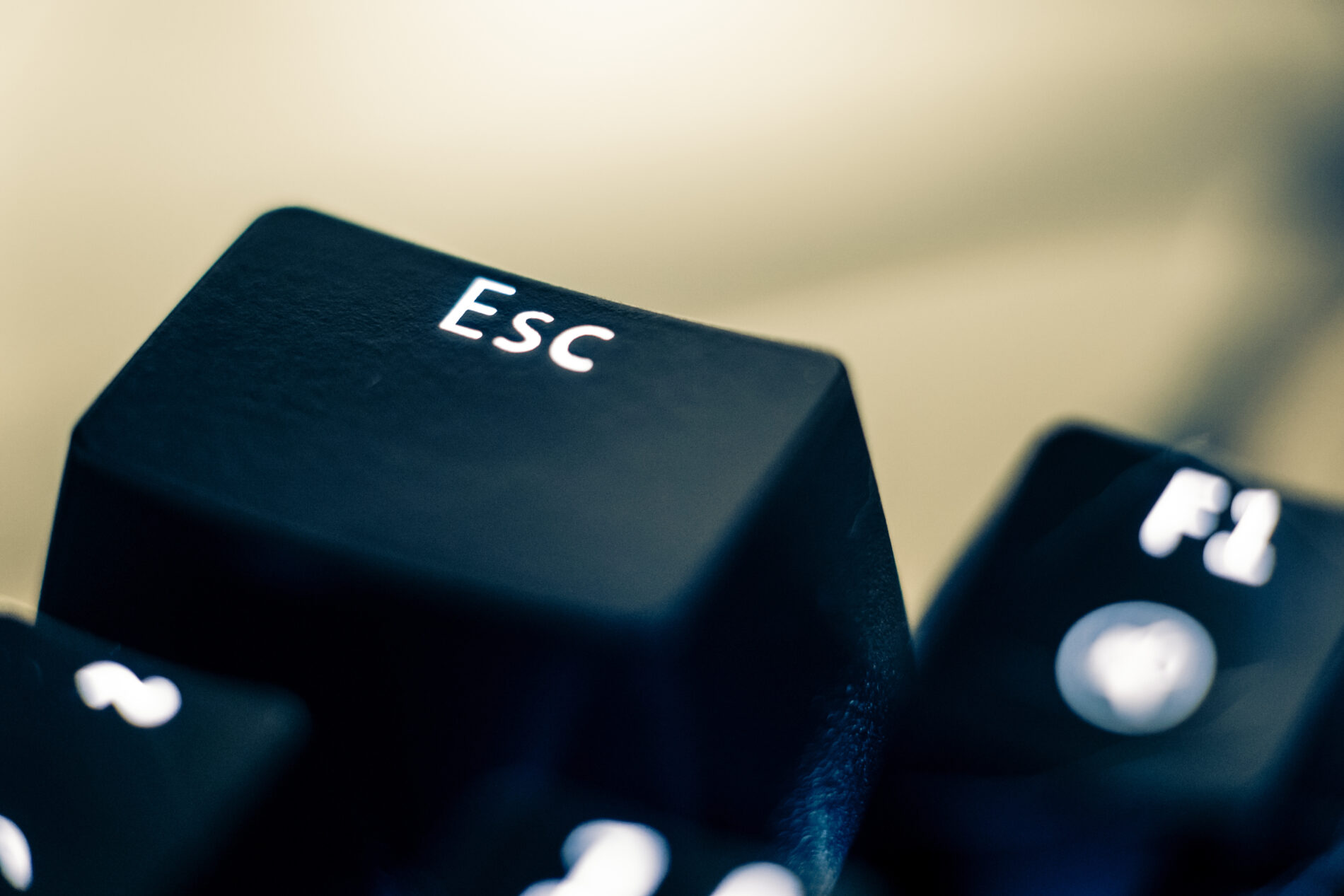
The manufacturer last presented its IK series at Computex in early 2025. These are inductive analog switches representing a new generation and highly sought after. However, the company has been struggling with financial difficulties for some time, which ultimately plunged it into a full-blown crisis. The consequence is a definitive end to production at the German site. For over half a century, the prestige of the Upper Palatinate company had been growing: its high-quality mechanical keyboard switches were the epitome of German craftsmanship in the hardware sector. However, cost pressures had recently become too great.
Therefore, these key components will now be supplied primarily by Chinese and, to some extent, Slovakian contract manufacturers. In industry circles, the move is considered drastic, but from the company’s perspective, the measure was unavoidable: the ongoing financial difficulties were recently reflected in a massive drop in the value of Cherry’s stock.
What will happen to the Auerbach site?
The Auerbach company premises will remain completely intact. Cherry will now convert its former production halls into warehouse space and, right next to its newly designed headquarters, will once again manage its own logistics, which the company had previously outsourced. This will save on costs for external service providers. The headquarters will now be a pure development center with integrated logistics. However, this step alone is not enough to lift the company out of the red.
At the last annual general meeting, the board of directors therefore announced that one of the two remaining core divisions would have to be sold. This is the only way to secure liquidity. These divisions are “Peripherals,” which includes keyboards and mice for office and gaming PCs, and “Digital Health & Solutions.” In this latter division, Cherry produces card terminals and telematics products. The sale decision had not yet been finalized by early December 2025.
Could the relocation of production to Asia lead to a decline in quality?
Many hardware enthusiasts fear this. For them, the current events mark a turning point: they specifically valued Cherry products for the high quality attributed to local manufacturing – namely, “Made in Germany.” However, the company itself and industry experts are reassuring the fan base. German managers can now enforce the same high standards in Chinese or Eastern European factories as they do in Germany.
Cherry – Back to the Roots
Even though six decades of purely German production is a long time, Cherry is now, historically speaking, returning to its roots. These roots lay in the USA for the later German icon, as its Anglo-Saxon name suggests. Walter Cherry founded the company in 1953 in Highland Park, Illinois, and established the German production line in 1963. With the peripherals produced here, the company achieved a spectacular international breakthrough in 1983. That year, it launched the MX Switches, which have since defined the global standard for mechanical keyboards.
Cherry established a color scheme to categorize the switch characteristics. Blue stood for clicky, red for linear, and brown for tactile. Almost all competitors soon adopted this scheme, but Cherry remained the innovation and market leader. Over the past few decades, billions of these switches likely left the Auerbach factory and were delivered to renowned third-party manufacturers like Dell and Corsair, finding their way into their keyboards.
However, a Cherry patent expired in 2014, protecting the company’s MX design. Since then, Chinese companies have flooded the market with equivalent but cheaper alternatives. Manufacturers like Kailh, Gateron, and Outemu now offer switches with innovative technologies such as the Hall effect, some of which even come pre-lubricated. The Hall effect is a magnetic actuation mechanism for variable actuation points. Far Eastern manufacturers have now mastered this technology better than Cherry.
Completely relocating production to China will undoubtedly reduce costs and perhaps even bring Chinese expertise into the company. Industry leaders like Razer and Logitech took this path years ago.