
Car dealers have not yet registered a noticeable boost in sales due to the new electric car subsidy, and many buyers remain hesitant, as they expect clear rules and a reliable start. At the same time, there is growing concern that the subsidy will severely impact the used car market through further declines in residual values. (wiwo: 09.02.26)
Dealer Survey Reveals Reluctance to Buy Despite Subsidies
The Association of German Automobile Dealers (VAD) bases its criticism on a member survey, and the results are clear. More than 80 percent of car dealers report no or only minimal increases in demand. Therefore, in a letter to Federal Environment Minister Carsten Schneider, the association is calling for faster implementation and improvements.
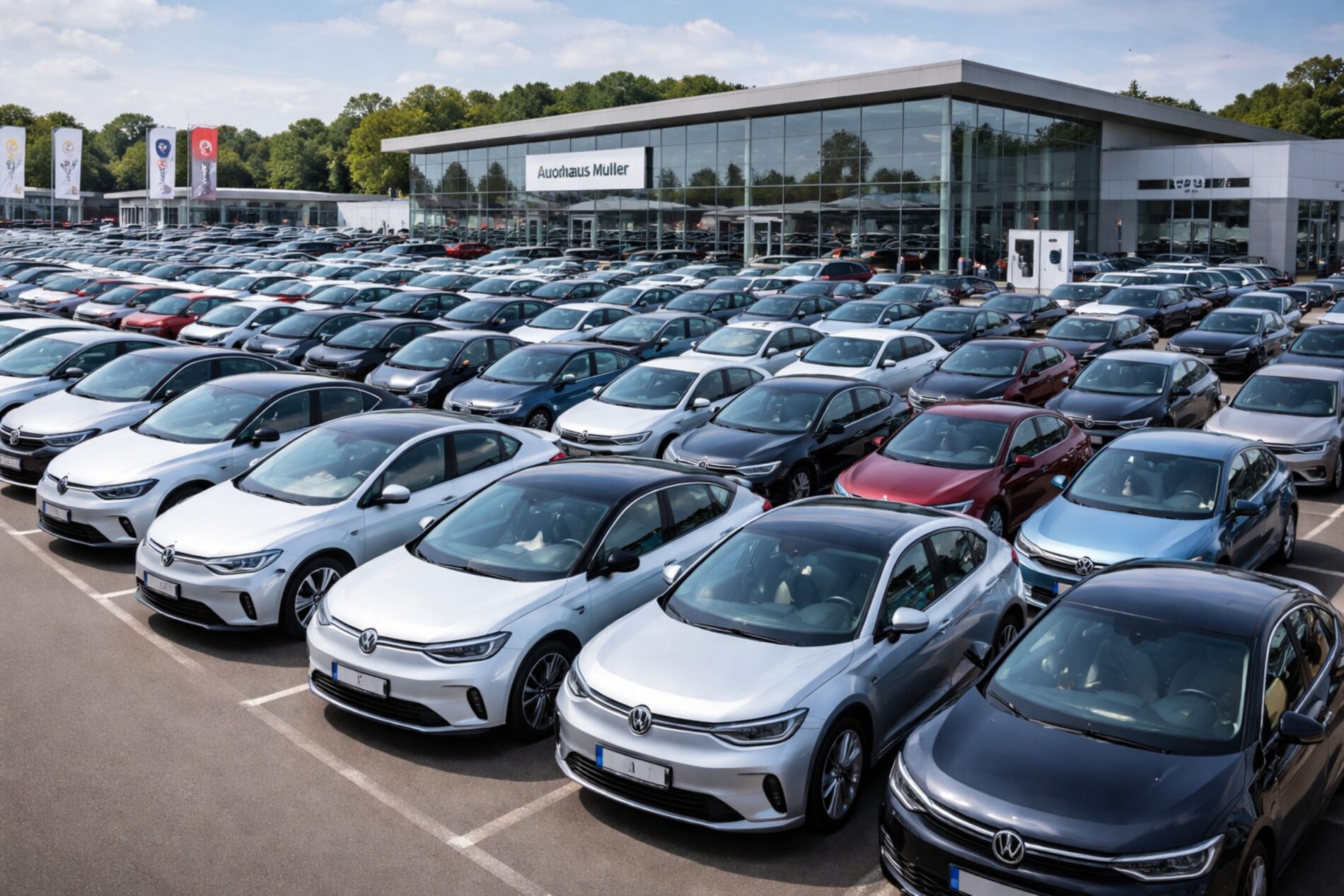
Online portals are reporting more inquiries, but the crucial step often remains elusive. Customers browse offers, but they don’t sign up. This gap between interest and completion is particularly hard on dealers because storage costs and financing continue to accrue.
Unclear conditions and a late portal launch are slowing down the buying decision
Many buyers are waiting because the eligibility requirements for the subsidies seem too vague. Car dealers cite questions about household income and the eligibility assessment as key obstacles, while interim financing presents additional hurdles. Burkhard Weller says: “We continue to see significant reluctance among potential buyers.”
The timeline is also weighing on the market, as the subsidy portal isn’t scheduled to open until May. This delays any impact, especially since delivery times for new cars already take months. Dealers are losing deals during this period because customers prefer to wait rather than take a risk.
High purchase costs and expensive repair bills are straining budgets
The figures from the DAT Report 2026 explain the headwinds, as new car buyers paid an average of €44,560 in 2025. Pure electric cars were even more expensive at €47,160, while used cars cost an average of €18,310. As a result, many owners are driving their vehicles longer, which stabilizes the existing fleet but slows down the new car market.
In addition, maintenance and repairs are rising noticeably because workshop hours are becoming more expensive and spare parts are costing more. At the same time, technical complexity is increasing, which means diagnoses take longer. According to DAT, the average repair cost in 2025 was around €604, about 30 percent higher than in 2020.
Subsidies for young used cars are intended to bring about a breakthrough
The VAD (Association of German Electric Vehicle Dealers) therefore wants to subsidize not only new cars but also young used electric cars. The association points out that private customers often choose used cars, while expensive new cars exclude many households. Furthermore, charging costs remain difficult for consumers to calculate because tariffs and conditions vary considerably.
Weller sums it up this way: “Only if young used cars are also subsidized can electromobility quickly become affordable for broad segments of the population.” The association has a clear goal in mind: to achieve more actual purchases, not just increased interest. Without this incentive, the electric car subsidy risks failing due to price constraints.
Bankruptcies rise, margins shrink, residual values falter
Car dealers’ margins are shrinking while manufacturers set ambitious targets. Many dealerships are forgoing portions of their margins to avoid losing bonus payments. According to industry analyses, bankruptcies among large car dealerships tripled in 2025, with 32 cases among larger dealerships.
The electric vehicle subsidy is further exacerbating fears of a residual value shock, as subsidized new cars can drive prices down. Claus Trilling warns: “The subsidy will completely devalue residual values. It will be a bloodbath for us.” This puts pressure on precisely those revenues that many dealers stabilize through the used car business.
Criticism of the instrument: Short-term boost, long-term problems
Industry expert Ferdinand Dudenhöffer criticizes the subsidy in principle and expects windfall gains. While the subsidy can support sales in the short term, it doesn’t solve structural problems. This is precisely where dealer criticism comes in, because without clear rules, an earlier start date, and a used car component, the program’s impact will be limited.
Ultimately, the customer decides the success, and customers are currently calculating costs more rigorously than policymakers are planning. Therefore, the electric car subsidy risks being ineffective for dealers, even though it is intended to accelerate the transition. For many businesses, planning certainty is now crucial; otherwise, the pressure will only increase.