
The electric vehicle crisis has reached a new peak, as Ford terminates a key battery deal with LG Energy Solutions. This decision comes despite the agreement being signed only a few months ago and follows a significant drop in demand for electric vehicles. At the same time, the company’s existing electric vehicle strategy is faltering, while a multi-billion-dollar write-down underscores the economic impact. This reinforces the signs of a widespread slump in electric mobility that extends far beyond Ford. (ntv: 17.12.25)
Electric Car Crisis Forces Ford into Radical Change of Course
Ford is reacting to the electric car crisis because sales forecasts for several models are no longer viable. The manufacturer is discontinuing electric vehicles, and as a result, the demand for batteries is declining significantly. Political regulations are further exacerbating the situation, as subsidy conditions are changing faster than anticipated. Under these circumstances, the terminated battery contract loses its economic foundation, even though it was intended to be a stable battery partnership.
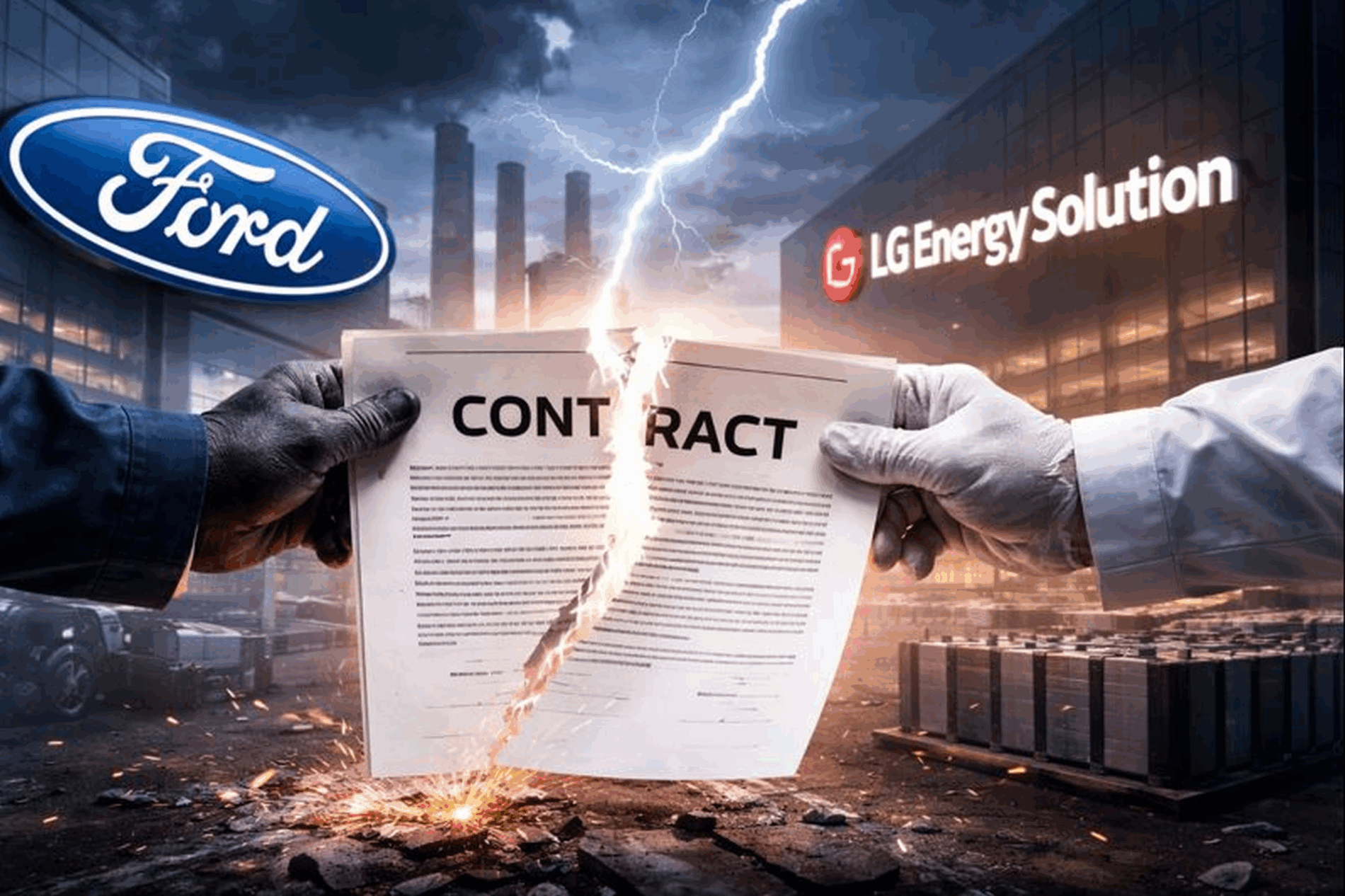
The terminated battery deal was worth approximately 9.6 trillion won, equivalent to about 6.5 billion US dollars. Deliveries were intended to secure the European market starting in 2026, but this prospect has now vanished. Ford is drawing consequences from the slump in demand, as even optimistic scenarios no longer promise sufficient production volumes. The electric vehicle strategy is therefore being readjusted, while the electric vehicle stance is becoming significantly more defensive.
A Billion-Dollar Write-Down as a Signal to the Market
The announced write-down of 19.5 billion US dollars marks a turning point, as it drastically corrects previous expectations. This impairment shows that investments in electric models are losing substance under current conditions. At the same time, it reinforces the impression that the electric vehicle crisis is not just a short-term phenomenon. Ford is reducing risks, even if this weakens confidence in long-term projects.
In parallel, the slump in demand is once again coming into focus, as even major markets like Europe and the USA are reacting less strongly than anticipated. Manufacturers must react faster, and supply contracts are losing their binding force. The battery deal with LG is thus becoming a symbol of an industry that must slow its expansion. The electric vehicle strategy is losing momentum, while traditional business areas are gaining in importance.
The disintegration of battery alliances is accelerating the crisis.
LG is not the only one affected; other partners are also feeling the effects of the electric vehicle crisis. Ford’s joint venture with SK On for battery factories in the US recently ended. This development is increasing uncertainty, as long-term battery partnerships are becoming increasingly difficult to secure. The risk for suppliers is rising, even though investments have already been made.
The repeated slump in demand is changing the balance of power because automotive companies are keeping their options open. The battery deal is therefore losing its strategic significance, while short-term flexibility is being prioritized. The write-down is also having a lasting impact, as it signals a clear break with previous growth assumptions. The slump in electric mobility is thus more profound than many market observers had anticipated.
Europe in the Shadow of New Electric Reluctance
For Europe, the withdrawal has concrete consequences, as planned supply chains need to be reorganized. Ford’s electric vehicle strategy is losing predictability, and gaps are emerging for future model generations. Competitors could benefit, but they too are reacting cautiously. The drop in demand is widespread, and political uncertainties are hindering investment.
Ultimately, the picture is becoming clearer of a structural electric vehicle crisis that is forcing manufacturers to make tough decisions. The failed battery deal, the massive write-down, and the abandonment of ambitious targets demonstrate an industry in adaptation mode. Ford is a prime example of this transformation, but the repercussions extend far beyond its own operations.