
In the Baden-Württemberg state election campaign, shortly before the state elections on March 8, 2026, Cem Özdemir is strikingly shifting his stance. He is calling for significantly stricter immigration control and speaks of the need to limit irregular migration. At the same time, he is considered open to postponing the EU’s 2035 deadline for phasing out combustion engine vehicles, while simultaneously portraying the Green Party as a pro-car party. This sounds like a change of course, but it clashes with clear positions from within his own party and parliamentary group. This raises the central question: How credible is Özdemir with promises that his party has not supported in this form so far – and which he might not even be able to implement after the election?
Internal combustion engines: “We know cars” – but his own party is nailing down 2035
Özdemir is campaigning for the trust of industry and commuters with the slogan “We know cars, this party knows cars.” According to several reports, he is also open to postponing the ban on internal combustion engines, i.e., to “flexibility” regarding the timing. This is a calculated political move, because Baden-Württemberg’s economy relies heavily on the automotive industry, and uncertainty costs votes. At the same time, a key problem arises: The Green Party in the Bundestag is officially demanding that the ban on internal combustion engines be maintained from 2035.
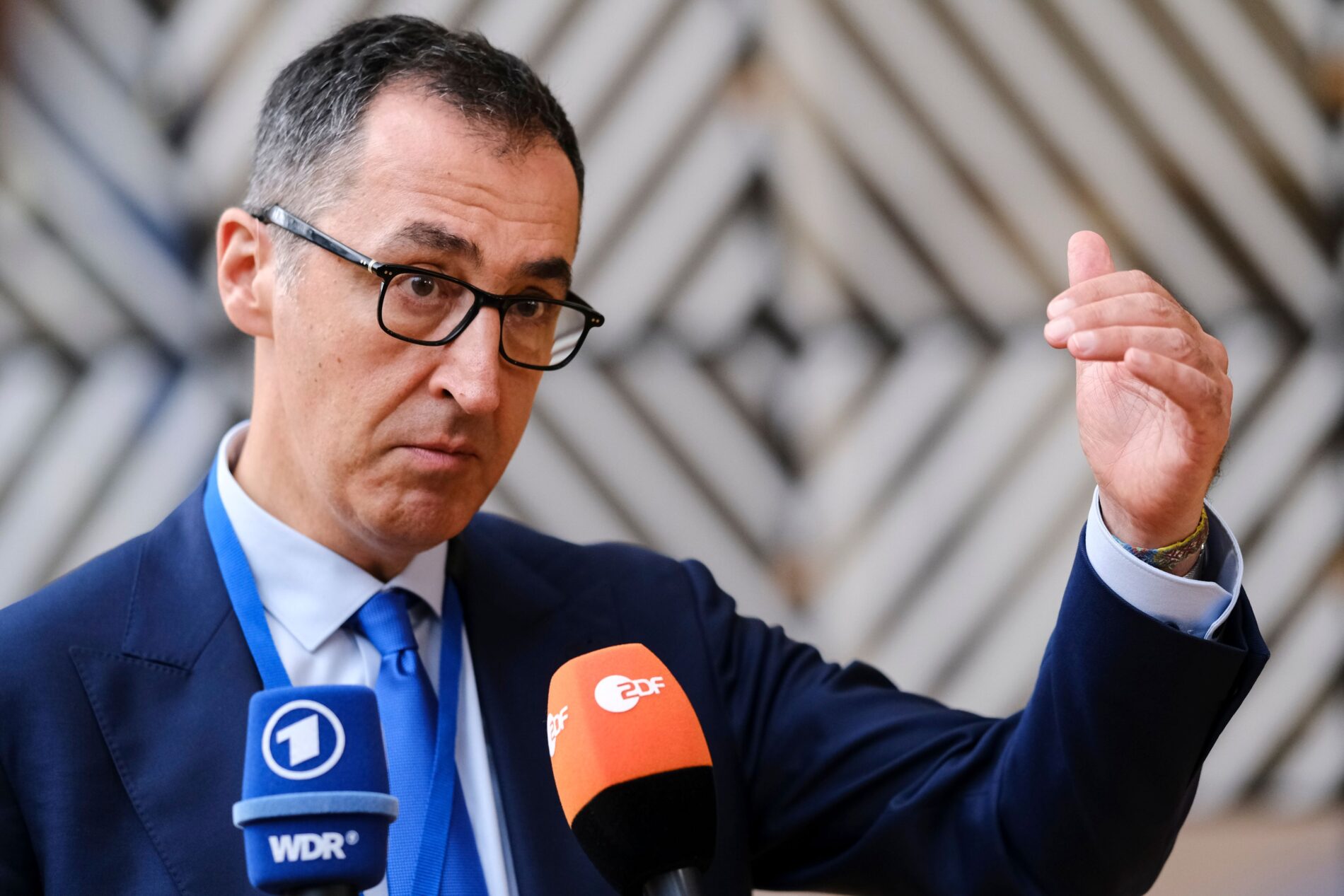
This raises the question of what Özdemir is actually promising voters. A state politician cannot rewrite EU law single-handedly, and without backing from Berlin, “flexibility” quickly becomes an empty promise. When his own parliamentary group sells “2035 remains” as a guarantee of reliability, an open campaign stance comes across as an offer without the ability to deliver. It is precisely at this point that a subtle shift in his position becomes a question of credibility.
Controlled migration demanded – but his own party is blocking it
The situation becomes even more critical when it comes to the issue of migration. Özdemir states verbatim: “We depend on openness to the world. But immigration must be much more tightly controlled.” He adds that the “limitation” of irregular migration must be taken seriously, and he explicitly addresses this to his own party as well. This sounds like a policy of strict adherence to the law and order, and like an attempt to occupy an area where the Greens have long appeared defensive.
However, this raises the uncomfortable question of his motives. Is this about a genuine change of course, or primarily about garnering votes in the state elections in a tense climate, including from the far right? It’s impossible to prove, but the timing is compelling: the announcement comes precisely at the height of the election campaign, while concrete instruments for steering the party will later require majorities and party discipline. If the party in Berlin politically or legally blocks such levers, then “steering” remains just a word, not a policy.
What remains of credibility if implementation fails to follow?
It’s legitimate to set priorities during an election campaign, as long as promises are realistic. It becomes problematic when one’s own power and legal limitations are concealed, even though they are crucial. With regard to combustion engines, the lever for change depends on Europe and Berlin, and with regard to migration, it depends on federal political majorities as well as the Green Party’s inherent conflict between humanitarianism and enforcement. This doesn’t automatically make Özdemir’s messages wrong, but it does make them verifiable: Can he truly unite his own party, or is he merely adopting a centrist tone to gain an advantage in the state elections?
Ultimately, voters face a simple test: Will these pronouncements translate into a solid policy, even against internal party opposition, or will they be relativized again after election day? Anyone who hints at “flexibility” regarding combustion engines must explain how they intend to implement it politically. Anyone who calls for “control” of migration must specify which measures they mean and what their red lines are. Without this specificity, the appearance comes across less as leadership and more as an offer that will only last until election day. Özdemir did not make any concrete proposals on how he intends to address these issues.