
Stutensee is the latest municipality to withdraw from the district heating network project, as performance, timeline, and economic viability no longer align. Previously, Bruchsal and Bretten had already announced their withdrawal from the large-scale project. The project development company was intended to bring district heating from deep geothermal sources to the region, with the municipal utilities handling the implementation. However, the key parameters shifted, and therefore the joint solution has now collapsed. (meinstutensee: 27.12.25)
District Heating Network: Why Deep Geothermal Capacity Is No Longer Sufficient
In an interview with the BNN (Badische Neueste Nachrichten), municipal utility CEO Stefan Kleck describes the crucial shift, as the expected energy output is significantly lower. Deutsche Erdwärme initially promised 40 megawatts at each of the two locations, but later revised these figures considerably downwards. Kleck now cites only 10 to 20 megawatts for Graben-Neudorf and 20 to 25 megawatts for Dettenheim. This means the planned district heating supply is losing the scale that was intended to make a regional pipeline project economically viable, even though the municipal utility’s calculations were based precisely on this.
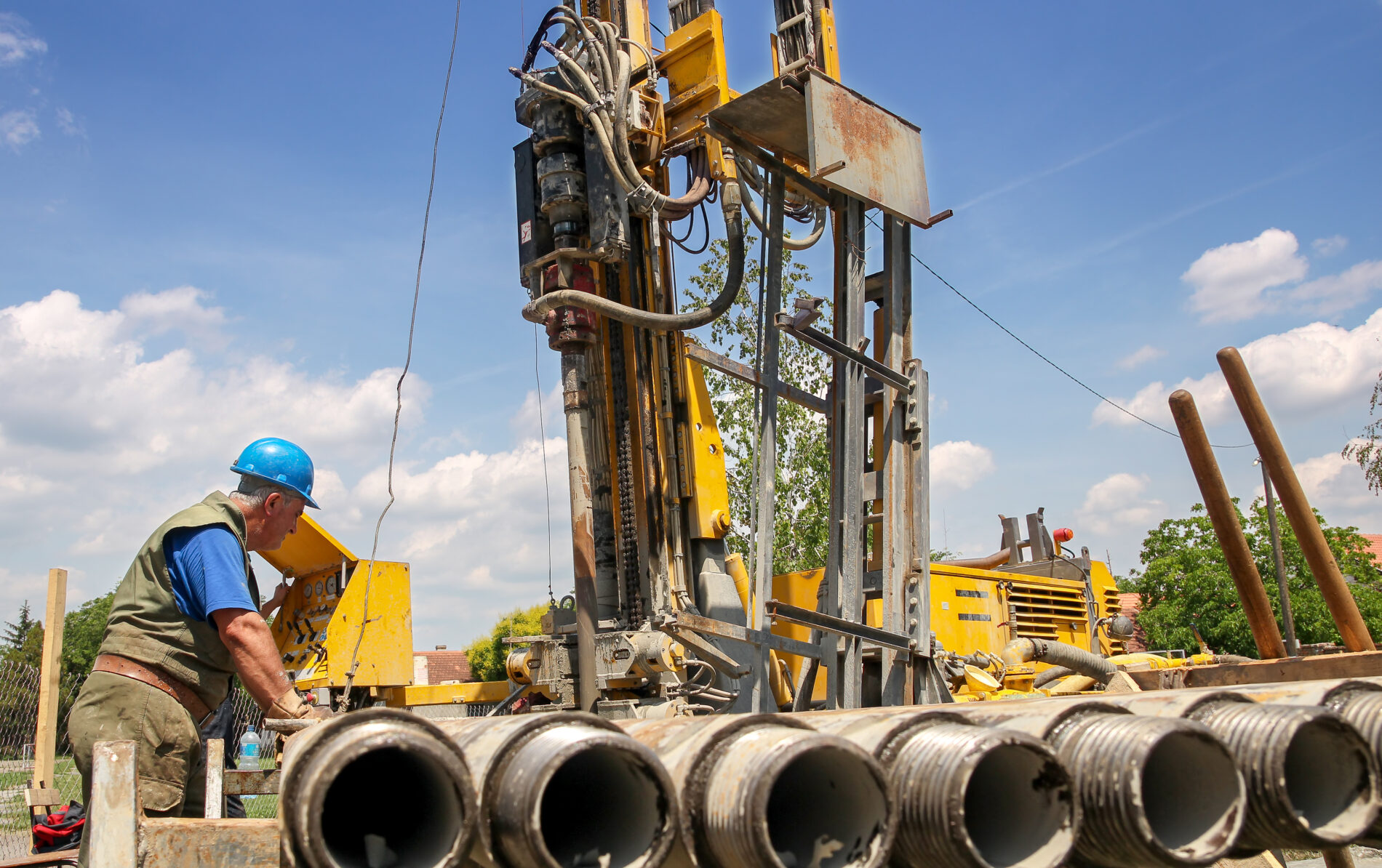
Added to this is the time factor, which acts as an additional obstacle. According to Kleck, the heat could “possibly be delivered to the first customers from 2029 onwards.” Such a date delays investments, but it also increases the risk because municipalities don’t want to leave their heat planning on hold for years. This directly affects the project development company, because a late start makes financing the heating network more difficult and simultaneously weakens political support.
Project Development Company: How the Project Began, How It Ends for Stutensee
In the summer of 2023, several municipalities in the northern district of Karlsruhe, together with the municipal utilities of Bruchsal, Bretten, and Ettlingen, founded a project development company (PEG). Stutensee contributed a one-time investment of €47,000 because the PEG was tasked with developing a feasibility study and an implementation model. In theory, it sounded robust, as deep geothermal energy from Graben-Neudorf and Dettenheim was supposed to supply climate-friendly heat and distribute it throughout the region via a pipeline.
The city administration points out that the initial analysis was generally positive, but the situation deteriorated in the next phase. The statement reads: “As the project progressed, the contractual and economic framework necessary for heat supply could not be implemented as expected.” This makes it clear that technology is not the only factor; pricing, supply contracts, and risk sharing are also crucial. Municipal utilities, in particular, require reliable commitments because they can only plan their networks with stable supply and demand patterns.
District Heating and Conflicting Interests: Why the Municipalities Are No Longer Working Together
The PEG’s withdrawal proposal also highlights the problem of cooperation itself. It states: “Furthermore, the initial situations and interests of the participating municipalities have developed differently over the course of the project, meaning that joint implementation within the existing PEG framework cannot currently be pursued.” When priorities diverge, even a district heating system becomes difficult to manage, because each municipality sets different investment targets and price goals.
For Stutensee, the withdrawal has a concrete consequence, as some of the money will be returned. The city will receive approximately €8,000 according to its share, while the remaining shareholders discuss the future. This leaves open the question of whether the project development company will pursue a smaller-scale solution in the future or realign itself, albeit without the original district heating network concept in its entirety.