In Göttingen, hundreds of residents in a large residential complex had to go without district heating and hot water starting in late August 2026. The local utility company cut off the supply due to significant payment arrears owed by the homeowners’ association. As a result, the central system used to generate heating and hot water could no longer be operated. The situation affected a complex of approximately 430 apartments on Groner Landstraße, with 171 children and adolescents among the residents. It was not until about eleven weeks later, on November 10, that the Administrative Court of Göttingen confirmed the homeowners’ association’s obligation to restore the hot water supply.
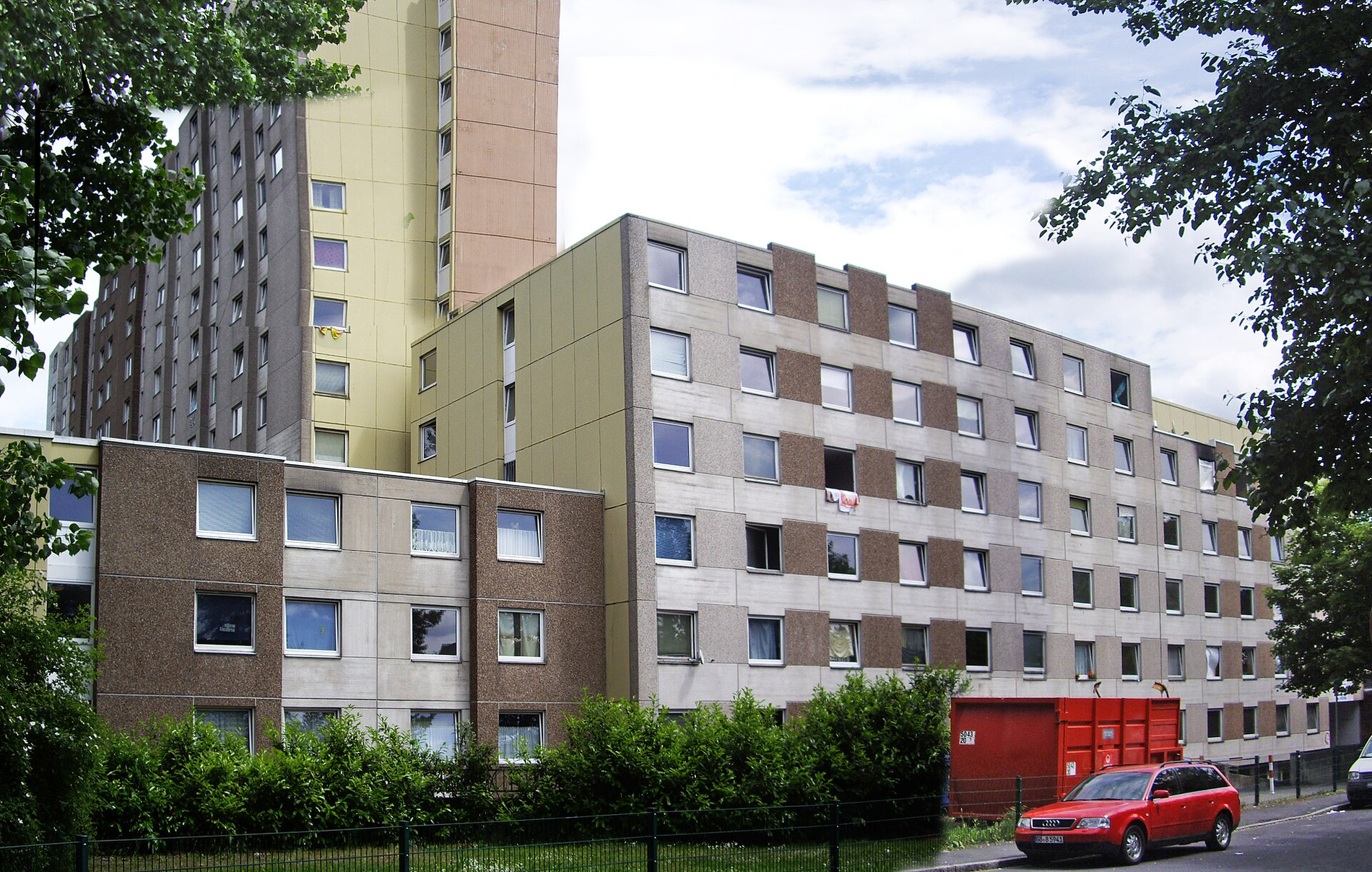
Image: Kryp, CC0, via Wikimedia Commons

District heating cut off since August – residents left waiting for months
The conflict began long before the court ruling. As early as the beginning of August, the Göttingen municipal utility company (Stadtwerke Göttingen) announced an interruption to the district heating supply, citing significant payment arrears that had accumulated over several years. At the end of August, the utility provider carried out the announced measure, cutting off the district heating used for the central heating system and hot water supply. As autumn temperatures began to drop, the supply remained disconnected.
By September, the Göttingen city council had already demanded the immediate restoration of the heating supply. Nevertheless, more than a month passed without a resolution. It was not until October 28 that the city issued a binding order directed at the homeowners’ association. By that point, the residents had already been without hot water for about nine weeks. According to earlier research by the broadcaster NDR, the central heating system had, in fact, been out of operation for considerably longer.
Owners’ association owes six-figure sum to municipal utility company
The root cause lies in the complex ownership structure of the residential complex. The approximately 430 apartments are owned by various parties, many of whom rent them out. The largest share is held by the “Göttinger Quartiersgesellschaft,” which belongs to the Hamburg-based investor Sivius. However, the homeowners’ association—the collective body of apartment owners—is responsible for the shared district heating supply; it is the contractual partner of the municipal utility company and is therefore liable for settling its bills.
According to the municipal administration, the outstanding claims have reached a six-figure sum. The utility company had previously offered several payment agreements, yet no lasting resolution could be reached. The provider cited the unpaid bills as the reason for cutting off the district heating. The consequences, however, did not affect the homeowners’ association as an abstract administrative entity, but rather the people living in the apartments. Even tenants who had consistently paid their own bills found themselves without a heating supply.
171 children left without reliable heating or hot water
The impact was particularly severe for families with children. According to the Göttinger Tageblatt newspaper, 171 children and teenagers lived in the affected complex. With no hot water flowing from the taps, households were forced to heat water using electric appliances or on their stoves. At the same time, the central district heating system—the primary source of warmth—was unavailable. While some apartments were equipped with electric radiators, these were no substitute for a fully functional heating system.
The city explored various ways to support the residents, including proposals for portable shower units and free access to shower facilities at a nearby swimming pool. However, the administration stated that no budgetary funds were available for portable shower units. Furthermore, it declined to cover ongoing utility costs, citing financial constraints. Consequently, the affected families were left to rely on improvised arrangements within their own apartments for weeks.
Owners sought to block restoration of services through the courts
The city ultimately ordered the homeowners’ association to restore the hot water supply by November 15, citing the Lower Saxony Housing Protection Act (Niedersächsisches Wohnraumschutzgesetz). The authorities also demanded proof that the order had been carried out, warning of coercive measures in the event of non-compliance. The homeowners’ association, however, did not accept this decision; it filed a lawsuit on November 3 and subsequently applied for interim legal relief.
In its justification, the association pointed to significant rent arrears—amounting to a six-figure sum and involving numerous tenants—arguing that this entitled them to withhold certain services. Furthermore, they contended that electric heaters were sufficient to heat the apartments and that the Housing Protection Act did not contain an explicit obligation to provide hot water.
Court prioritizes protection of residents over financial interests
The Administrative Court of Göttingen rejected this line of reasoning. On November 10, it denied the homeowners’ association’s application for interim relief. The judges held that hot water is an essential component of the proper use of sanitary facilities. Moreover, they noted that portable electric heaters cannot serve as a substitute for a proper central heating system. Consequently, financial claims against tenants do not justify the withdrawal of basic utility services.
The court explicitly prioritized the protection of the residents over the economic interests of the owners. It emphasized that an adequate heating supply is essential, particularly with the onset of winter. In doing so, the judges also invoked the principle that property ownership carries social obligations (Sozialpflichtigkeit des Eigentums), as enshrined in Article 14 of the Basic Law (Grundgesetz). The decision may be appealed to the Higher Administrative Court of Lower Saxony.
District Heating Cutoff Reveals Consequences of Years of Mismanagement
The problems at Groner Landstraße extend far beyond the current loss of utility services. Media outlets had previously reported on issues such as piles of trash, vermin infestations, and extensive structural damage to the building. At the end of 2025, the “Göttinger Quartiersgesellschaft” (Göttingen Neighborhood Company) acquired numerous apartments from previous owners who had become insolvent. Its parent company, Sivius, announced comprehensive renovation plans. Nevertheless, significant grievances persisted, while financial conflicts within the owners’ association continued.
For the residents, this dispute had particularly severe consequences. The local municipal utility company demanded payment for outstanding district heating bills, while the owners’ association pointed to unpaid rent. The city initially attempted to reach a resolution through negotiations and political resolutions; however, a binding directive was not issued until about two months later. Ultimately, a court had to confirm that the provision of essential utilities to residents cannot be made contingent upon financial disputes.
The owners’ association was ordered to restore the hot water supply by November 15 and to provide proof of this by the following Monday. It remains unclear from the latest available reports whether the district heating supply was actually resumed by the deadline. What is certain, however, is that hundreds of people had to endure significant hardships for months. The case illustrates the far-reaching consequences that unpaid energy bills can have in large residential complexes. Particularly concerning is the fact that it took eleven weeks for a court ruling to confirm the owners’ obligation to provide these essential services.