
In Amsterdam and other Dutch ports, at least half the fleet is idle this week because high diesel prices are making large parts of the fishing industry unprofitable. Particularly affected are the fuel-intensive beam trawlers targeting North Sea species such as sole, turbot, and plaice, which represent around 7 percent of the EU fleet. The trigger is the sharp rise in fuel costs in the wake of the Iran-Iraq War, while catch revenues are barely sufficient to pay crews and keep vessels running. Belgium, the UK, France, Spain, and Italy are also reporting increasing pressure. The consequences are therefore impacting not only the fishermen but also wholesalers, restaurants, and consumers through rising prices and reduced supply. (berlinermorgen: 27.03.26)
Fishing industry struggles with exploding operating costs
Dutch flatfish fishermen, in particular, are reaching their limits. According to VisNed, 80 to 90 percent of beam trawlers remained in port this week. These vessels consume a lot of diesel, so the price shock is hitting them especially hard.
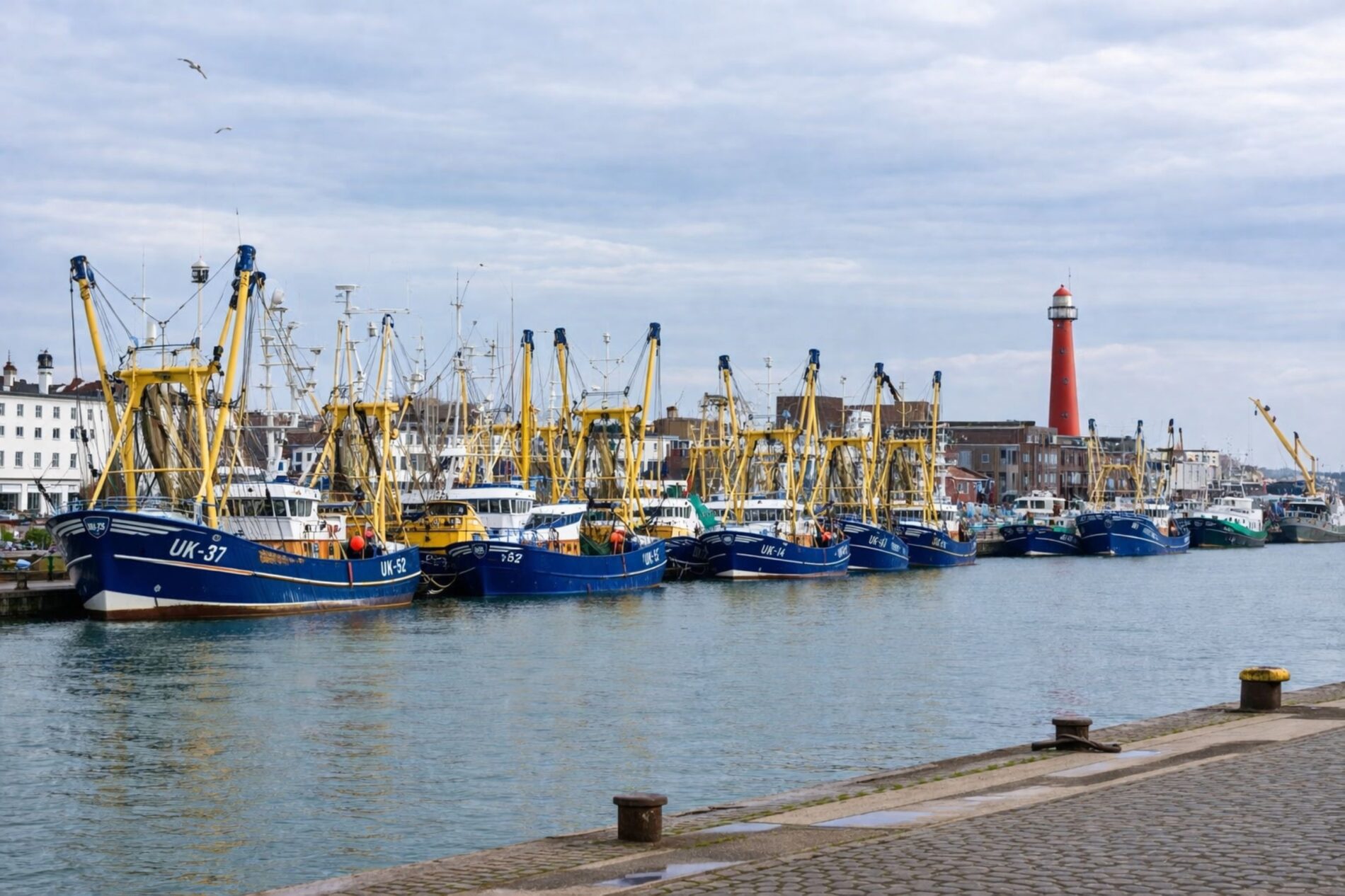
The increase is drastic. Before the Iran-Iraq War, weekly diesel costs were between €12,000 and €13,000, according to industry figures. Now, bills are soaring to almost €30,000, while the value of the expected catch is similarly high. Union spokesman Durk van Tuinen said: “Now the fuel bill equals the revenue; it’s simply not sustainable.”
The crisis is affecting the European market
The Netherlands is not alone in facing this problem. Fleets in Belgium, Great Britain, and France are also struggling with higher fuel costs. Furthermore, the industry association Europêche reports that Spain, Italy, and France have already introduced limited aid. Nevertheless, many ships remain ashore because even these measures cannot compensate for the losses.
This increases the risk for the entire fish market in Europe. If bottom fisheries suspend operations for cod, haddock, or flatfish, the supply drops rapidly. At the same time, coastal communities come under pressure because jobs on board, at auctions, in transport, and in processing depend on the fishing industry.
Consumers are paying more, even in Germany
The price effects are already evident in retail and the restaurant industry. According to Van Tuinen, the price of Dover sole has risen from €12 to €18 per kilo. Restaurants are reacting in different ways. Some are reducing portion sizes, while others are removing certain fish dishes from their menus altogether.
This pressure is also likely to be felt in Germany. North Sea products could become more expensive, while restaurateurs are finding it increasingly difficult to calculate their purchasing costs. At the same time, there is a risk of reduced availability of highly sought-after species. This directly affects consumers and also puts a strain on businesses that rely on fresh fisheries.
Industry Demands Rapid Aid from Brussels
The industry is now calling for intervention at the EU level. The focus is on the European Maritime, Fisheries and Aquaculture Fund (EMFAF). They are demanding direct subsidies, tax relief on diesel fuel, and aid per vessel rather than per company. Larger operators, in particular, are therefore pushing for more flexible rules.
There is a precedent for this. Following the invasion of Ukraine in 2022, the EU Commission temporarily relaxed state aid rules to safeguard the liquidity of the fleets. Without coordinated measures, longer shutdowns, structural fleet losses, and a weaker supply of fish products in Europe are threatened.