
Since the beginning of the year, Germany has been subsidizing the purchase of electric cars with up to €6,000, while sales are rising noticeably and dealers are simultaneously taking in more and more older gasoline and diesel vehicles. In February, more than one in five new cars was already fully electric, and the increase was around 29 percent compared to the same month last year. However, the real problem doesn’t end on German roads. Most old combustion engine vehicles don’t disappear from the roads but are sold to other markets and often continue to be driven there for years. This is precisely where the crucial risk factor lies: Germany improves its environmental record, while air pollutants, CO2 emissions, and technological liabilities are shifted to Eastern Europe, Africa, or other regions. (nzz: 26.03.26)
Emissions are falling in Germany, but the burden remains globally
For individual buyers, switching to an electric car can make sense. While battery production initially generates more greenhouse gases, electric vehicles offset this disadvantage later on. According to a study by Duke University, electric cars perform worse than combustion engine vehicles in the first two years. After that, the balance shifts because they emit no CO2 during operation. Only with very low usage, such as a car kept in a garage with barely 3,000 kilometers driven per year, is the advantage significantly smaller.
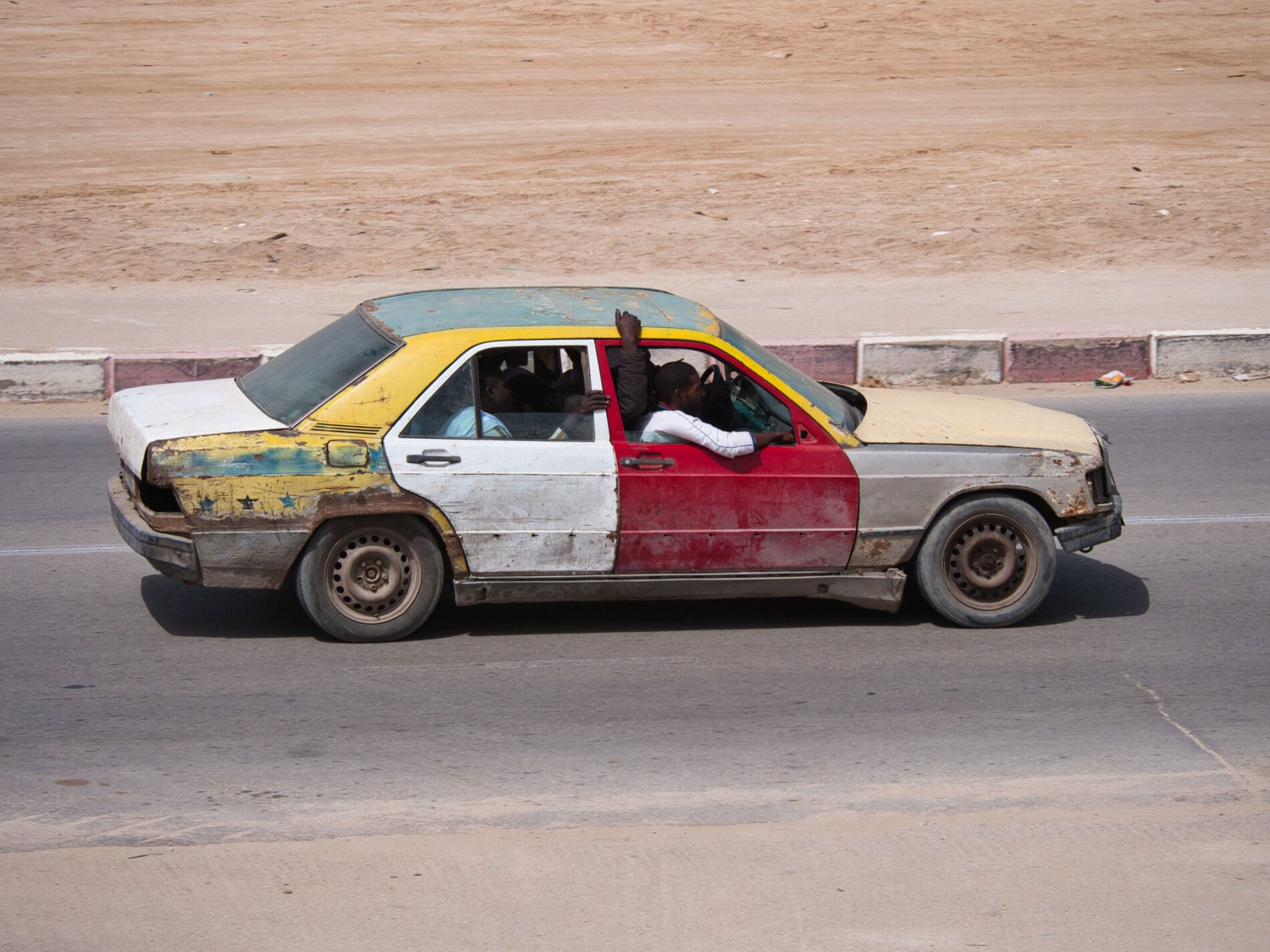
Researchers also see advantages for electric cars over their entire lifespan. The Heidelberg-based Ifeu Institute calculates up to 60 percent fewer greenhouse gases, while the ICCT even cites 73 percent. With the current European electricity mix, an electric car, on average, outperforms a diesel after 25,000 kilometers and a gasoline car after 45,000 kilometers at the latest. This happens even faster with green electricity. This calculation seems sound, but it overlooks a crucial point: The replaced car doesn’t simply vanish into thin air, but often reappears in another country.
Old combustion engine vehicles often continue to be driven for years elsewhere
Very old vehicles below the Euro 4 standard are particularly harmful to the environment and human health. They emit more nitrogen oxides, carbon monoxide, and particulate matter, and their technical condition further worsens their emissions balance. According to Ifeu, it can therefore even be more environmentally friendly to drive a new combustion engine vehicle than to continue using an extremely old one. When such vehicles are exported, the consequences are borne not by Germany, but by other markets. This makes the global picture significantly worse than national subsidy figures would suggest.
The figures illustrate the scale of this problem. In Germany, approximately 6.5 million passenger cars are registered to new owners each year, and 7.7 million vehicles are taken off the road, at least temporarily. According to estimates by the German Federal Environment Agency, only around 250,000 are recycled or scrapped domestically. At least 580,000 used cars were recently exported to other EU countries, primarily the Netherlands, Poland, France, Denmark, and Belgium. An additional 155,000 vehicles went to non-EU countries such as Ukraine, Serbia, the United Arab Emirates, and states in East Africa. Many old combustion engine vehicles remain in use there not just briefly, but continue to shape traffic patterns for years to come.
Germany’s Ease of Relief Becomes a Burden for Other Countries
Even more problematic is the large statistical gap. According to the EU Commission, 3 to 4 million vehicles “disappear” from the statistics every year after being deregistered, without any documentation of where they ultimately end up. Research from Ghana, Benin, and other end-of-life vehicle hotspots also shows that even technically unsound vehicles arrive at ports and are put back on the road. In some cases, they even exceed local emission limits. This means that while the environmental problem is visibly shrinking in Germany, it continues to grow in poorer or less strictly regulated markets.
Therefore, the global assessment of the electric car boom is more critical than the German debate often suggests. Germany is reducing its direct emissions, but is simultaneously exporting part of the problem. Joachim Ragnitz therefore demands: “It is crucial that the recycling of the recyclable remains is actually possible at some point.” The German Federal Environment Agency wanted to restrict exports to vehicles meeting Euro 4 standards, but was unable to prevail in Brussels. As long as scrap cars are allowed to continue being exported, the climate problem is merely shifted geographically instead of actually being solved.