
Between 2000 and 2024, Germany generated less electricity—despite a record expansion of wind power, solar energy, and other facilities. While theoretical power plant capacity rose by 143 percent, actual electricity production declined by 10 percent. This trend is driven by a combination of weather-dependent generation and the decommissioning of dispatchable power plants. The nuclear phase-out and the dismantling of coal-fired power plants, in particular, are exacerbating the situation. The core problem lies in the gap between installed capacity and guaranteed electricity generation. The consequences impact industry, electricity consumers, and the European interconnected grid through higher prices, increased imports, and declining security of supply. (nzz: 16.05.26)
Record Expansion Masks Weakness in the Power System
Germany often points to the high share of renewable energies in its electricity mix. Around 60 percent of electricity now comes from renewable sources. While this figure appears impressive, it reveals little about secured capacity.
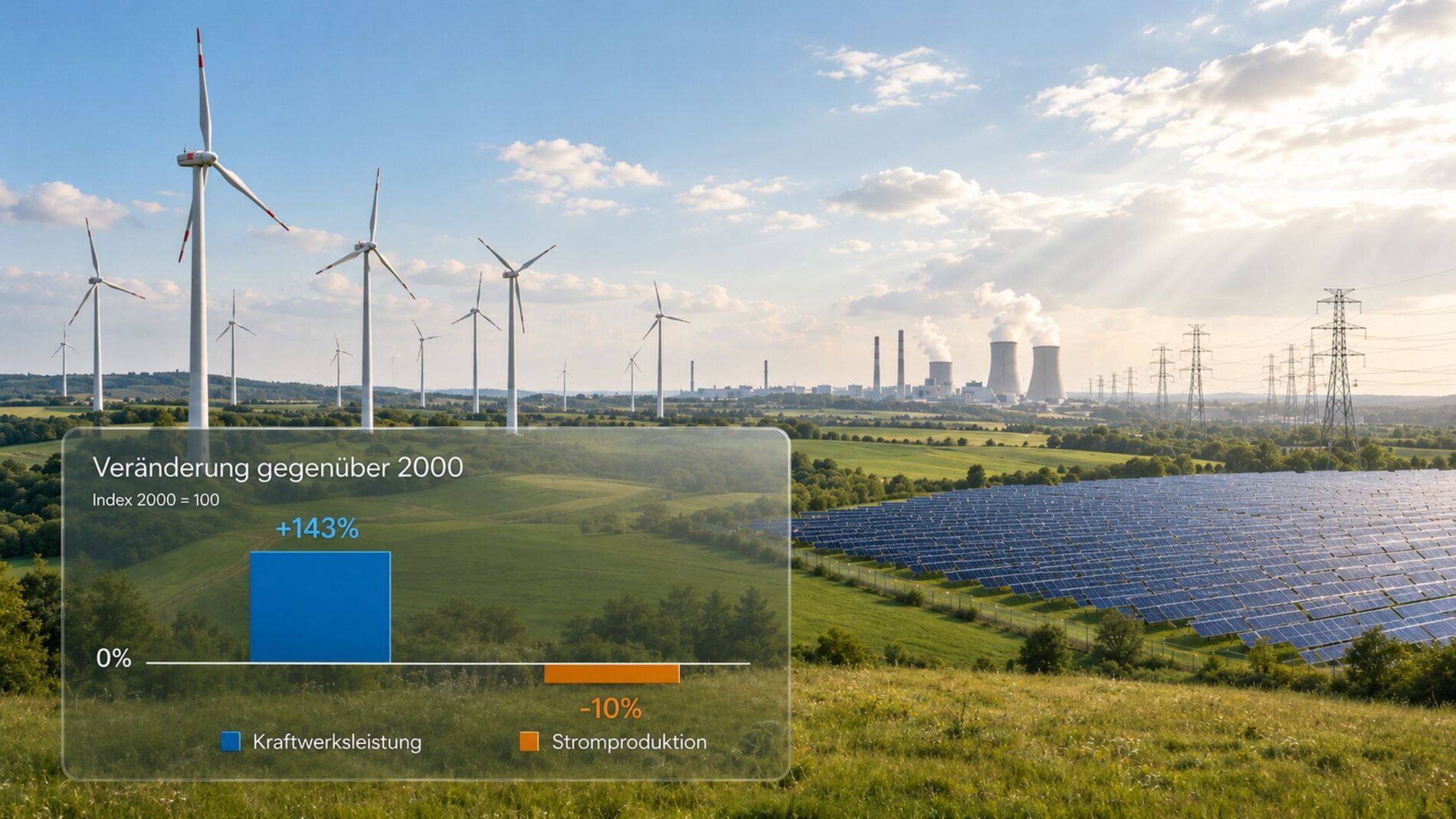
After all, wind turbines and solar installations do not supply electricity at all times; they depend on the weather, the time of day, and the season. Consequently, installed capacity is growing significantly faster than actual electricity generation.
The Nuclear Phase-out and Coal Reduction Widen the Electricity Gap
Furthermore, Germany has shut down many dispatchable power plants—facilities capable of supplying electricity independently of sun and wind. As a result, the system has lost a large portion of its predictable generation capacity.
The nuclear phase-out had a particularly profound impact on this balance. In 2010, nuclear energy still supplied approximately one-quarter of Germany’s electricity. Subsequently, this reliable capacity was gradually withdrawn from the grid.
Other Countries Achieve Better Results
Moreover, Germany has decommissioned more coal-fired power plant capacity than any other European country. From a climate policy perspective, this reduces domestic emissions; however, in terms of security of supply, it leaves a shortfall in capacity during periods of low wind and darkness.
A comparison with the rest of Europe therefore highlights Germany’s unique position. Spain, too, has significantly expanded its power plant capacity; yet, in that country, electricity generation rose by around 30 percent.
Record Expansion Without Reliable Capacity Remains Problematic
The Netherlands, too, has substantially increased its capacities—and in doing so, generated around 40 percent more electricity. Germany’s decline in generation therefore stands out as particularly striking.
Germany’s subsidy framework has further exacerbated this problem. For a long time, plant operators had little incentive to consider whether a specific location offered particularly high yields, as the state compensated for any disadvantages through various subsidy mechanisms.
Electricity Imports Only Partially Replace Domestic Generation
As a result, generation facilities have been built even in locations where wind or solar resources yield less electricity. While this record expansion does indeed boost statistics regarding installed capacity, it does not automatically increase actual electricity supply.
Consequently, Germany is now importing more electricity from neighboring countries. French nuclear power and Scandinavian hydropower, in particular, help bridge the gap during periods of low renewable energy output. However, this solution has strict limitations.
Declining Consumption Signals Economic Weakness
Germany often requires imported electricity precisely at those times when power supplies are scarce elsewhere as well. This drives up prices and creates political conflicts. Moreover, this model is ill-suited to serve as a blueprint for the rest of Europe.
Furthermore, Germany is consuming less electricity. At first glance, this might appear to be a gain in efficiency; in reality, however, it also signals economic weakness, as energy-intensive companies are either relocating their production or shutting down their facilities. Thus, the record expansion of renewable energy sources cannot serve as a substitute for a comprehensive strategy to ensure a secure and reliable power supply.