
Denmark is officially including mini nuclear reactors in a state review process for the first time, thereby calling into question the nuclear power ban that has been in place since 1985. The government aims to make the long-term energy supply more stable with this change of course and is relying on a new assessment framework. This does not yet make a decision on construction, but the process has begun. (ntv: 22.01.26)
Legal Framework and Policy Shift
Energy Minister Lars Aagaard declared that “small modular nuclear reactors should be an option.” Therefore, Denmark has created a legal framework to assess the potential of Small Modular Reactors (SMRs). At the same time, this step opens the possibility of lifting the existing ban on nuclear power.
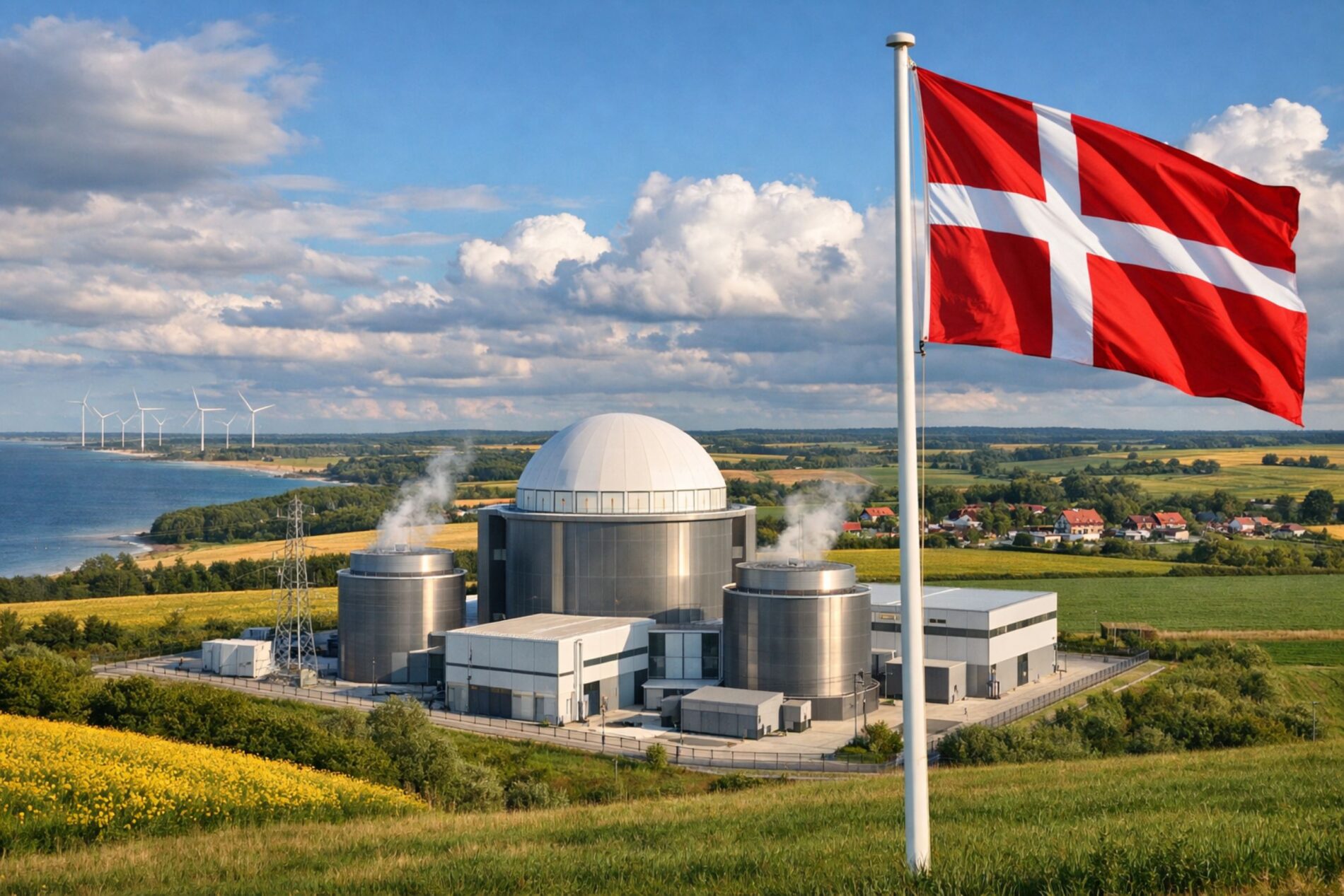
Aagaard does not see nuclear technology as a replacement for renewables, but rather as a potential complement. “Green energy from sun and wind is the pillar of Denmark’s energy supply today and will remain so in the future, but we see that it is not sufficient on its own,” he emphasized. This is the government’s justification for wanting to examine additional options, even though wind and solar power dominate.
Review before decision: Safety, regulations, waste, costs
Before making a final decision, the government intends to gather further information systematically. This includes safety issues, specific regulations, and the handling of radioactive waste. Reliable cost estimates are also to be presented so that future decisions are not based on wishful thinking.
Small modular reactors (SMRs) differ significantly from conventional large-scale power plants because they are smaller in size. According to the International Energy Agency, typical outputs are up to 300 megawatts of electrical power, which necessitates a different project approach. Furthermore, SMRs are considered easier to construct because many components are designed using standardized methods.
Energy Mix as a Starting Point for the Debate
Looking at the energy mix explains the pressure for system planning, even though Denmark is already quite advanced in renewables. According to IEA data, in 2024 around 58 percent of the energy mix came from wind power, with solar accounting for about 11 percent. Biofuels made up 18 percent, while coal and waste each accounted for 5 percent.
Parliament passed a law banning nuclear power in 1985; nevertheless, since the beginning of 2025, the debate has shifted more strongly towards technology assessment. The government wants to examine new nuclear power technologies as potential energy sources before making a political decision. Ultimately, the question depends not only on the price of electricity, but also on safety standards and waste disposal methods.