
In Parsons, Kansas, the startup Deep Fission has begun its first deep drilling operation for an underground mini-nuclear power plant. The borehole is planned to reach a depth of 6,000 feet, or nearly two kilometers, and is part of a project comprising three exploratory boreholes. The impetus for this is the plan to operate a Small Modular Reactor (SMR) deep underground, where radiation could be better shielded and the reactor design could be more compact. However, crucial factors remain: is the geological stability of the subsurface, and how do groundwater, temperature, and pressure behave at this depth? The technical feasibility depends precisely on these factors. At the same time, significant risks remain, as operation, criticality, and the subsequent extraction of fissile materials from the depths would all require remote control. (golem: 13.03.26)
Deep Fission Investigates Subsurface for Underground SMR
The drilling that has now begun is not initially for the construction of the reactor itself. Its diameter is only 20 centimeters, as it is solely intended to gather data about the subsurface. Deep Fission aims to determine the bearing capacity of the rock and the actual conditions at great depths.
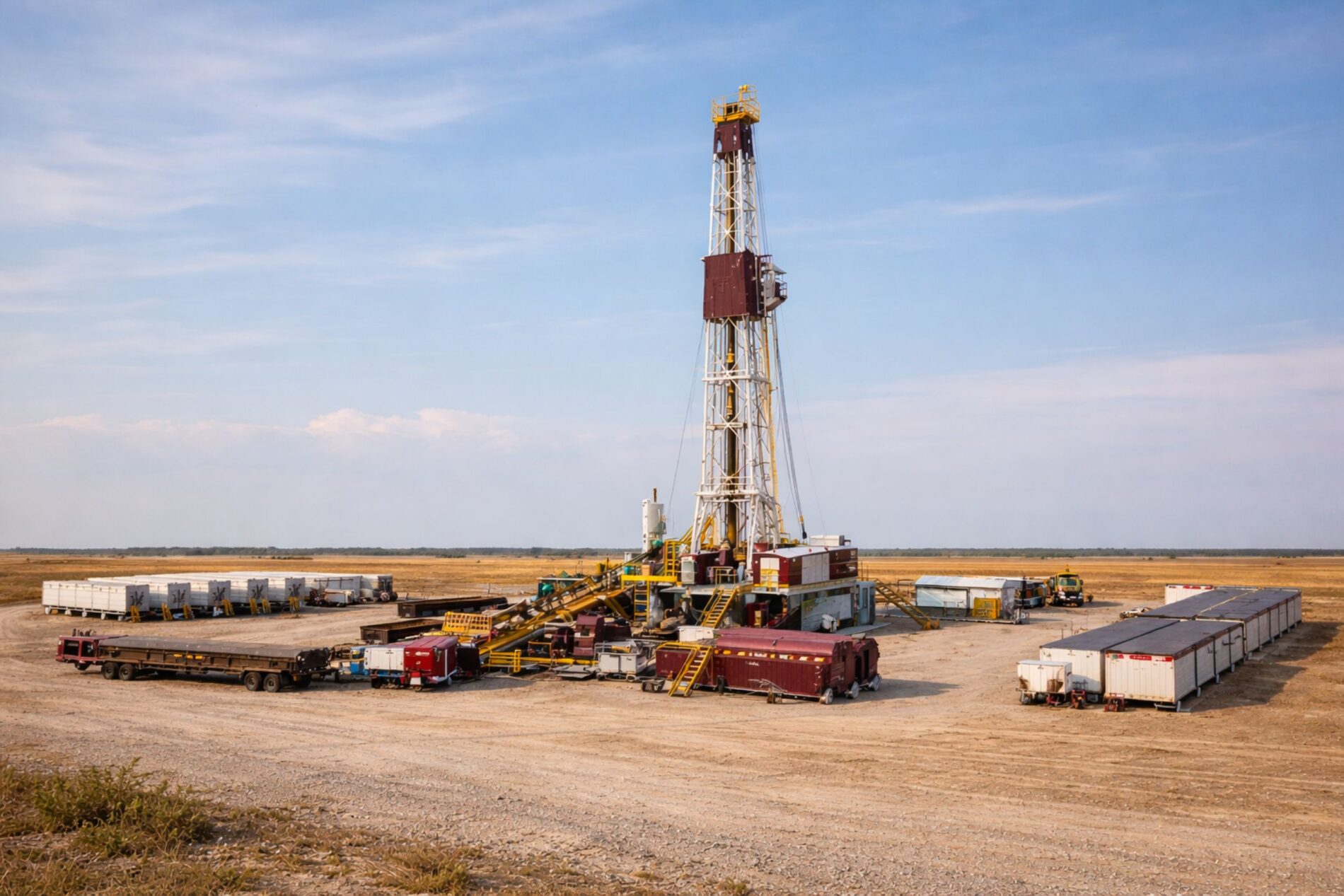
Furthermore, the movement of groundwater in this area will be investigated. Temperature and pressure are equally important, as both values directly influence the subsequent reactor design. Only when this data is reliably available can it be assessed whether a larger shaft would even be practical for actual reactor operation.
The advantage of depth also brings new challenges
The company is relying on a pressurized water reactor, which will be lowered into a later, significantly wider borehole. At a depth of approximately two kilometers, the ambient pressure is high, which would allow for a smaller reactor design. At the same time, the surrounding soil would provide some shielding, potentially reducing the technical effort required at the surface.
However, this very concept complicates operation. A reactor at this depth cannot be maintained or operated using conventional methods. Therefore, key steps such as commissioning, achieving criticality, and subsequent extraction of fissile material would have to be remotely controlled. Before Deep Fission can even consider a regular start-up, the company must have mastered these processes.
Limited output, expansion only possible with massive scaling
The planned reactor is designed to produce 15 megawatts. While this is considerable for a single SMR, it falls short of the output of large nuclear power plants. To achieve a similar level of electricity generation, approximately 100 such reactors in as many boreholes would be needed.
This shifts the problem from a single solution to scaling. Each additional reactor would require new boreholes, new technology, and new safety procedures. Furthermore, the effort required for monitoring, remote control, and material logistics increases with the number of facilities.
Nevertheless, financing for the project appears to be secured for the time being. According to the company, private investors have already secured more than 12 gigawatts of capacity, which is roughly equivalent to 800 small deep geological reactors. The US Department of Energy is also supporting the project. Further support is coming from Washington, as reactor tests have been permitted outside of national laboratories since May 2025.