
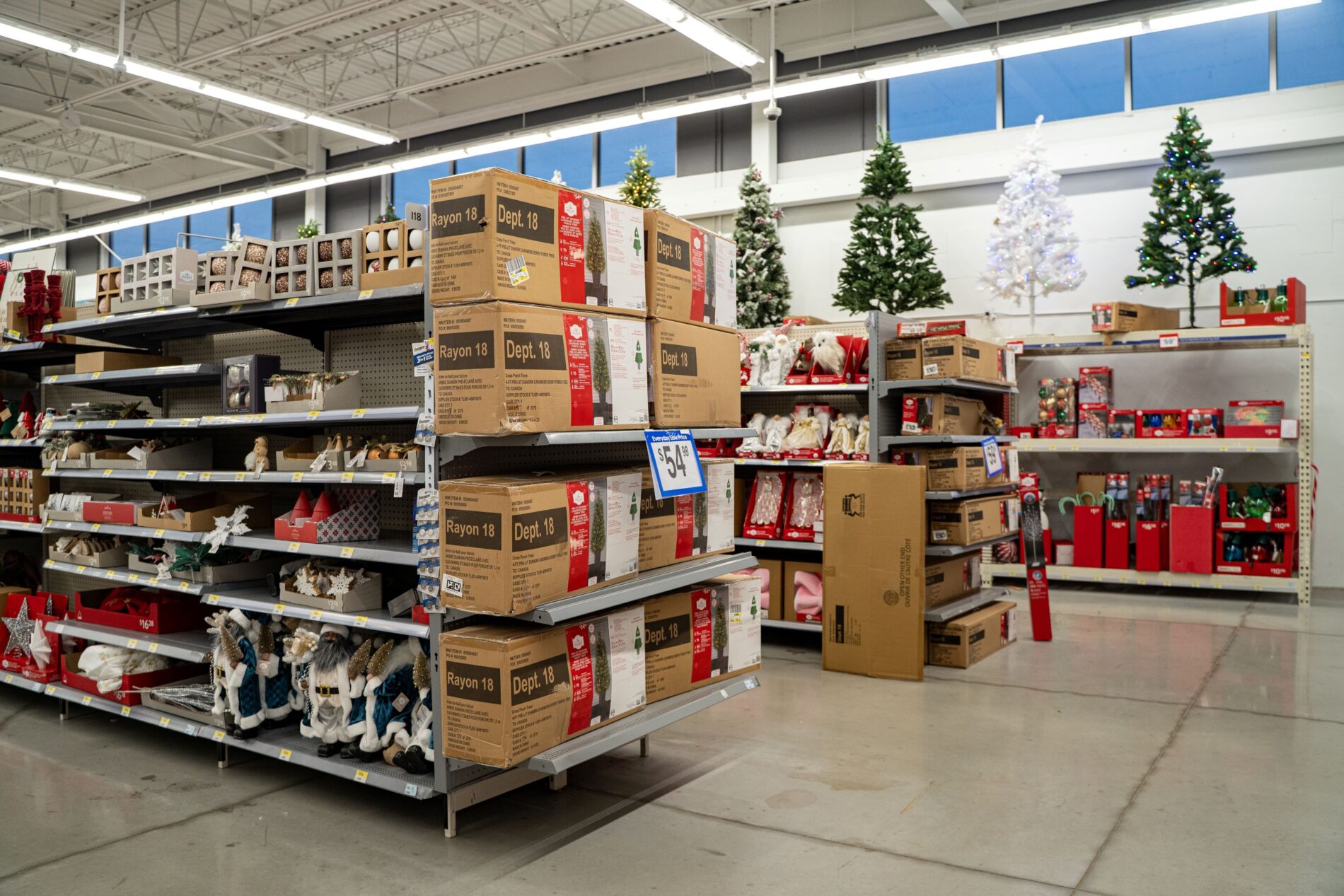
Christmas sales were weaker than hoped, and this perfectly reflects the situation of many households. It’s not a general reluctance to spend that’s causing the slump in consumer spending, but rather a lack of financial leeway. Inflation has increased basic costs, while social security contributions continue to rise. At the same time, the CO2 tax is making not only energy and transportation more expensive, but practically all products on the market. The promised compensation through climate funds remains a broken promise from politicians. Those who can barely cover their fixed costs cut everything that isn’t essential first. The majority of Germans aren’t saving; they simply don’t have more money available. (focus: 02.01.26)
Consumption is a driver of growth – but the slump in consumption is affecting the entire economy
When private households spend less, it impacts not only retail but the entire economy. Marcel Fratzscher, President of the German Institute for Economic Research (DIW), told FOCUS online: “Weak consumption is slowing down the German economy, because well over half of economic output is attributable to private consumption.” This decline is therefore becoming a key issue for Germany’s economic competitiveness, because demand supports investment and safeguards employment.
Nevertheless, the cliché of thrift often takes hold in debates, obscuring the underlying causes. Enzo Weber, head of research at the Institute for Employment Research (IAB), considers even the term itself misleading. “Proportion to save” sounds like a virtue, but “it’s really just another word for low spending,” says Weber. Low spending, however, also occurs when the budget is insufficient, and not only when someone consciously chooses to forgo certain things.
Recession and uncertainty dampen consumption – but the income gap is the deciding factor
Weber points to the overall economic climate because it shapes expectations. “We’ve had a recession for three years, industry is shrinking, and there’s no sign of a turnaround yet. Uncertainty dampens investment.” Uncertainty acts as a brake because people postpone purchases and businesses plan more cautiously.
The crucial dividing line, however, lies with income, and here “saving” becomes a statistical illusion. Sebastian Dullien, director of the Institute for Macroeconomics and Business Cycle Research (IMK), says: “One has to differentiate between different income groups. The poorer half of the population has practically no financial leeway to save.” Those without leeway cannot “consume more,” even if the general mood were better.
At the same time, Dullien observes that the wealthier half often has reserves but remains cautious nonetheless. “They are currently holding back on consumption.” Thus, two mechanisms are at work in parallel: those at the lower end lack money and those at the top lack confidence, while both effects impact retail simultaneously.
Price shock in everyday life: Living more expensively, buying less
It is also true that not all employees benefit from wage increases, because measured gains primarily affect those covered by collective bargaining agreements, and thus only slightly less than half of all employees. Moreover, the price shock remains a constant presence in everyday life, and it immediately changes behavior. Dullien says: “If everything in a restaurant is about a quarter more expensive than it was five years ago, people eat out less.” People who eat out less often also buy less on impulse, and this trend is evident across many sectors.
Added to this is the pressure on savings, as money is losing value in real terms. “Someone who had set aside around 2,000 euros might now realize that with prices 20 percent higher, this reserve is no longer sufficient,” says Dullien. Many are therefore putting money aside, not as a way to live off their wealth, but rather as a way to reinforce their financial safety net.
Many households without savings: One bill is all it takes, and consumption collapses
Dullien describes the situation of lower income groups very concretely: “We know that about half of all households have hardly any savings. Probably at least a third of households, due to low incomes, really have very little opportunity to save.” If a washing machine breaks down, “saving” immediately turns into emergency management because the next payment is already causing problems.
Fratzscher also emphasizes the social divide, and he cites figures. While Germany may be the world champion of saving, at the same time, “almost 30 percent of all households have no savings whatsoever.” His assessment of inflation is harsh: “We are experiencing a profoundly unfair inflation.” He also points out that food prices have risen by almost 40 percent in five years, and this is precisely what hits households that spend the majority of their income on basic necessities hard.
Politicians are increasing caution, and relief must be tangible
Dullien also sees part of the dampening effect in political signals, because they influence expectations. “Anyone who claims that our social welfare system needs massive cuts shouldn’t be surprised when people save more money out of uncertainty.” When fear grows, consumption falls, and this effect exacerbates existing financial constraints.
Ultimately, one clear statement remains, explaining the Christmas shopping season and describing the daily lives of many: Many Germans are buying less because they can’t afford it. Those who want to boost consumption must increase purchasing power and reduce basic costs, and they must implement promised compensation measures like climate benefits in a way that actually reaches household budgets. Without significant leeway, the slump in consumption will remain structural and will continue.