
Trucks consume around one-fifth of the world’s total oil, and at the same time, EU heavy goods vehicles are responsible for a large share of transport-related CO₂ emissions. Therefore, the climate impact of hydrogen trucks is becoming increasingly important. However, the origin and logistics of the hydrogen remain crucial, because only green hydrogen combined with short transport routes offers a clear advantage. Furthermore, the benefits of fuel cell trucks depend on hydrogen transport, as both factors significantly influence emissions in the upstream supply chain. (ingenieur: 14.01.26)
Climate Impact: Life Cycle Matters, Not the Exhaust Pipe
An analysis by Chalmers University of Technology, published in iScience, evaluates hydrogen in heavy-duty transport across its entire life cycle. It examines production, logistics, and in-vehicle use. The result is clear: the climate impact can be significantly improved, but only with suitable supply chains. “Hydrogen does not produce carbon dioxide when used in fuel cells, but we must ensure that we are not simply shifting emissions from one part of the life cycle to another,” says lead author Jorge Enrique Velandia Vargas. This makes a comprehensive assessment essential, because CO₂-free operation alone is not enough.
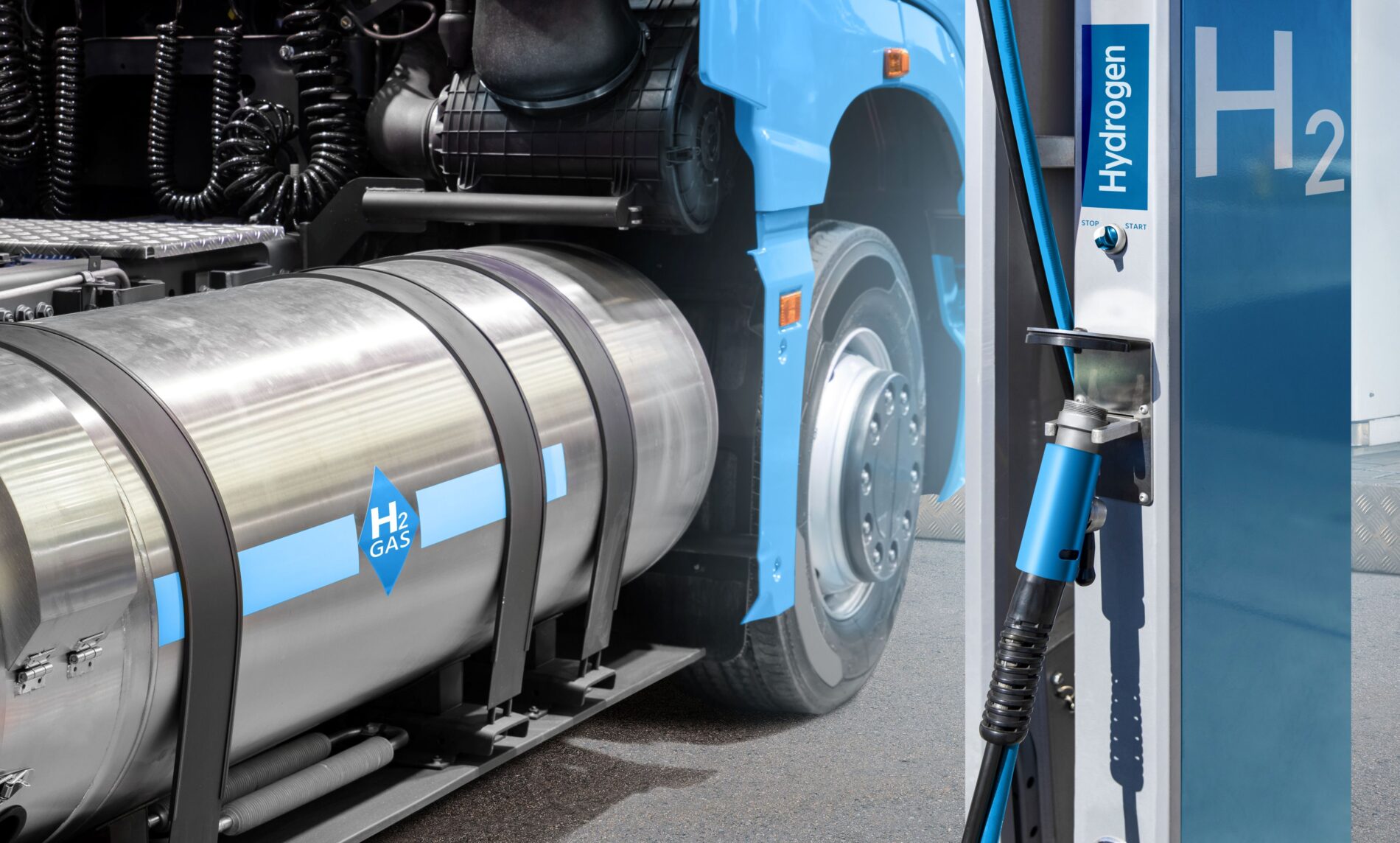
The study models several future scenarios, initially for Sweden, but with applicability to other countries. It reveals that whether fuel cell trucks can meaningfully replace diesel depends heavily on the production route. Depending on the chosen path, significant differences arise, and these differences shape the everyday climate impact.
Blue Hydrogen: Natural Gas Path with Methane Risk
So-called blue hydrogen is produced from natural gas, while CO₂ is captured and stored. This sounds clean on paper, but in practice, residual emissions remain. “Theoretically, the production of blue hydrogen is climate-neutral, but in reality, this is not the case,” says Maria Grahn, associate professor at Chalmers University. “It’s not possible to capture all the CO₂; 5 to 10% escapes into the atmosphere. Additionally, there are methane losses along the supply chain.” This makes the natural gas pathway a risky option because even small leaks significantly worsen the CO₂ balance.
Blue hydrogen sounds clean on paper, but in practice, residual emissions remain. Methane has a very strong short-term effect, which is why the equation quickly becomes unbalanced if extraction and transport are not airtight. Under unfavorable conditions, blue hydrogen performs hardly better than diesel, even though the vehicle itself emits no CO₂. This diminishes the relevance of this approach if the goal remains a robust, large-scale climate footprint.
Green Hydrogen: Best Performance, but Logistics as a Weak Point
Green hydrogen, produced via electrolysis using renewable electricity, performs best. Its production generates virtually no CO₂ emissions, and none are produced during operation. Nevertheless, the study warns of an underestimated factor: hydrogen transport consumes energy because hydrogen must either be highly compressed or liquefied at around -253 °C. “Hydrogen is the lightest of all elements and is not easy to transport,” says Velandia Vargas. Long distances and losses can significantly worsen the climate footprint, even if the production process was clean.
Green hydrogen: Best Performance, but Logistics as a Weak Point
Green hydrogen, produced via electrolysis using renewable electricity, performs best. This leads to a clear priority: Decentralized production close to the filling station performs better than large, centralized plants with long transport chains. At the same time, Maria Grahn emphasizes a strategic aspect: “Energy self-sufficiency is just as important as reducing CO₂ emissions.” Green hydrogen can be produced where water and wind or solar power are available, thus reducing dependence on imports.
Heavy Goods Transport: Infrastructure Has a Decade-Long Impact
Heavy goods transport needs to rapidly scale technologies, but decisions regarding refueling stations, supply chains, and facilities tie up capital for decades. Therefore, the study recommends life cycle analyses as the basis for subsidy policies and industrial investments. “Every decision has long-term consequences,” says Maria Grahn. Those who choose the wrong path today risk costly retrofitting and simultaneously lose valuable time for effective CO₂ reductions.
Ultimately, the message remains clear: Fuel cell trucks can contribute to heavy goods transport if green hydrogen is produced regionally and hydrogen transport is kept short. Then the climate balance improves sustainably because production and logistics are aligned. However, if natural gas, methane losses, or energy-intensive transport dominate, the equation falls apart despite modern vehicles.