
On the night leading up to August 11, climate activists deliberately let the air out of the tires of numerous cars. Large passenger vehicles in Wenningstedt and Kampen were primarily affected. The “Resistance Collective” claimed responsibility for targeting around 50 vehicles. Police initially confirmed approximately 20 cases, while NDR later reported that around 50 cars had been affected. The activists tampered with the valves to allow the air to escape slowly, intending to deliberately render the vehicles temporarily inoperable. For the owners, however, this entails not only restricted mobility but potentially also costs for roadside assistance or other help. Even more serious is the potential danger if a driver fails to notice the loss of pressure in time. Nevertheless, a police spokeswoman initially stated that no criminal offense had occurred because the tires themselves were undamaged.
Climate activists on Sylt: Disabling other people’s cars without committing a crime?
The police’s initial assessment therefore seems remarkably lenient. After all, the activists did not merely stick protest notes onto other people’s vehicles; they deliberately interfered with their technical operability, thereby preventing them from being driven further. That precise effect was part of the action.
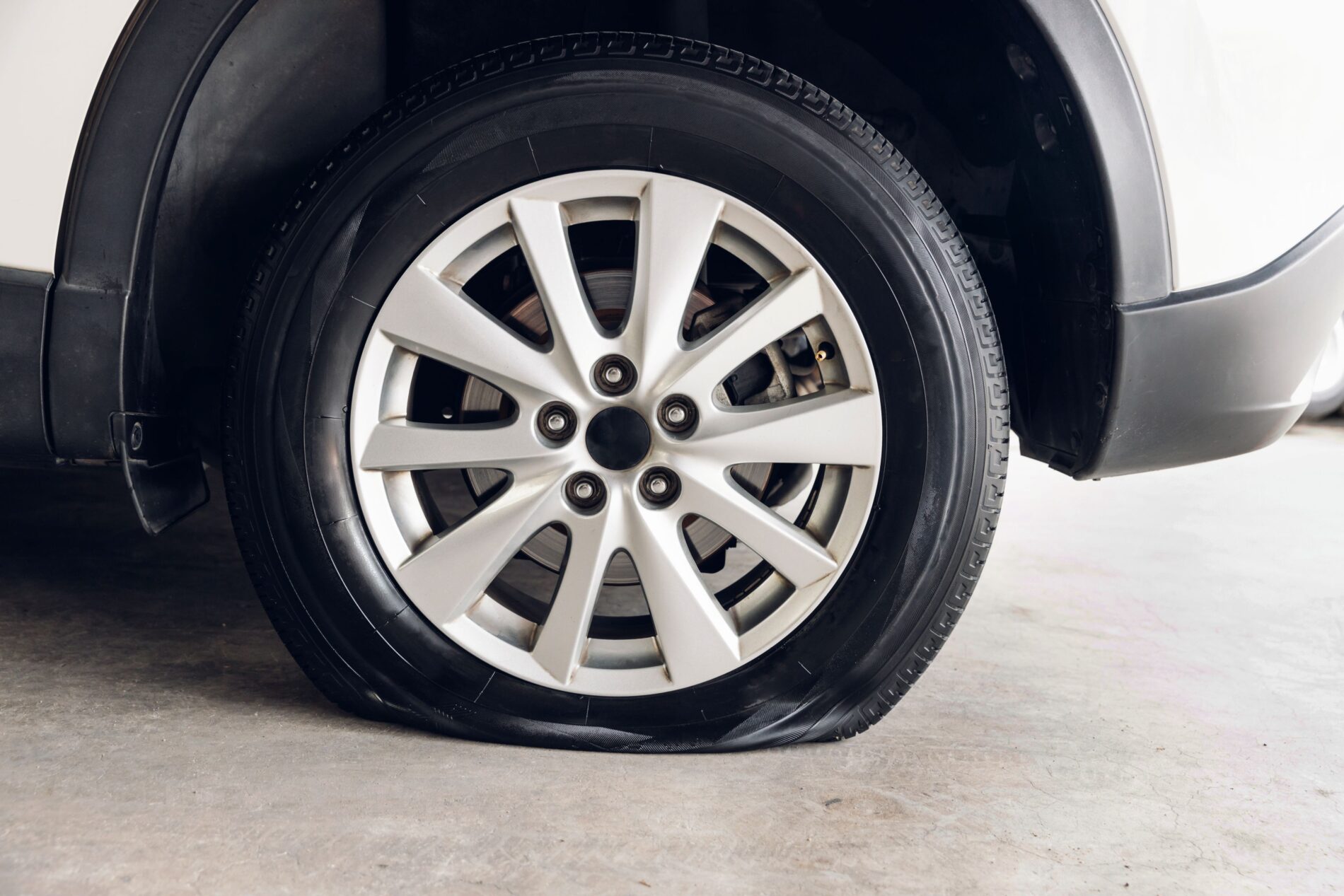
Image: Shutterstock
For the vehicle owner, the impact of the incident goes beyond simply discovering a flat tire. Anyone without an onboard compressor might need roadside assistance. Furthermore, appointments could be missed, or additional trips might become necessary. Such costs incurred to restore the vehicle to its proper state can, in principle, constitute compensable damages, provided a liable party is identified. Section 823 of the German Civil Code (BGB) protects property rights, among other things, while Section 249 BGB governs the restoration of the condition that existed prior to the damaging event.
Police warn of accidents with unpredictable consequences
The assessment of the Sylt incident becomes particularly striking when compared to a similar case in Regensburg. There, the same “resistance collective” deflated the tires of several SUVs. The criminal police investigated the matter as property damage and potentially other offenses. They also issued an explicit warning regarding the potential consequences of such tampering.
According to the Regensburg police, drivers can lose control of their vehicles even at low speeds. The risk increases significantly at higher speeds or when cornering sharply. Consequently, the authorities explicitly warned of accidents with “unpredictable consequences.” This physical danger does not disappear simply because a tire can subsequently be reinflated.
The premature dismissal of the incident sends a disastrous signal.
From a criminal law perspective, too, the matter is more complex than the simple formula “tire not destroyed, therefore no crime.” Welt itself points out that a charge of property damage can hinge on a significant impairment of a vehicle’s usability. Moreover, according to NDR, the police are continuing to examine whether a criminal offense has been committed. Even the possibility of coercion would therefore warrant legal scrutiny, even if the necessary criteria are by no means automatically met.
Even more problematic, however, is the public signal this sends. The climate activists on Sylt explicitly intended to disable vehicles belonging to others, and they achieved precisely that goal. If the initial message conveyed is that this does not constitute a crime, the deterrent effect is likely to be negligible. From the perpetrators’ perspective, further actions appear comparatively low-risk, provided they leave no visible physical damage. Yet they have no way of controlling whether a driver notices the tampering or whether an accident ensues. Should the actions actually result in a concrete threat to human life or significant property, the Criminal Code—specifically Section 315b—explicitly defines such acts as dangerous interference with road traffic.
The focus on the physical condition of the tire is therefore particularly questionable. Factors such as the loss of use, restoration costs, and the risk posed to uninvolved road users are also crucial. After all, a vehicle owner should not have to anticipate that political activists might tamper with safety-critical components of their car during the night. Consequently, the initial assessment of the Sylt incident comes across as treating the perpetrators with kid gloves. While the final legal assessment remains the prerogative of investigative authorities and the courts, a blanket, premature dismissal of the incident hardly does justice to the gravity of the interference.
Author: Blackout News
Sources: NDR (11.08.26) – Welt (11.08.26) – Polizeipräsidium Oberpfalz (22.08.25) – ADAC (24.04.26)