
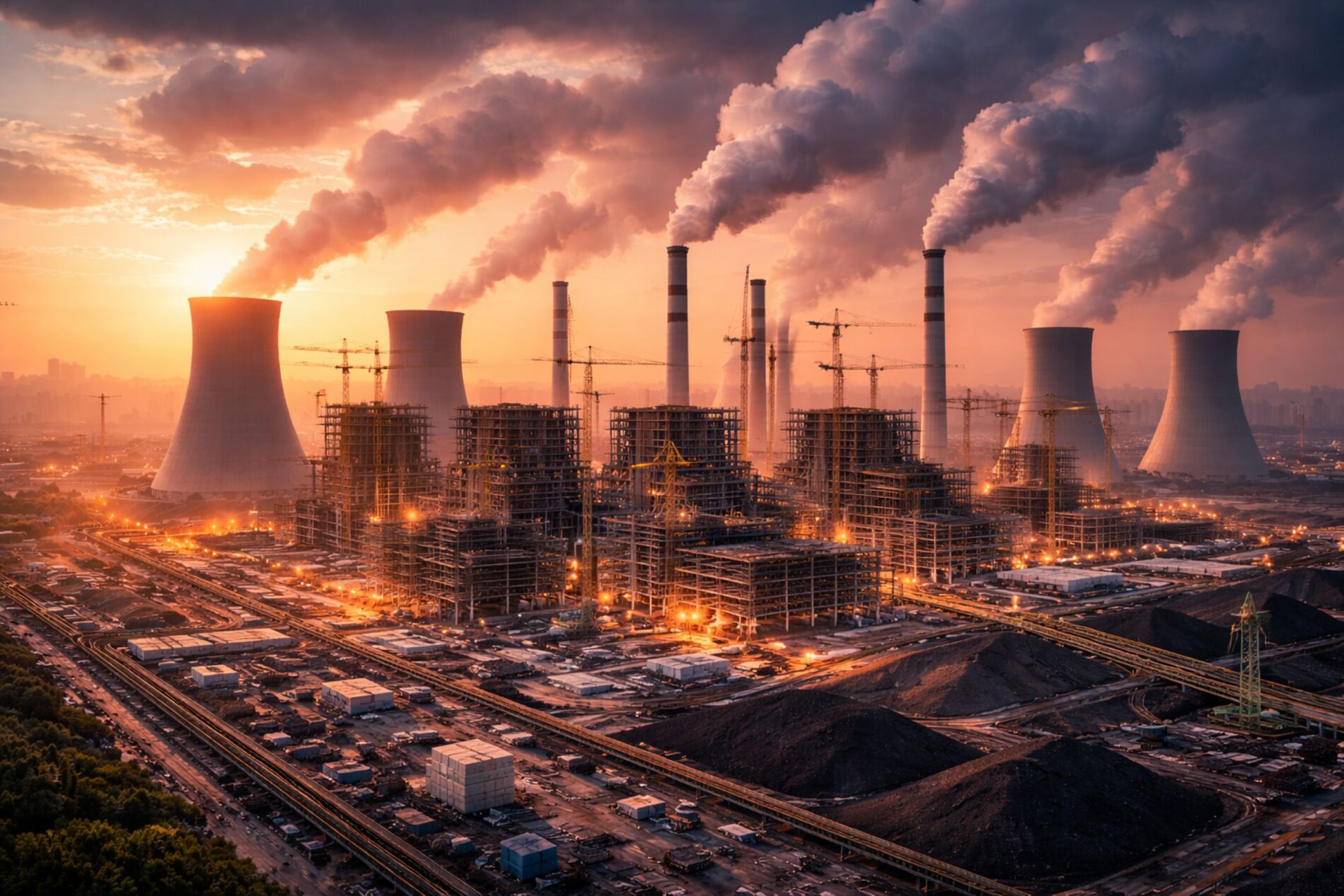
China accelerated the expansion of its coal-fired power plant capacity in 2025, commissioning 52 large units (each with a capacity of ≥1 GW), according to the CREA/Global Energy Monitor report. This is the highest figure in ten years, during which fewer than 20 such large units were connected to the grid. The catalyst was the power shortages in 2021 and 2022, when factories had to reduce production and one city implemented rolling shutdowns. Beijing therefore prioritized security of supply through the massive expansion of coal-fired power plants. The consequences range from more stable industrial power to increased climate risks, as new coal-fired units will eventually have long operating lifetimes.
New coal-fired power generation at record levels – coal continues to grow despite the solar and wind boom
With 52 new large-scale power plants, China added a total of 78 gigawatts of new coal-fired power capacity in 2025, and construction has already begun on another 83 gigawatts. This scale represents a systemic decision because it shapes the power plant fleet for the long term. Depending on consumption, one gigawatt can supply anywhere from several hundred thousand to over two million households, which is why each individual plant remains politically significant. At the same time, the National Energy Administration reported 315 gigawatts of new solar capacity and 119 gigawatts of new wind power.
Despite the surge in renewables, the share of coal in the electricity mix declined slightly, but the core question remains unanswered. The crucial factor is not just the expansion of renewable energy capacity, but also its subsequent operation. If operators prioritize full capacity utilization, this crowds out flexible generation because grid capacity is limited. This then threatens higher emissions despite new wind and solar farms, while simultaneously increasing the costs of curtailment and grid stability.
Blackouts as a trigger – permits as an accelerator
The power shortages of 2021 and 2022 significantly impacted industrial areas, prompting the government to prioritize energy security. Factories had to temporarily halt production, and one city implemented rolling shutdowns. Subsequently, applications and permits for new coal-fired power plants skyrocketed, leading to record-breaking construction and grid connection as early as 2025. Qi Qin, an analyst at the Centre for Research on Energy and Clean Air and co-author of the report, says: “Once the permits are granted, the projects are difficult to stop.”
This is precisely what creates a lock-in effect, because ongoing construction projects are rarely abandoned. Provinces want capacity and jobs, so they push projects through. Because construction of another 83 gigawatts of coal-fired power began in 2025, coal expansion is likely to continue, even though China is simultaneously promising declining emissions. This increases the likelihood that coal will not only remain a reserve but will once again assume baseload power generation.
Industrial electricity as a competitive advantage, emissions as a side issue
Beijing justifies coal as a reserve for wind and solar power, but its primary benefit is a reliable supply of electricity for factories. This reduces production risks and stabilizes supply chains, thus strengthening export industries. At the same time, electricity costs are rising in many Western countries because grid fees, levies, and expensive flexibility requirements increase the price burden. This difference acts as a location bonus, as the energy price flows directly into the production of steel, chemicals, and basic materials.