
Carl Zeiss Meditec is pulling the plug on its China business because access to its most important market is becoming more difficult. The company plans to relocate more production to the People’s Republic to continue selling there. CFO Justus Felix Wehmer said: “To continue participating in the large Chinese market, we need to shift more value creation there.” At the same time, he acknowledged that this “could have repercussions for locations elsewhere in the world, and certainly also in Germany.” The share price recently reacted with a drop of around two percent as investors reassessed the risks. (onvista: 12.02.26)
China Remains a Key Market for Ophthalmology
A withdrawal from China is out of the question for Zeiss Meditec, even though the environment is becoming increasingly competitive. Wehmer emphasized: “China is the world’s largest market for ophthalmology.” The company generates around a quarter of its revenue there, meaning that a crucial part of its business depends on access to clinics and successful bids. Zeiss Meditec sells, among other things, artificial lenses, diagnostic equipment, surgical microscopes, and medical lasers in China. Therefore, the company plans to relocate production closer to its customers to increase value creation and ensure it doesn’t fall behind in bidding processes.
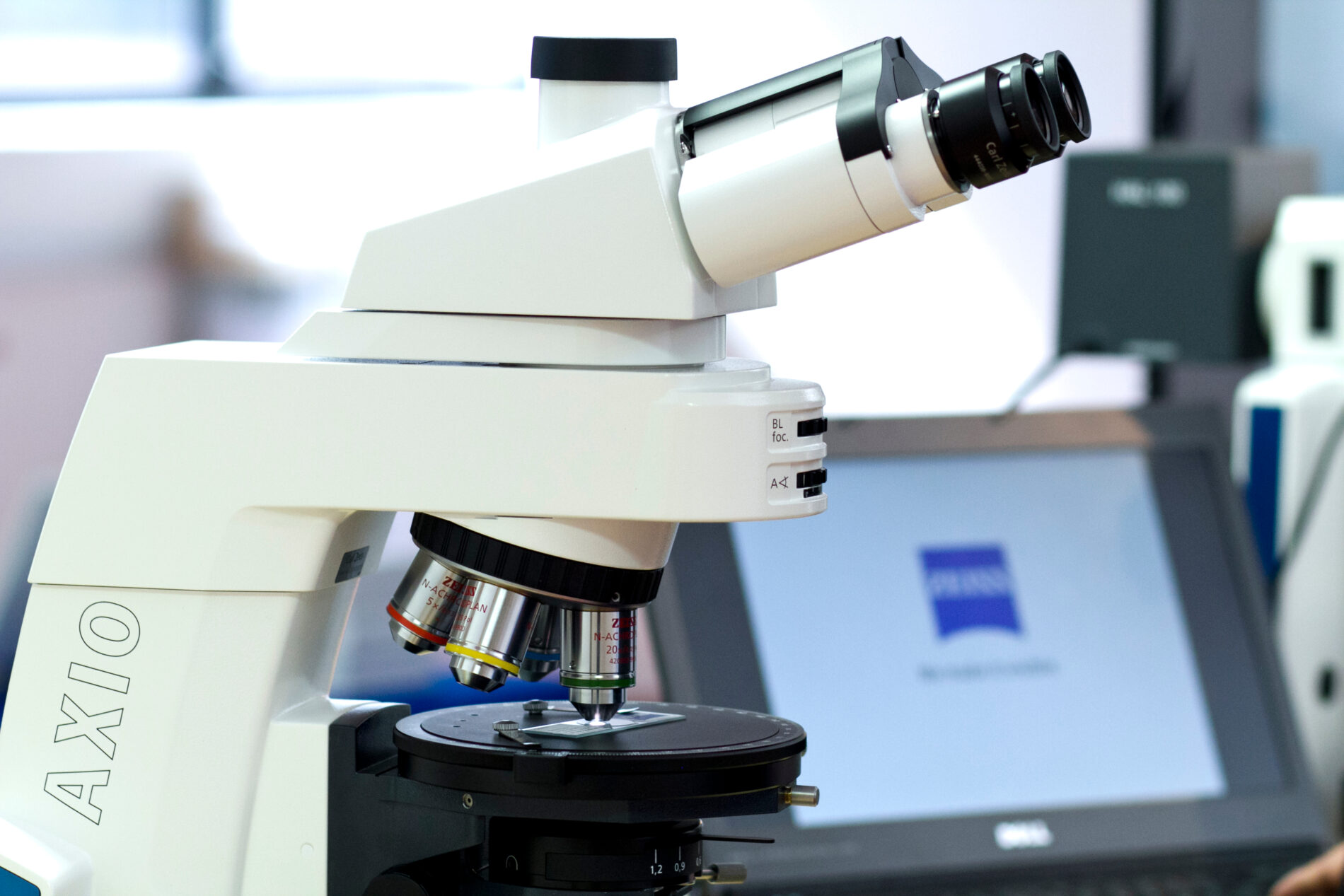
The production base in the People’s Republic already exists, but it is to be utilized more extensively. Zeiss Meditec operates two of its own sites in Guangzhou and Suzhou, and it is precisely there that increased volume is expected in the future. Wehmer is keeping details to himself because internal decisions are still pending. However, he clearly states that the decision is not only operational but also politically influenced. In Beijing, rules change rapidly, and those who do not produce locally are more likely to lose market access in sensitive segments.
Red figures at the start of the year intensify the pressure to act
The change in strategy comes at a time when the figures are turning sour. In the first fiscal quarter, ending in December, the company posted a loss of €4.9 million, compared to a profit of €15.7 million in the previous year. Operating profit (EBITA) also plummeted by almost 80 percent to just over €8 million, further exacerbating the situation. Negative currency effects and higher depreciation played a role, but the main driver remains the weak business in China.
Wehmer describes the pressure openly, but without using catchphrases. The government in Beijing is tightening market protection, and these safeguards are changing the competitive landscape. Zeiss Meditec is also feeling the effects of stricter regulations, which, according to management, were introduced in response to EU tariffs on Chinese electric vehicles. At the same time, the weak economic situation in China is slowing investment, and consumer reluctance to buy remains high. This is putting premium products under more rapid price pressure, even though they are technologically impressive.
According to Wehmer, it is still too early to comment on potential cutbacks. This also applies to the question of whether there could be job reductions, as the relevant bodies must first decide. The forecast for the fiscal year ending in September, which was suspended in January, will also remain on hold for the time being. Nevertheless, the company is announcing measures because the results leave no room for maneuver.
Group restructuring in research and processes aims to reduce costs
In addition to relocating production, Zeiss Meditec is planning a realignment of its research and development. This involves prioritizing, but also accelerating, so that projects reach market maturity more quickly. Efficiency programs will also be implemented because cost centers within the group need to be reduced. Wehmer explained that processes would be reviewed, unified, and standardized to save money. “I don’t want to single out any particular function, but I also don’t want to exclude any,” he added.
The new approach has far-reaching potential because standardization often impacts purchasing, production, IT, and administration. At the same time, its success depends heavily on how the regulatory environment in China develops. If approvals take longer or local suppliers are favored, the pressure on margins will increase further. Therefore, Zeiss Meditec is linking its next steps to greater clarity in the coming months.
The company plans to present updated targets no later than its half-year results on May 12. Wehmer stated, “By then, we will have more clarity.” Until then, the situation remains dynamic, and decisions will be closely aligned with factors related to China. This is relevant for investors because profitability needs to recover to prevent the company from remaining in the red indefinitely.
Tenders, approvals, and tariffs increase uncertainty
One outstanding issue is a major nationwide tender in China, in which Zeiss Meditec is competing with an expensive premium lens. Winning the contract would be lucrative, but competition is intensifying. The company only recently learned that two local suppliers are also bidding, and domestic companies are increasingly being given preferential treatment in awarding contracts. This increases the risk that premium segments will no longer automatically go to international brands.
In addition, there is a second lens for which, according to Wehmer, only verbal approval has been granted so far. Such details are crucial for planning because, without written approval, neither sales nor production can be accurately calculated. Furthermore, demand around the Chinese New Year remains to be seen, as purchasing behavior fluctuates significantly during this period. The further development of US tariffs also plays a role, as it affects supply chains and prices, while global trade conflicts are escalating again.
Ultimately, Zeiss Meditec is focusing on local value creation because China remains its core market. At the same time, the risk for other locations increases because capacities could shift. The company is avoiding making firm commitments, but the direction is clear, and that makes the next few months equally critical for employees and investors.